Tell us about the job
Takes about a minute. No obligation.
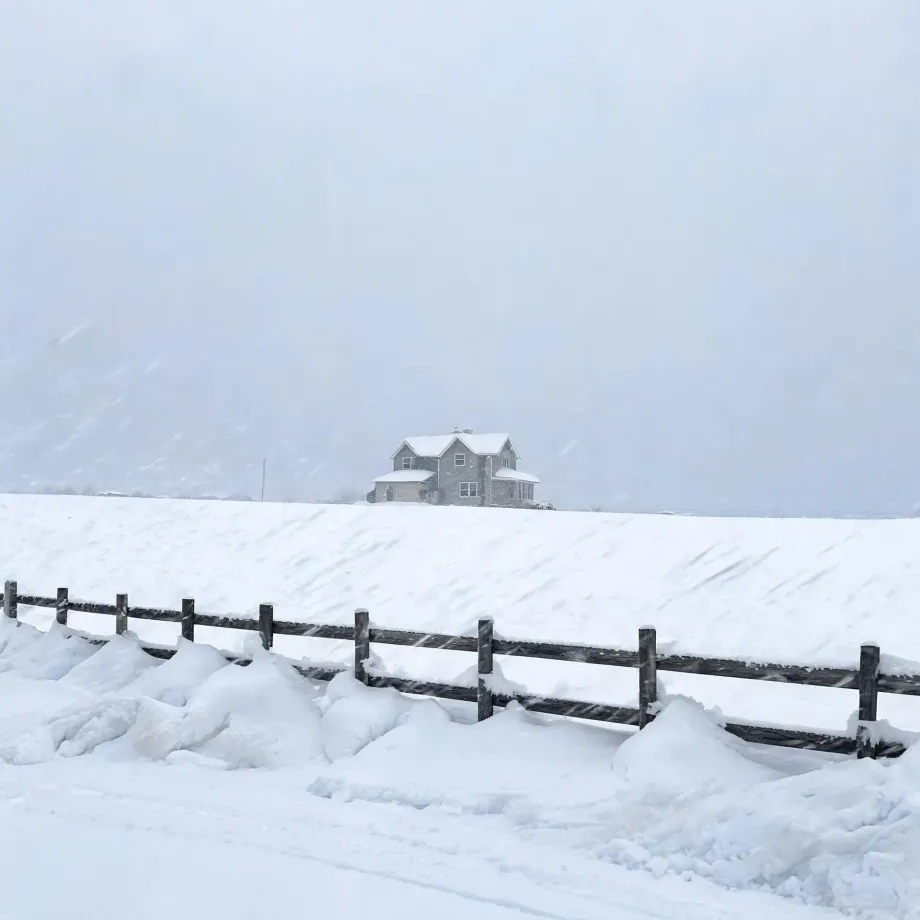
Sizing a heat pump for Gray County means solving a problem that does not come up in milder climates: the equipment has to deliver useful heat on the coldest nights, which is exactly when its capacity falls. Homes in Gray County, KS run heat about seven months a year, from October through April. A contractor quoting an install here has to run a load calculation that accounts for that gap between what the house needs and what the unit can actually produce when outdoor temperatures are at their lowest. Back-up heat is not an afterthought on a job like this. The contractor has to size it, wire it, and fold it into the quote from the start.
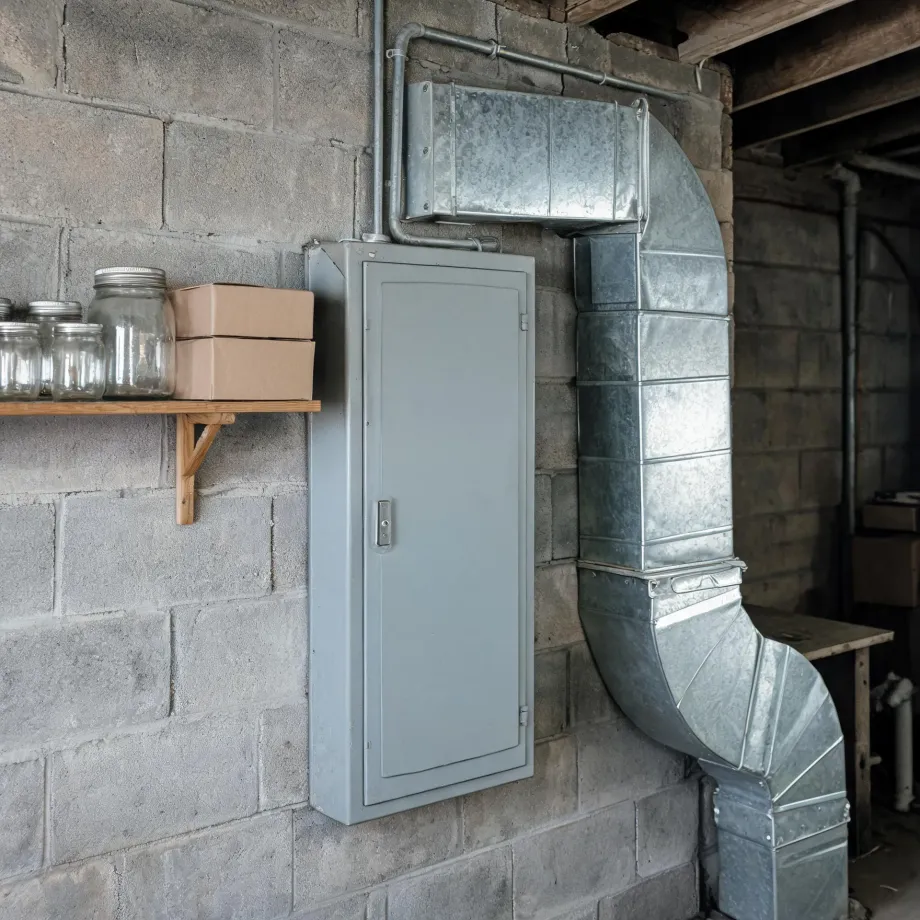
Ductwork laid out for one generation of heating equipment does not always carry a heat pump without modification. Half the homes in Gray County, Kansas were built in 1976 or earlier (2020-2024 ACS 5-year). That history shows up in the duct runs a contractor has to measure and pressure-check before any new unit gets priced, because passages sized for an older system may move air differently than what a heat pump requires. The electrical service is the second question: older panels were not wired for the loads a modern heat pump draws, and what is already on the breaker box is what determines whether that panel stays or goes.
What a Heat Pump Installation Covers
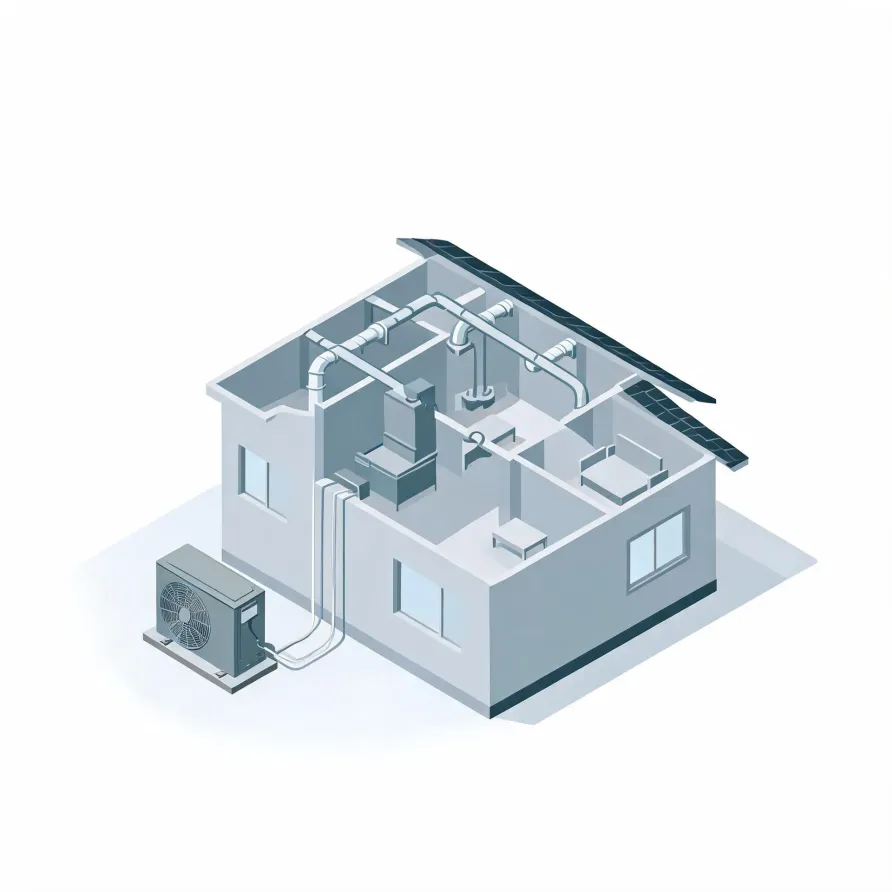
The outdoor unit sits on a pad beside the house and holds the compressor and the main coil. Inside, an air handler mounts in a utility space, attic, or closet and moves conditioned air through the home. Both units arrive as new equipment and are set in place by the contractor.
A refrigerant line set runs between the two units, connecting them through a small penetration in the wall. A thermostat goes on an interior wall where it can read the living space accurately and give the homeowner control over the system.
The drawing shows a typical layout, and a licensed contractor determines exactly how the equipment is positioned and connected in your home.
Find a contractor in Gray CountyGray County, Kansas, by the numbers
213 severe weather events were recorded in Gray County, Kansas between 2015 and 2024.
NOAA National Centers for Environmental Information, Storm Events Database, bulk CSV export, events 2015-01-01 through 2024-12-31.Half the homes in Gray County, Kansas were built in 1976 or earlier (2020-2024 ACS 5-year).
U.S. Census Bureau, 2020-2024 American Community Survey 5-Year EstimatesGray County, Kansas holds 2,354 housing units (2020-2024 ACS 5-year).
U.S. Census Bureau, 2020-2024 American Community Survey 5-Year EstimatesOwners occupy 77.1% of the occupied homes in Gray County, Kansas (2020-2024 ACS 5-year).
U.S. Census Bureau, 2020-2024 American Community Survey 5-Year EstimatesSevere Weather Events in Gray County
Gray County's climate puts real demands on heating and cooling equipment, and those demands shape what a heat pump here needs to handle over its life. Sizing and installation decisions are local ones, and the weather record is part of that picture.
213 severe weather events, 2015–2024. Source: NOAA National Centers for Environmental Information, Storm Events Database.