Tell us about the job
Takes about a minute. No obligation.
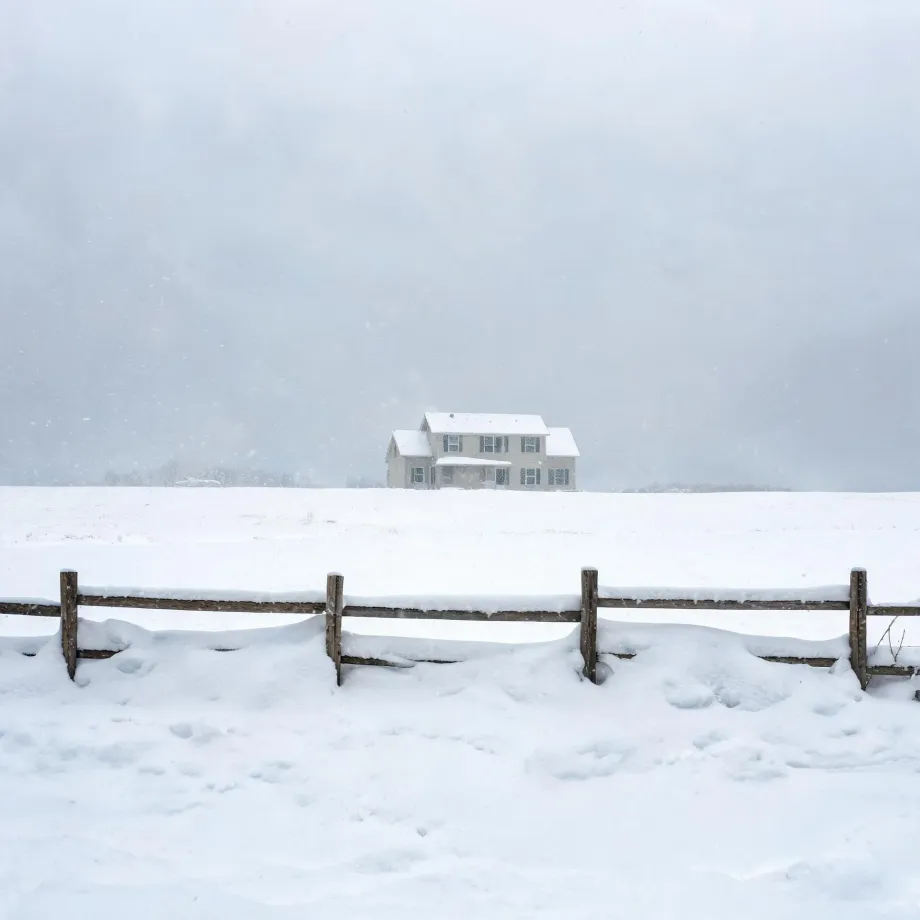
Sizing a heat pump for Greenwood County is a local problem, not a catalog decision. Homes in Greenwood County, KS run heat about seven months a year, from October through April. A heat pump loses capacity as outdoor temperatures fall, so the coldest weeks of that stretch are exactly where an undersized system falls short, running flat out and still not keeping up. A contractor has to establish what temperatures the equipment will face at the bottom of winter, then decide whether the selected unit can meet that load and what back-up heat element covers the gap it cannot. Get that calculation wrong on the front end, and the system runs in deficiency every January.
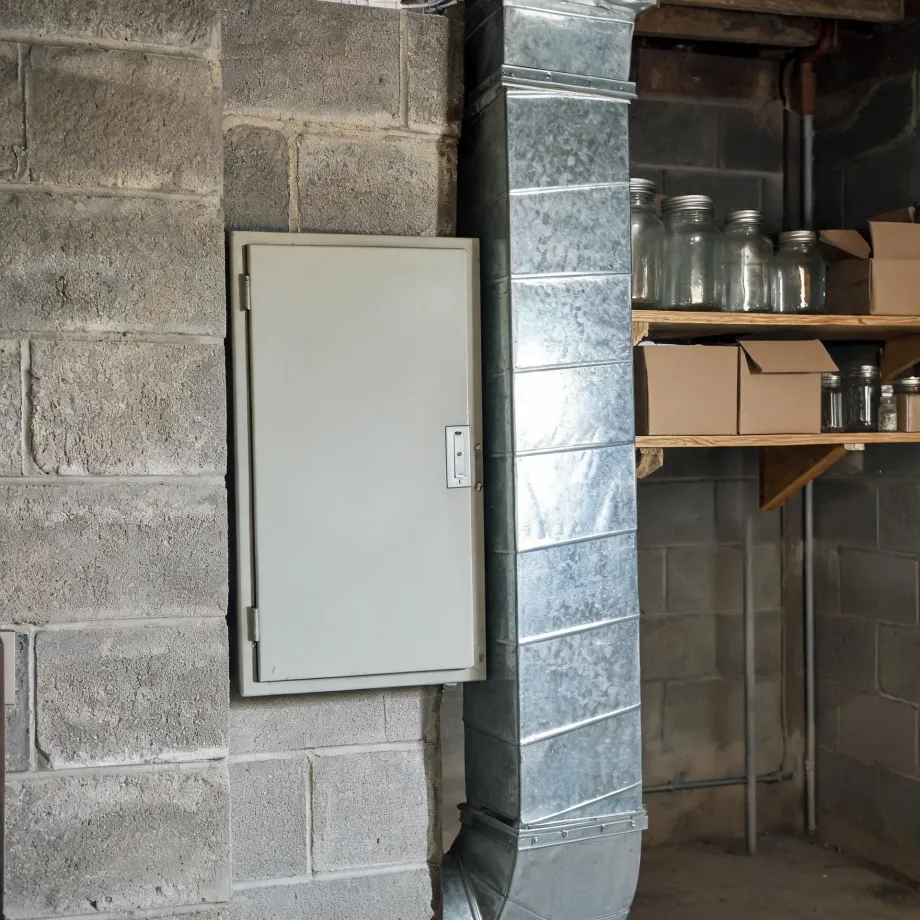
Ductwork and electrical panels in this county's housing stock were put in for systems that drew far less than a heat pump draws today. Half the homes in Greenwood County, Kansas were built in 1956 or earlier (2020-2024 ACS 5-year). A contractor quoting a heat pump installation here has to pull the panel cover and measure what the service actually delivers before the equipment choice means anything, because a box-swap price that skips that step will be wrong. What the panel turns out to contain sets the scope: a straight swap or a service upgrade first.
What a Heat Pump Installation Covers in Your Home
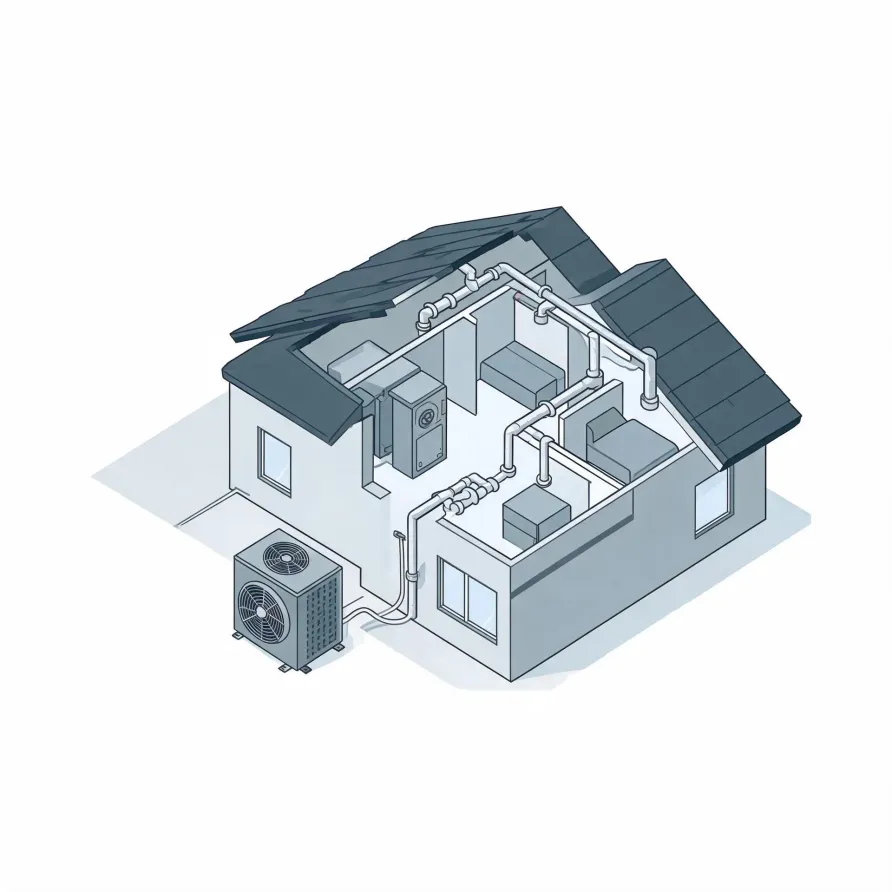
The outdoor unit sits on a pad beside the house and holds the compressor and the coil that exchange heat with the outside air. The indoor air handler mounts in a utility space, a closet, or an attic and moves conditioned air through the home. These two units are the core of what a contractor installs.
A refrigerant line set runs between the outdoor unit and the air handler, connecting the two halves of the system. A thermostat goes on an interior wall where it reads the living space and tells the system when to run. Both pieces are part of the installation.
The drawing shows a typical layout, and a licensed contractor determines exactly what applies to your house.
Find a contractor in Greenwood CountyGreenwood County, Kansas, by the numbers
120 severe weather events were recorded in Greenwood County, Kansas between 2015 and 2024.
NOAA National Centers for Environmental Information, Storm Events Database, bulk CSV export, events 2015-01-01 through 2024-12-31.Half the homes in Greenwood County, Kansas were built in 1956 or earlier (2020-2024 ACS 5-year).
U.S. Census Bureau, 2020-2024 American Community Survey 5-Year EstimatesGreenwood County, Kansas holds 3,666 housing units (2020-2024 ACS 5-year).
U.S. Census Bureau, 2020-2024 American Community Survey 5-Year EstimatesOwners occupy 80.5% of the occupied homes in Greenwood County, Kansas (2020-2024 ACS 5-year).
U.S. Census Bureau, 2020-2024 American Community Survey 5-Year EstimatesSevere Weather Events in Greenwood County
Kansas weather puts real demands on heating and cooling equipment, and Greenwood County gets its share of what the climate throws at this part of the state. A heat pump sized and installed for local conditions handles those demands differently than one that was not.
120 severe weather events, 2015–2024. Source: NOAA National Centers for Environmental Information, Storm Events Database.