Tell us about the job
Takes about a minute. No obligation.
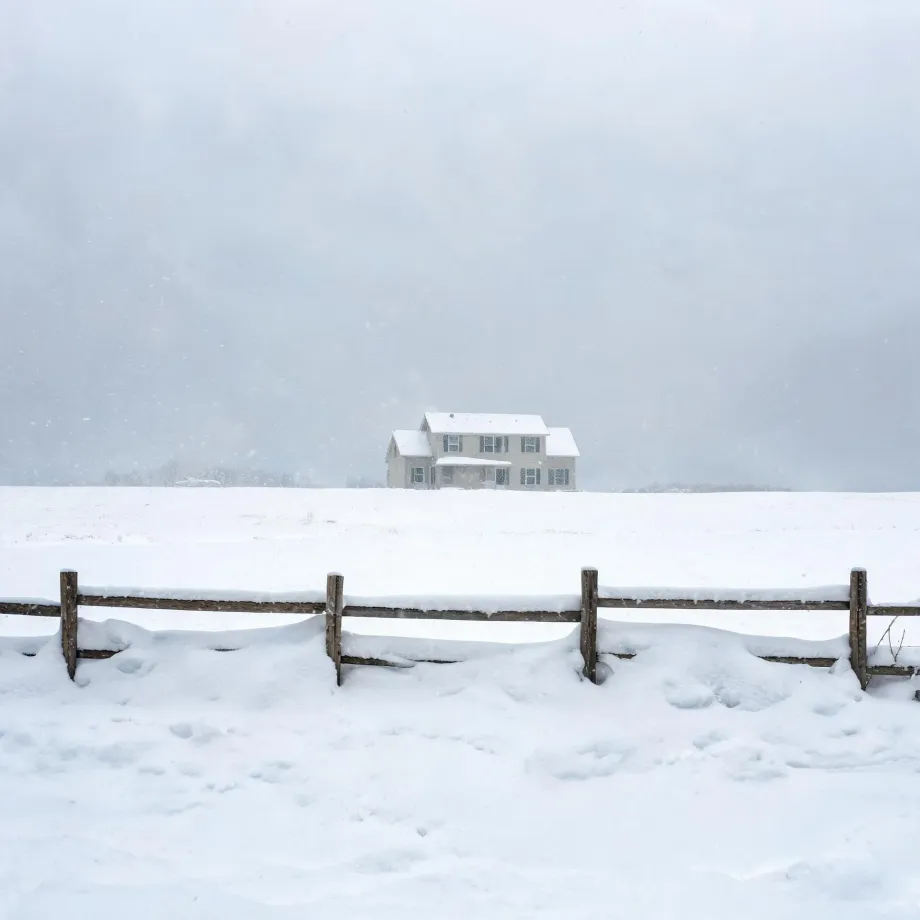
Sizing a heat pump for Stevens County means pricing what happens at the hard end of the heating season, not the middle of it. Homes in Stevens County, KS run heat about seven months a year, from October through April. As outdoor temperatures drop toward and below freezing, a heat pump's capacity falls while the house's demand rises, and a system sized too optimistically hands that gap to the backup resistance elements. A contractor here calculates that crossover point before recommending equipment, because the balance between compressor capacity and supplemental heat determines how the system runs across the full heating season.
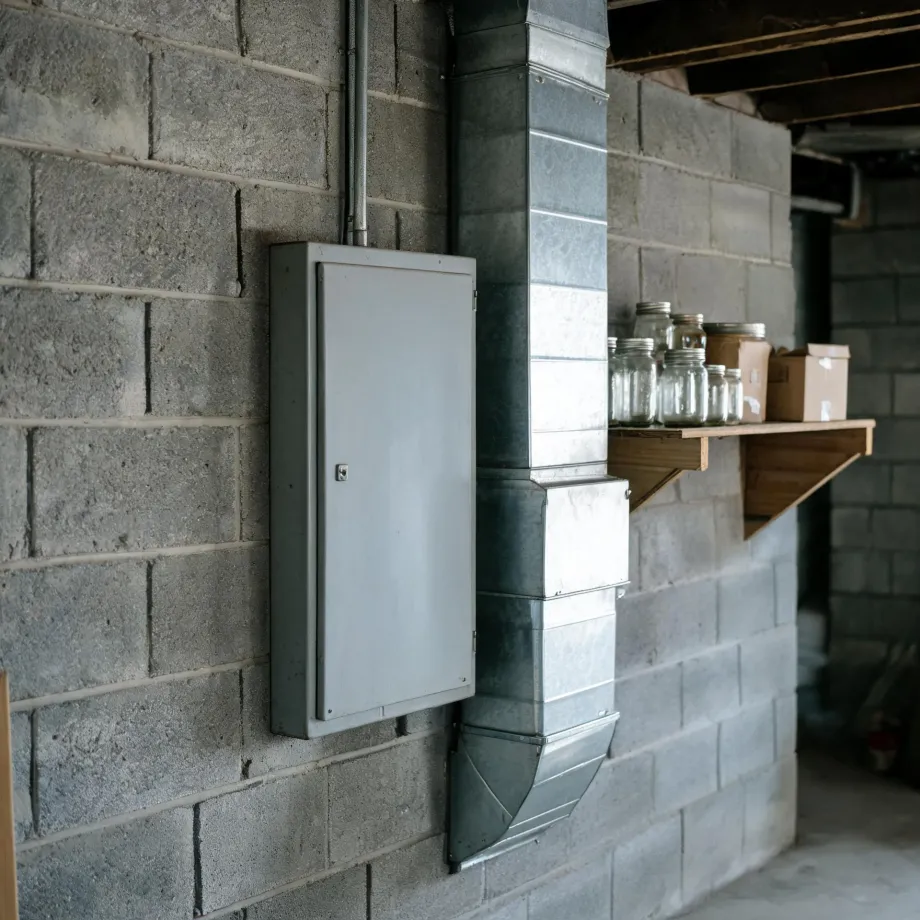
Ductwork laid down for a gas furnace or a window unit was sized and routed around a different kind of load, and a heat pump pushes air differently enough that what is already in the walls becomes the first thing a contractor has to account for. Half the homes in Stevens County, Kansas were built in 1974 or earlier (2020-2024 ACS 5-year). That depth of stock means the duct system a contractor opens is more likely to need modification than the one in a recently built house, and the electrical service may need an assessment before anyone prices the outdoor unit. The equipment selection comes after those answers, not before.
What a Heat Pump Installation Covers
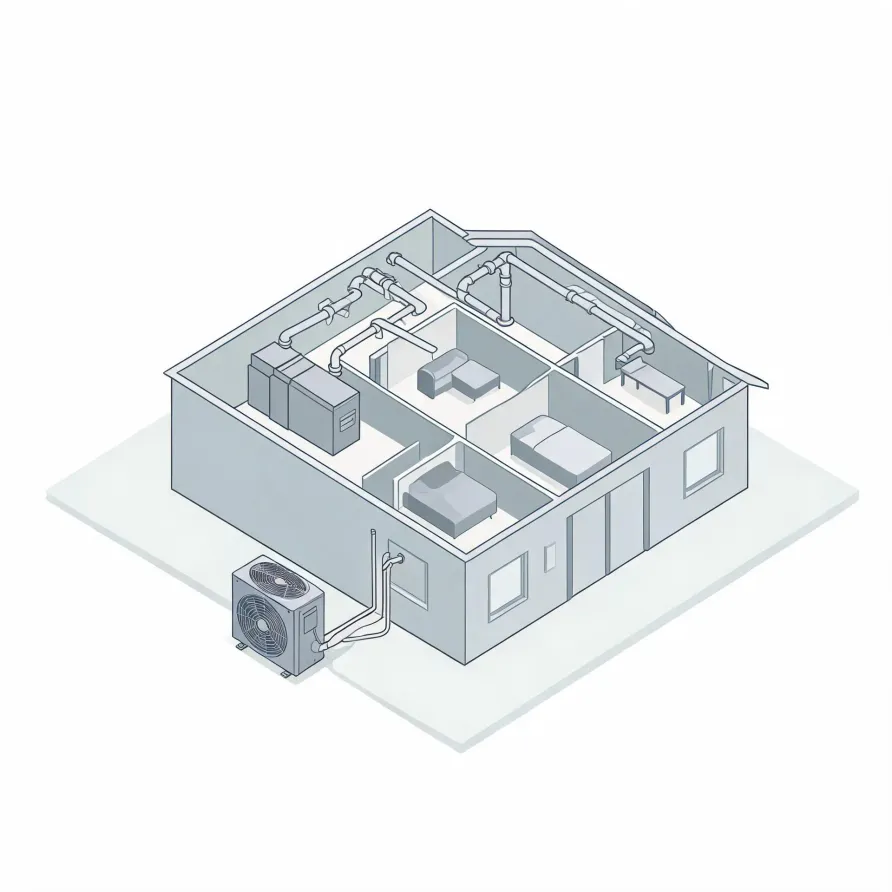
The outdoor unit sits on a pad beside the house and holds the compressor and coil that do the system's core work. Inside, an air handler mounts in a utility space, basement, or closet and moves conditioned air through the home. Together these two units are what a new installation puts in place.
A refrigerant line set runs between the outdoor and indoor units, connecting them through a small penetration in the wall. A thermostat goes on an interior wall where it can read the living space and give the homeowner control over the whole system.
The drawing shows a typical layout, and a licensed contractor determines what the configuration looks like in your specific home.
Find a contractor in Stevens CountyStevens County by the numbers
102 severe weather events were recorded in Stevens County, Kansas between 2015 and 2024.
NOAA National Centers for Environmental Information, Storm Events Database, bulk CSV export, events 2015-01-01 through 2024-12-31.Half the homes in Stevens County, Kansas were built in 1974 or earlier (2020-2024 ACS 5-year).
U.S. Census Bureau, 2020-2024 American Community Survey 5-Year EstimatesStevens County, Kansas holds 2,265 housing units (2020-2024 ACS 5-year).
U.S. Census Bureau, 2020-2024 American Community Survey 5-Year EstimatesOwners occupy 74.5% of the occupied homes in Stevens County, Kansas (2020-2024 ACS 5-year).
U.S. Census Bureau, 2020-2024 American Community Survey 5-Year EstimatesSevere Weather Events in Stevens County
Extreme weather puts heat pump systems under real stress, and how hard the equipment has to work is shaped by local conditions. Stevens County's weather history is part of what determines the right system for a home here.
102 severe weather events, 2015–2024. Source: NOAA National Centers for Environmental Information, Storm Events Database.