Tell us about the job
Takes about a minute. No obligation.
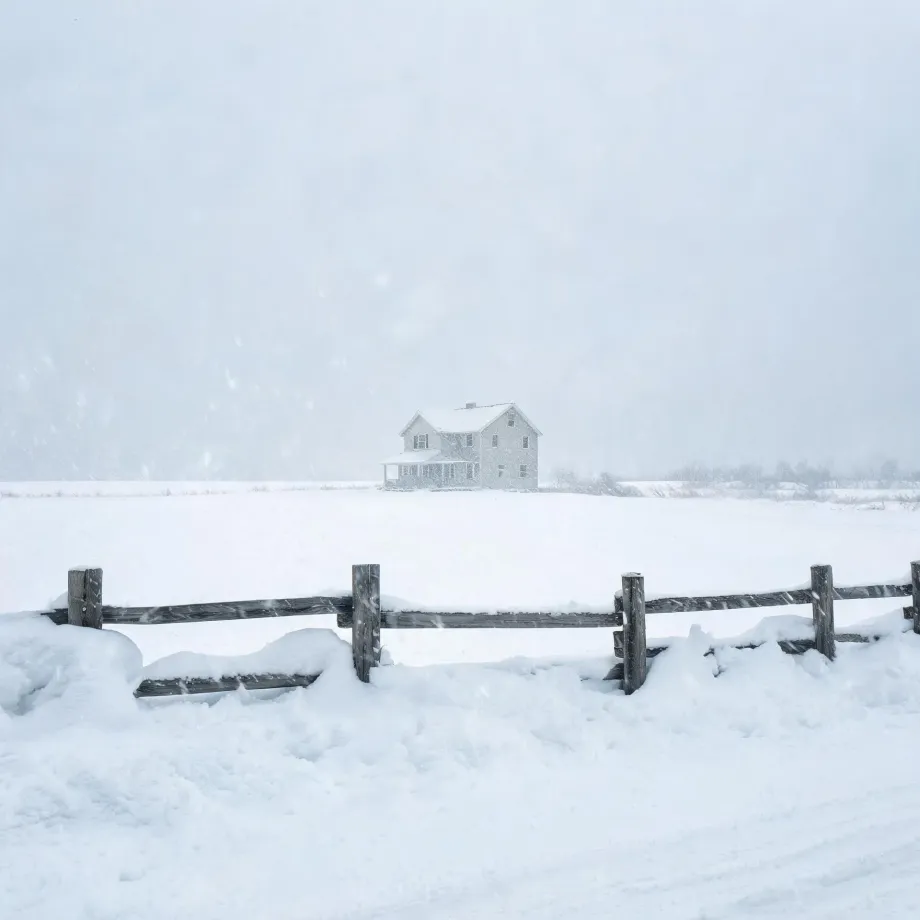
Sizing a heat pump for Norton County means accounting for what happens at the cold end of the season, when outdoor temperatures drop and the unit's capacity falls fastest. Homes in Norton County, KS run heat about eight months a year, from October through May. A contractor working this area has to run a load calculation that reflects those coldest weeks, not just the mild shoulder months, because an undersized unit will lean on its backup heat strip through the stretches that matter most. The heat strip covers the gap, but it draws significantly more power to do it, and the homeowner pays for an install decision made on day one.
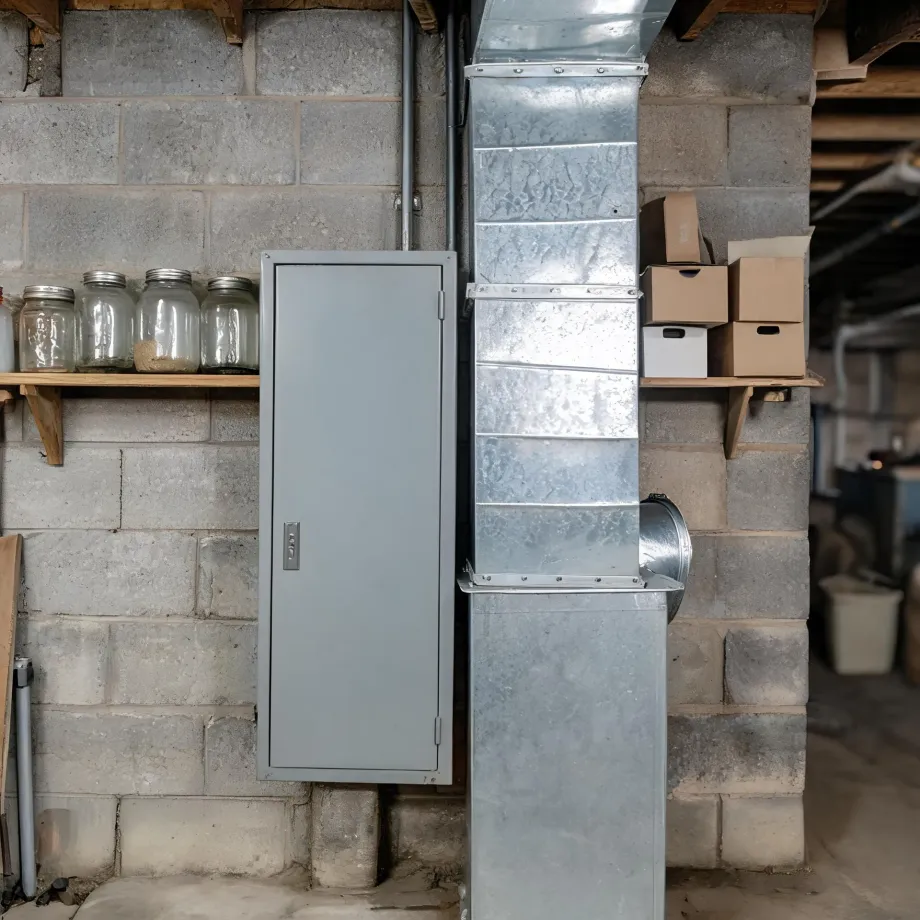
Ductwork laid out for older equipment shapes every heat pump installation in this county before the new unit is even on the truck. Half the homes in Norton County, Kansas were built in 1957 or earlier (2020-2024 ACS 5-year). That span means the ducts in a typical house here were sized and routed for something fundamentally different from what a contractor is now asked to connect to them. A mismatch in duct capacity forces a choice: modify what is there, or reroute. Either path changes the scope and the price before the electrical service gets looked at. The panel is a separate question, and it gets answered on the same visit.
What a Heat Pump Installation Covers in Your Home
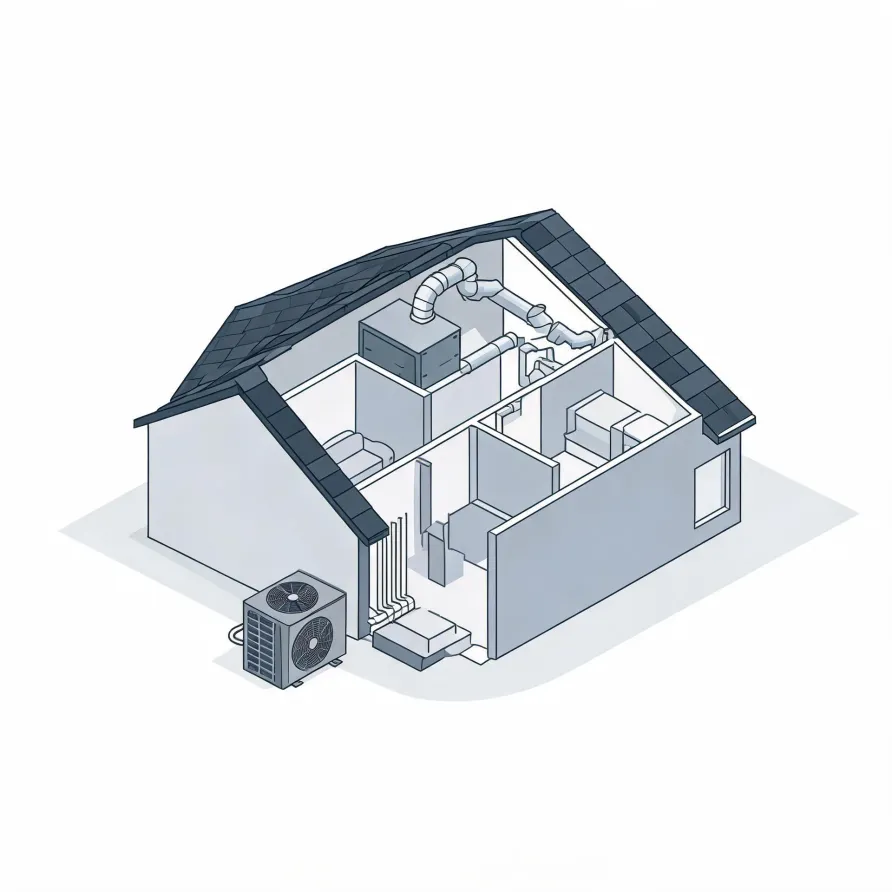
The outdoor unit sits on a pad beside the house and holds the compressor and the coil that exchange heat with the outside air. Inside, an air handler mounts in a utility space, attic, or closet and moves conditioned air through the home. These two units are the core of what a contractor installs.
A refrigerant line set runs between the outdoor unit and the air handler, carrying refrigerant back and forth through insulated copper tubing. A thermostat goes on an interior wall where it reads the home's temperature and signals both units when to run.
The drawing shows a typical layout, and a licensed contractor determines exactly which components and configurations apply to your house.
Find a contractor in Norton CountyNorton County, Kansas, by the numbers
219 severe weather events were recorded in Norton County, Kansas between 2015 and 2024.
NOAA National Centers for Environmental Information, Storm Events Database, bulk CSV export, events 2015-01-01 through 2024-12-31.Half the homes in Norton County, Kansas were built in 1957 or earlier (2020-2024 ACS 5-year).
U.S. Census Bureau, 2020-2024 American Community Survey 5-Year EstimatesNorton County, Kansas holds 2,450 housing units (2020-2024 ACS 5-year).
U.S. Census Bureau, 2020-2024 American Community Survey 5-Year EstimatesOwners occupy 76.2% of the occupied homes in Norton County, Kansas (2020-2024 ACS 5-year).
U.S. Census Bureau, 2020-2024 American Community Survey 5-Year EstimatesSevere Weather Events in Norton County
Kansas weather puts real demands on heating and cooling equipment, and those demands vary by where you are. A heat pump sized and installed for Norton County's conditions handles the load that actually shows up.
219 severe weather events, 2015–2024. Source: NOAA National Centers for Environmental Information, Storm Events Database.