Tell us about the job
Takes about a minute. No obligation.
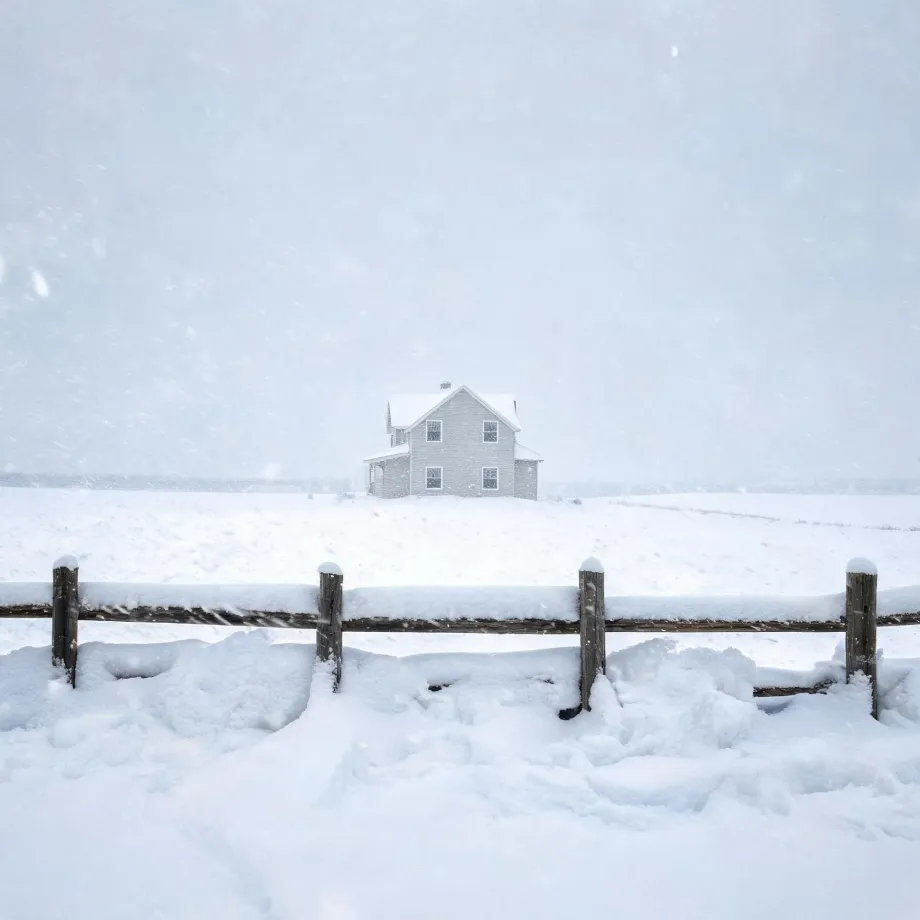
Sizing a heat pump for Cheyenne County starts with what the equipment is actually being asked to carry through the cold half of the year. Homes in Cheyenne County, KS run heat about eight months a year, from October through May. A heat pump's capacity drops as outdoor temperatures fall, so the gap between what the unit is rated for and what it can deliver on the coldest nights is a local question a contractor has to answer before a model gets chosen. Ductwork condition and the home's envelope factor into that calculation too. Getting the sizing wrong means the backup heat element carries the shortfall, and the homeowner pays for it every month the system runs hard.
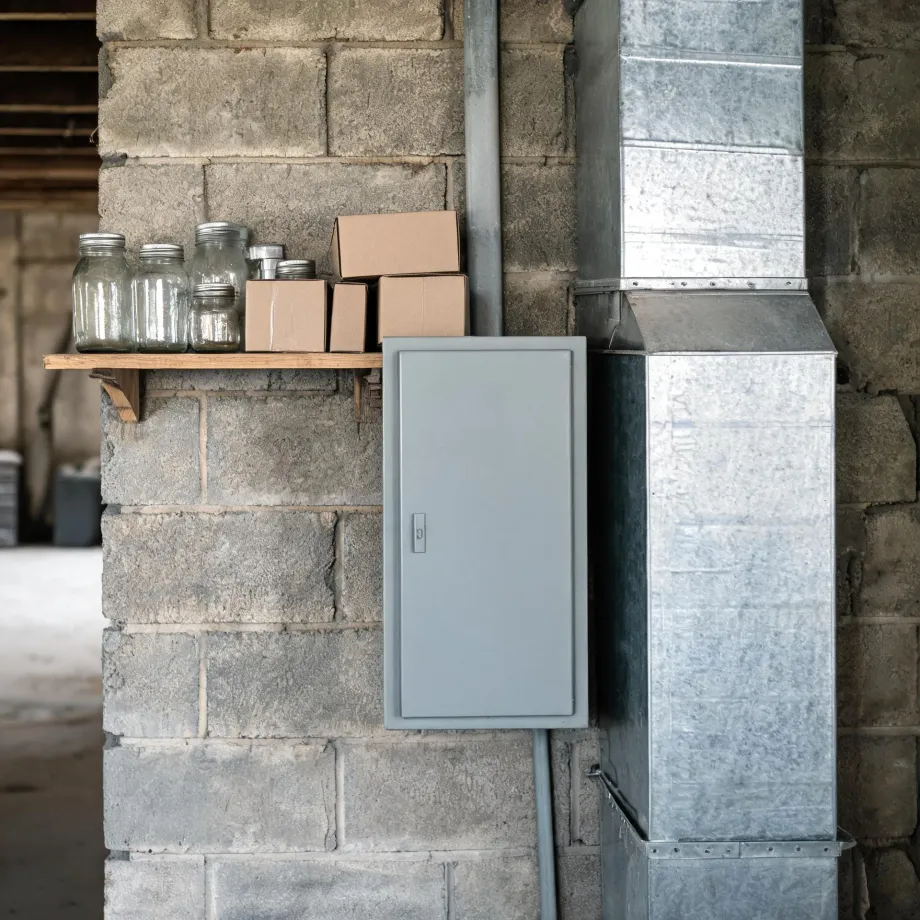
Ductwork and electrical service in older houses were put in for systems that are long gone. Half the homes in Cheyenne County, Kansas were built in 1951 or earlier (2020-2024 ACS 5-year). A heat pump draws more from a panel than what many of these houses were originally wired to carry, so a contractor pricing an install here checks the service entrance and the breaker capacity before settling on any equipment. If the panel is undersized, that cost lands in the quote alongside the unit.
What a Heat Pump Installation Covers
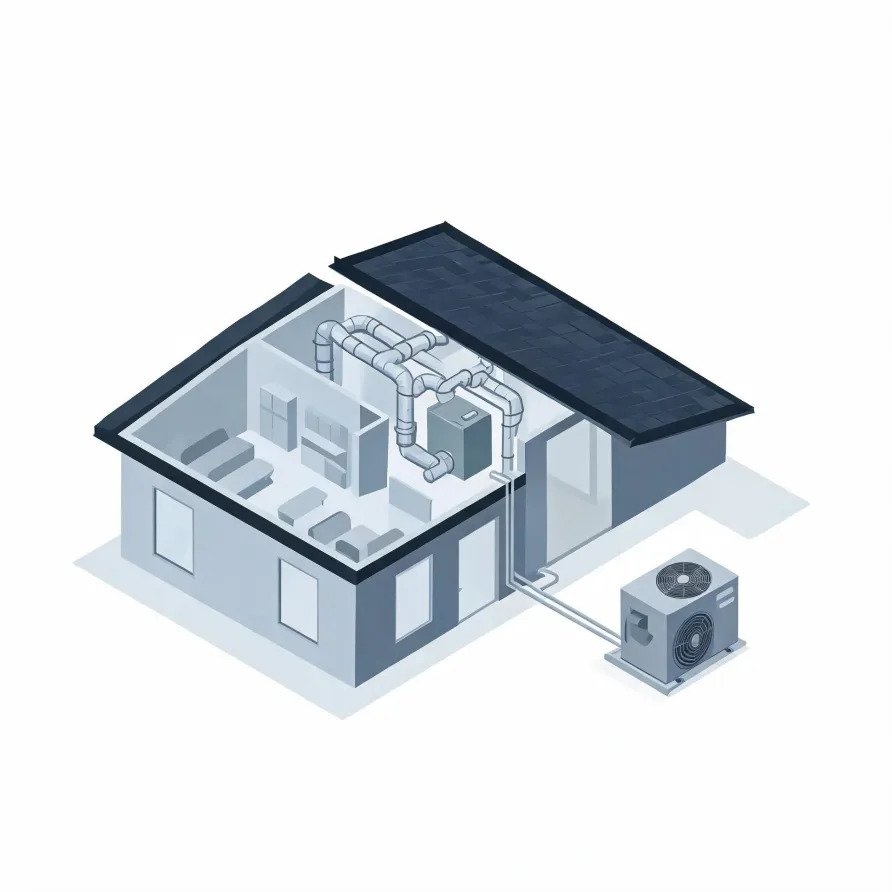
The outdoor unit sits on a pad beside the house and holds the compressor and the coil that exchanges heat with the outside air. Inside, the air handler mounts in a utility space, basement, or closet and moves conditioned air through the home. These two units are the core of what a contractor brings in and sets in place.
A refrigerant line set runs between the outdoor unit and the air handler, connecting the two and carrying the refrigerant that does the work. A thermostat goes on an interior wall where it can read the living space accurately and give the homeowner control over the system.
The drawing shows a typical layout, and a licensed contractor determines exactly what applies to this house.
Find a contractor in Cheyenne CountyCheyenne County, Kansas, by the numbers
306 severe weather events were recorded in Cheyenne County, Kansas between 2015 and 2024.
NOAA National Centers for Environmental Information, Storm Events Database, bulk CSV export, events 2015-01-01 through 2024-12-31.Half the homes in Cheyenne County, Kansas were built in 1951 or earlier (2020-2024 ACS 5-year).
U.S. Census Bureau, 2020-2024 American Community Survey 5-Year EstimatesCheyenne County, Kansas holds 1,455 housing units (2020-2024 ACS 5-year).
U.S. Census Bureau, 2020-2024 American Community Survey 5-Year EstimatesOwners occupy 77.9% of the occupied homes in Cheyenne County, Kansas (2020-2024 ACS 5-year).
U.S. Census Bureau, 2020-2024 American Community Survey 5-Year EstimatesSevere Weather Events in Cheyenne County
Weather in this part of Kansas puts real demands on heating and cooling equipment, and those demands shape what a heat pump needs to handle over its working life. That load is a local fact, which is why installation decisions here are not the same as they are somewhere else.
306 severe weather events, 2015–2024. Source: NOAA National Centers for Environmental Information, Storm Events Database.