Tell us about the job
Takes about a minute. No obligation.
A heat pump repair quote in Sedgwick County starts with the compressor and the reversing valve, and the reason is straightforward. Homes in Sedgwick County, KS run heat about seven months a year, from October through April. A system running that heating load cycles its reversing valve repeatedly as temperatures drop and recover, and the compressor works against falling outdoor air temperatures where capacity is hardest to maintain. Those are the components a contractor checks first, because that is where accumulated wear shows up. Refrigerant charge and the defrost board follow close behind.
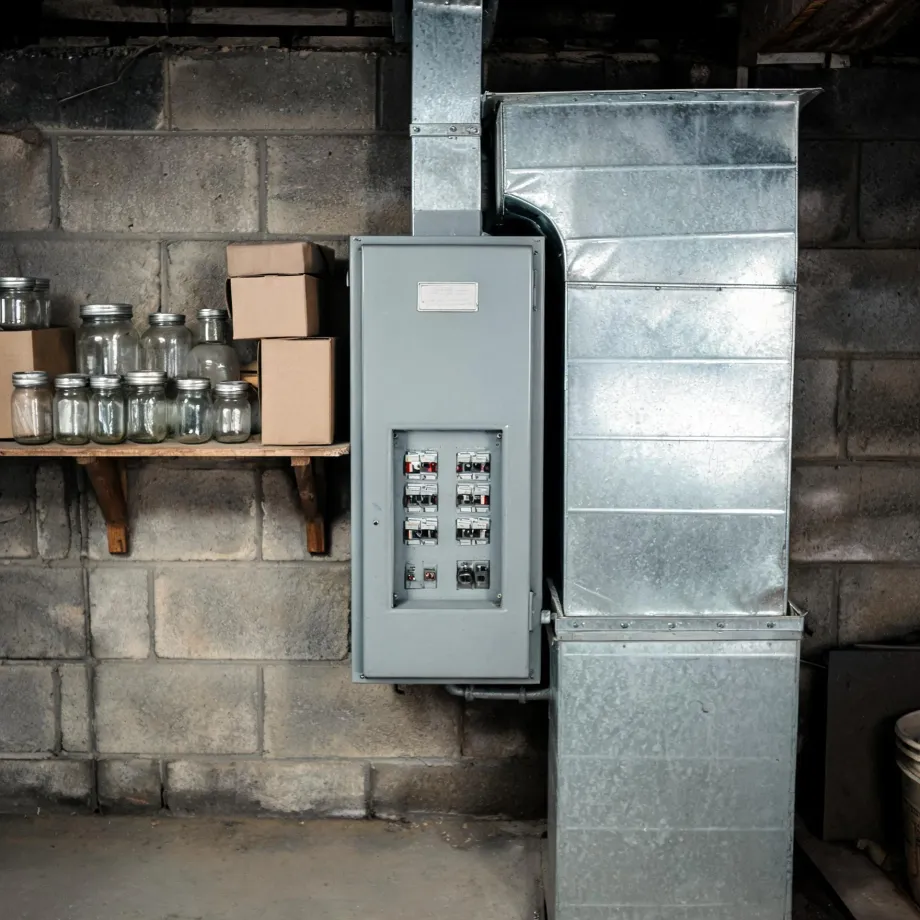
Opened equipment in a house that has been through several rounds of adaptation tells a different story than the exterior suggests. Refrigerant lines that have been re-routed, contactors that have been running hotter than spec, capacitors stressed by circuits that were not laid out for this load: what a contractor finds inside the cabinet is shaped by the layered history of the house, not just the age of the unit itself. Half the homes in Sedgwick County, Kansas were built in 1978 or earlier (2020-2024 ACS 5-year). A heat pump sitting in that stock has been asked to compensate for ductwork and wiring that changed around it, which is where the worn parts tend to be.
The Parts of a Heat Pump a Contractor Checks First
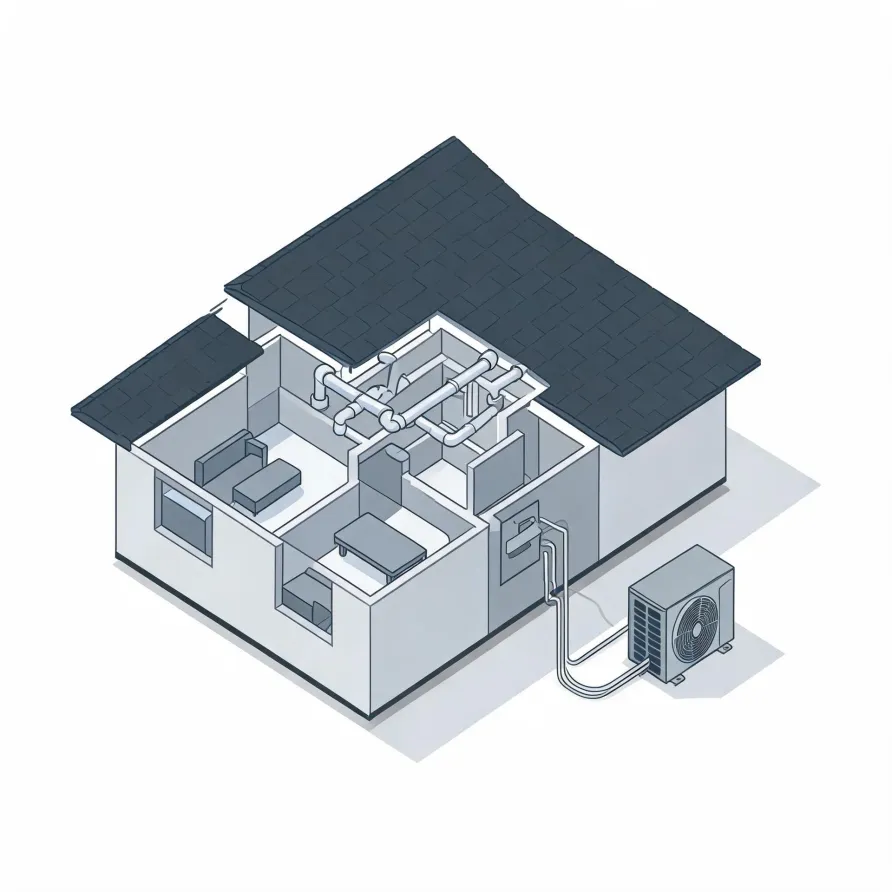
The outdoor unit is usually where a repair call starts. It houses the compressor, which is the heart of the system, along with the condenser coil and a fan. When the system stops moving heat, runs loudly, or ices over, the outdoor unit is where a contractor looks first.
Inside the house, the air handler holds the evaporator coil and the blower fan that pushes conditioned air through your home. The refrigerant line connects the two units, and the reversing valve inside the system is what lets a heat pump heat and cool. A fault in any of these can show up as the same symptom, which is why a contractor works through each one.
The drawing shows a typical heat pump layout, and a licensed contractor determines which parts and conditions apply to your specific home.
Find a contractor in Sedgwick CountySedgwick County, by the numbers
620 severe weather events were recorded in Sedgwick County, Kansas between 2015 and 2024.
NOAA National Centers for Environmental Information, Storm Events Database, bulk CSV export, events 2015-01-01 through 2024-12-31.Half the homes in Sedgwick County, Kansas were built in 1978 or earlier (2020-2024 ACS 5-year).
U.S. Census Bureau, 2020-2024 American Community Survey 5-Year EstimatesSedgwick County, Kansas holds 227,638 housing units (2020-2024 ACS 5-year).
U.S. Census Bureau, 2020-2024 American Community Survey 5-Year EstimatesOwners occupy 63.1% of the occupied homes in Sedgwick County, Kansas (2020-2024 ACS 5-year).
U.S. Census Bureau, 2020-2024 American Community Survey 5-Year EstimatesSevere Weather Events in Sedgwick County
Extreme weather puts heat pumps under stress that routine use does not. How often that stress arrives shapes what repair needs look like here, and it is a reason local equipment experience matters.
620 severe weather events, 2015–2024. Source: NOAA National Centers for Environmental Information, Storm Events Database.