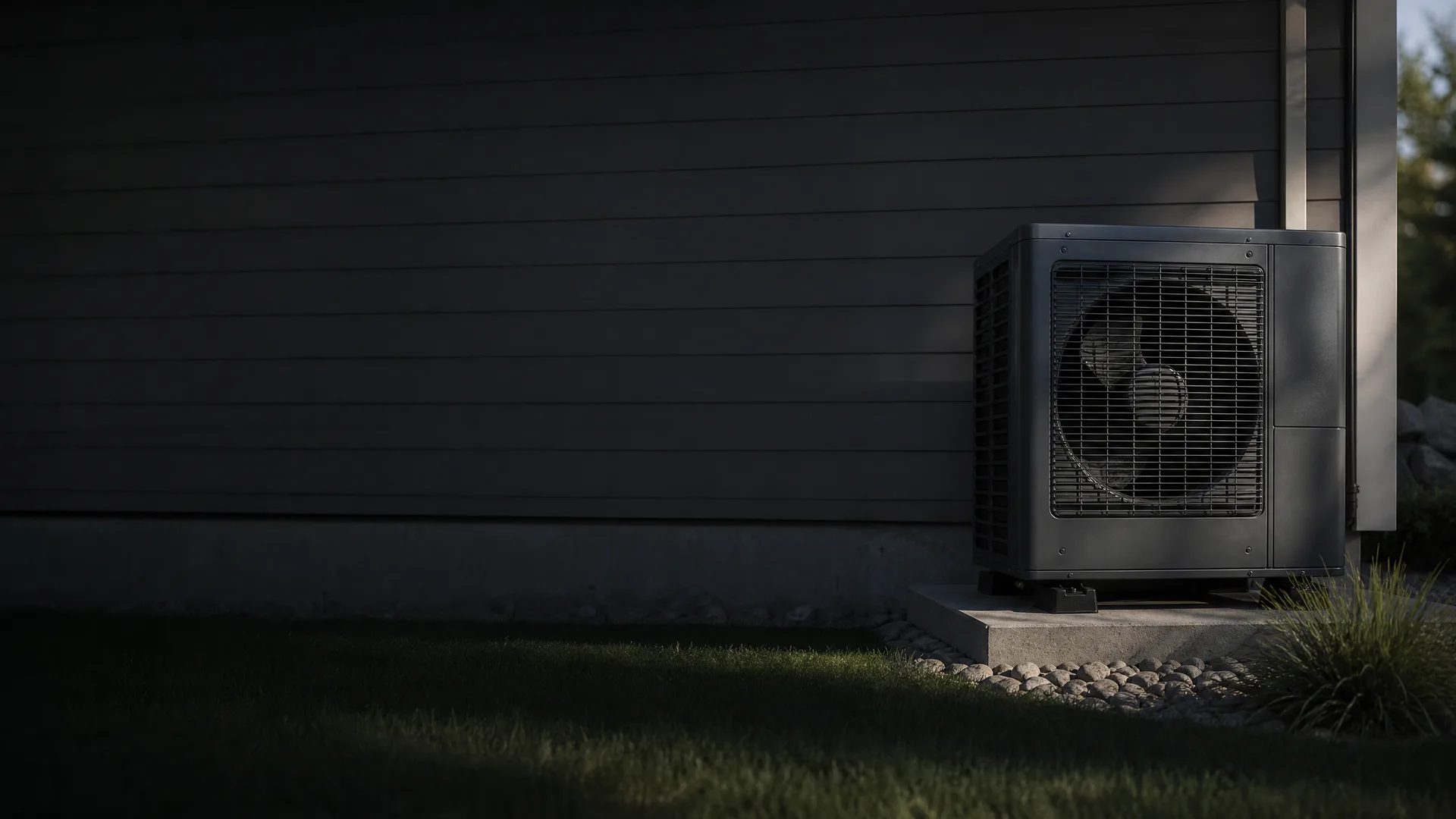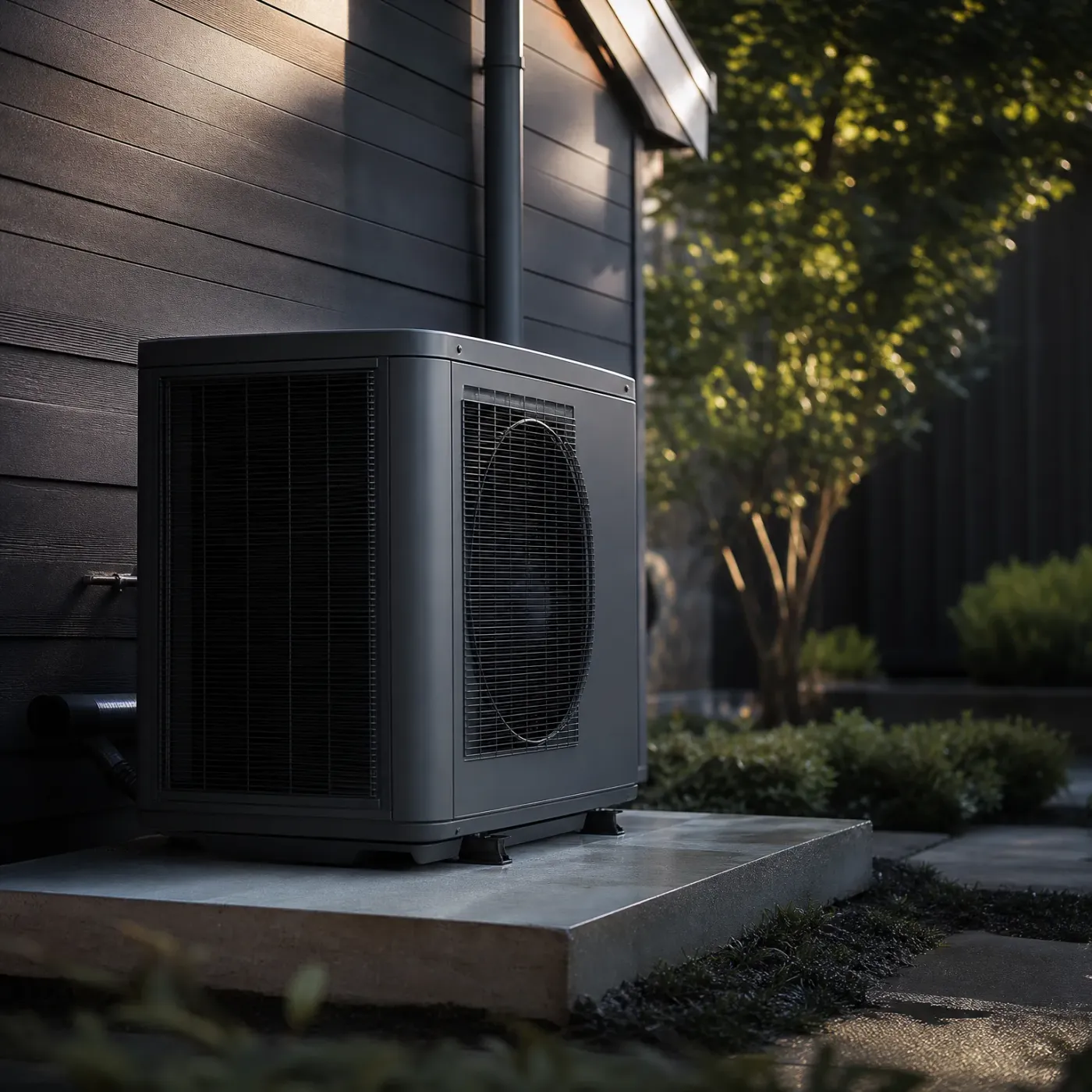







A gray outdoor condenser/heat pump unit with a side fan grille sits on a concrete pad beside a dark horizontal wood-sided house, with shrubs and a small tree nearby.

Describe it once

Heat pump stuck on emergency heat in Coffeyville, KS

Your thermostat shows an "emergency heat" light that won't go off, or the system switched itself over and the outdoor unit has gone quiet. That usually means the heat pump has stopped moving heat from outside and the house is running on backup alone. Below is what that points to and when it's worth a call, so you're not stuck ringing around Coffeyville for someone who knows this equipment.

Skip the calls

A heat pump stuck on emergency heat has stopped working outside and is leaning on its backup heat strips alone. Most often it means the outdoor unit has iced over and can't shed the ice, the thermostat is set wrong, or a part like the defrost board, reversing valve, or compressor has failed. Cold snaps here make ice buildup common, and once the coil freezes, the system defaults to emergency heat to keep the house warm while the outdoor unit sits idle. That keeps you warm, but backup heat strips use far more power to do the job the heat pump normally does, so a bill will show it fast if this runs for more than a day or two. Some causes clear on their own once the ice melts. Others, like a stuck reversing valve or a bad sensor, won't fix themselves and need a technician to find and replace the failed part before the heat pump will run normally again.

A woman with long light-brown hair in a gray knit sweater sits in a living room looking off to the side, with a sectional sofa, houseplant, lamp, wooden table and large windows behind her.
A woman in a chunky gray turtleneck sweater sits indoors looking off to the side, with a blurred dining table, chairs, pendant lamp and window behind her.
A woman in a cream knit sweater with her hair in a bun stands near a window, looking off to the side, with a gray sofa, houseplant and open kitchen with pendant lights blurred behind her.
A woman with long brown hair in a cream knit sweater stands near a window, looking to the side, with a white sofa, shelving, and a hallway visible behind her.

In cold, damp weather, a heat pump outside your house in Montgomery County is supposed to run short defrost cycles, clearing frost off the coil every half hour to hour before going back to heating. That switch happens at the reversing valve. When it sticks, the coil stays iced over and the unit can't pull heat from outside air anymore. A defrost board reads the coil temperature to decide when defrost should start and stop, and if that sensor is off, it can skip the cycle or get stuck running it too long. Either way, the outdoor unit ends up unable to keep up, and the house falls back on its electric heat strips. Sometimes the outdoor unit itself is fine and the problem is at the thermostat. A worn relay or loose wire there can call for emergency heat even when the compressor and outdoor fan are both able to run. The outdoor fan matters too. It has to move air across that coil during normal heating, and if it seizes, backup heat takes over to keep the house from going cold.

How emergency heat actually gets triggered

  • A defrost cycle normally runs for a few minutes every half hour to hour in cold, damp weather, melting frost off the outdoor coil before the unit switches back to heating.
  • The reversing valve is what moves the system between heating and defrost, and if it sticks, the outdoor coil can stay iced over instead of clearing.
  • A defrost board or sensor that misreads coil temperature can either skip defrost cycles entirely or hold the unit in defrost too long.
  • Emergency heat is a manual setting meant for when the outdoor unit has failed, so it bypasses the compressor and runs only the backup heat strips.
  • If the thermostat has a worn relay or bad wiring, it can call for emergency heat on its own even though the outdoor unit is able to run.
  • The outdoor fan motor has to run during normal heating, and if it seizes or fails, the system can trip into backup heat to keep the house warm.
A gray outdoor condenser unit on a concrete pad beside a house with horizontal lap siding, with a wall-mounted disconnect box, conduit and insulated refrigerant lines, a shrub at left and gravel at right.
The outdoor unit is running, the coil is clear of ice, and the house is heating off the compressor the way it's supposed to.
An outdoor condenser unit on a concrete pad beside a horizontal-sided house, with insulated refrigerant lines running to a wall-mounted box, surrounded by bare dirt.
The outdoor unit sits idle and frosted while the system leans on backup heat strips to keep the house warm.

What This Costs Your House

  • Backup heat strips burn more electricity than the compressor, so a bill that runs higher than last month's is often the first sign something's wrong.
  • If the outdoor unit stays frosted for hours instead of clearing on its normal defrost cycle, the coil can ice over solid and stop moving heat at all.
  • Rooms may still feel warm on emergency heat, which is why some households run on backup for days before anyone checks the thermostat.
  • The longer a stuck defrost board or failed reversing valve goes unfixed, the harder the backup strips work to cover for a compressor that isn't helping.
  • A heat pump that won't come off emergency heat in a Montgomery County cold snap can mean long stretches of backup-only heat until it's looked at.
  • Checking the outdoor unit for a thick layer of ice or a fan that isn't turning is something you can do yourself before calling anyone out.

The backup strips are electric resistance heat, the same principle as a space heater, and they are not cheap to run for days at a stretch. That is the first thing most households notice, usually when the bill arrives and it is well above what the same cold stretch cost the winter before. The second thing is less obvious. While the system leans on backup heat, the outdoor unit is supposed to be clearing itself through short defrost cycles. If something has failed, that is not happening, and ice can build up on the coil until it is solid. A coil in that condition cannot move heat even after the underlying problem gets fixed, which can turn a simple repair into a longer one. Meanwhile the house itself may give you no warning at all. Backup heat still heats the rooms, often well enough that nobody notices anything is wrong until they check the thermostat or the bill. That is how a stuck system can run for days in a Montgomery County cold snap with the household none the wiser. Before any of that, there is something worth a look outside. If the outdoor unit is carrying a thick shell of ice, or the fan is not spinning at all, that tells you plainly that the unit is not defrosting the way it should, and it is worth knowing before anyone comes out to look at it.

Why does emergency heat cost so much here in winter?

  • Winter nights average 26°F

    Overnight lows averaging 26°F mean the heat strips run harder and longer whenever the compressor sits idle.

  • Heat runs October through April

    Heat is on in this county from October through April, so a stuck system can run up backup-heat bills for most of the year.

  • Cooling runs May through September

    Five months of cooling the rest of the year means the heat pump is working nearly year round, giving more chances for a part to fail.

NOAA nClimDiv 1991-2020

A gray outdoor condenser unit sits on a concrete pad against a house wall with horizontal siding above a stone veneer base, with an electrical disconnect box and conduit on the wall and a leafy shrub in mulch to the left.

Heat pump running normally

The outdoor unit sits on its pad, running quietly, coil clear. Warm air comes out of the vents without the heat strips kicking in. Your bill reflects normal compressor use, not backup heat. This is what the system looks like when it's moving heat from outside instead of generating it.


An outdoor air conditioner condenser unit on a concrete pad beside a house with horizontal siding above a concrete block foundation, with insulated refrigerant lines and a vertical white pipe on the wall.

Stuck on emergency heat

The outdoor unit sits idle, coil frosted over, refrigerant lines running along the foundation doing nothing. The thermostat shows emergency heat and won't clear. The house stays warm, but only because the heat strips are carrying the whole load while the compressor sits dark.

An outdoor air conditioning condenser unit with dusty coils sits on a concrete pad against light horizontal siding, with an electrical disconnect box and refrigerant lines on the wall and a shrub and mulch at left.
Before you get your heat pump repair
A gray outdoor condenser unit sits on a concrete pad beside a house with horizontal lap siding, with a wall-mounted disconnect box and refrigerant lines, mulched beds and a shrub nearby, and a concrete walkway in the foreground.
After you get your heat pump repair

No calling every shop in Montgomery County

A heat pump that won't come off emergency heat in Montgomery County isn't something to leave alone through a stretch of 26-degree nights, and it isn't something most homeowners can sort out by swapping a filter or flipping the thermostat mode back and forth. You need someone who can get on the outdoor unit, check the defrost board and the reversing valve, and tell you which one quit. That usually means calling a few companies, explaining the thermostat light and the quiet outdoor unit each time, then sitting with quotes trying to guess who actually works on heat pumps regularly versus whoever picked up the phone first. Submitting this request instead sends your situation once to a contractor local to Coffeyville who works on this equipment all winter and has seen what usually causes it to stick on backup heat. No repeating the story to five different voices, no sorting through bids from people you've never heard of. You still have a cold house leaning on expensive heat strips right now, and that part doesn't wait.

Calling around for help

Finding someone to look at a heat pump stuck on emergency heat usually means searching for a contractor, calling a few numbers, explaining the same problem to each one, then waiting to see who calls back and comparing what they quote. In a cold snap, that's time spent with the heat strips carrying the whole load. Submitting a request here replaces that search. It goes to one licensed contractor local to Montgomery County, not a handful of companies competing for the job, so your phone isn't ringing off the hook with sales calls while you're trying to keep the house warm.

Someone who knows this system

A contractor working heat pumps in and around Coffeyville every winter has seen this exact fault more times than most homeowners will in a lifetime. They know a frozen coil that won't clear reads different from a bad defrost board, and that a reversing valve stuck mid-cycle behaves differently from either one. That familiarity means less time spent guessing at the cause and more time spent fixing it. You're not explaining the problem from scratch to someone unfamiliar with how these units run through a Kansas winter.

A woman and a child wrapped together in a thick knitted blanket on a sofa, both with eyes closed, with a lit table lamp and houseplant in the dim background.
A smiling older woman with gray shoulder-length hair in a cream cable-knit turtleneck sweater stands behind a wooden board holding a round loaf of bread, in a warmly lit kitchen with a dark window and shelves behind her.

Call now

A heat pump stuck on emergency heat through a run of 26-degree nights keeps pulling on backup strips instead of the compressor, and that gap on the bill grows every day it waits.

Find a licensed heat pump pro

Wait it out

The thermostat stays on emergency heat, the outdoor unit stays idle and frosted, and the house keeps heating on backup strips until someone looks at the defrost board or reversing valve.

Find a licensed heat pump pro

Emergency Heat Now or Fix It

Leave it on emergency heat

  • The heat strips keep the house warm, so nothing feels urgent even though the compressor isn't running at all.
  • Every day it runs this way, the electric bill climbs since strips cost more to run than the compressor they're replacing.
  • Whatever caused the switchover, whether a frozen coil, a bad defrost board, or a stuck reversing valve, stays unfixed and can get worse.
  • A coil that stays iced over for days instead of clearing on its normal cycle can lead to damage a tech would otherwise catch early.
  • You're still guessing at the cause, which means you can't tell a thermostat glitch from a part that needs replacing.

Get it repaired

  • A contractor who works on heat pumps all winter in Montgomery County can tell within minutes whether it's the board, the valve, or the sensor.
  • Once the actual fault is fixed, the compressor goes back to carrying the heat load and the strips only kick in when they're supposed to.
  • The outdoor unit starts clearing frost on its normal cycle instead of sitting frosted over for hours at a time.
  • Your bill drops back to reflecting compressor use instead of the heat strips running nonstop through 26-degree nights.
  • You get one licensed local contractor looking at the actual unit instead of a thermostat you're switching back and forth on your own.
  1. A contractor checks the thermostat mode and corrects it if it was switched by mistake.

  2. A contractor pulls the outdoor unit's cover and checks the coil for ice.

  3. A contractor tests the defrost board that times the melt cycle.

  4. A contractor checks the reversing valve that switches the system between heat and defrost.

Power here costs 14.36 cents per kilowatt-hour

At 14.36 cents per kilowatt-hour, running heat strips instead of the compressor shows up fast on your bill. The compressor moves heat for a fraction of what it costs to make it with resistance strips, so every day stuck on emergency heat adds up at that rate.

EIA-861 2025

A closed silver laptop and a glazed ceramic mug on a wooden table, with a blurred kitchen counter, potted plant, cutting board and window in the background.

Emergency heat that won't shut off means a repair, not a reset

A heat pump stuck on emergency heat needs a contractor to find out why the compressor stopped carrying the load, whether that's ice on the coil, a stuck reversing valve, a bad defrost board, or a thermostat set wrong. Until that's fixed, the house stays warm off the strips while the bill climbs behind it.

You don't have to spend an evening on this. Instead of searching for a contractor near Coffeyville, calling a few, explaining the same problem each time, and waiting to see who calls back with a quote, you get matched with one licensed contractor local to Montgomery County who works on heat pumps all winter and knows what usually fails in weather like this. One call, one visit, one answer.

A wooden table holding a stone vase with a bare branch, two stacked books and a small dark bowl, beside a window with green foliage outside and a sofa in the dim background.
An outdoor air-source heat pump unit with a large fan grille stands on a concrete pad beside a dark horizontal-slat clad house wall, bordered by gravel, grass and an ornamental grass clump.

One form, no calling around

A licensed pro who works in Montgomery County gets your request.

Step 1 of 3: Equipment