
Heat pump stuck on emergency heat in Topeka, KS

Find my pro

Your heat pump switched over to emergency heat and won't go back to normal operation. That's the backup system running on its own, usually because the heat pump senses it can't keep up or something tripped it into that mode. Left alone through a cold stretch here in Shawnee County, it means higher bills, since emergency heat relies on resistance coils instead of the heat pump doing the work it's built for. Figuring out why it's stuck there takes someone looking at your specific system, not a guess. Instead of searching through contractor listings, calling a few, and explaining the same problem over and over, you can use this page to get matched with a contractor who works on heat pumps in this area. They'll reach out to you directly once you request it. No need to compare quotes on your own or vet who's worth calling back. Just answer a few questions about your system and let the right contractor follow up.

A heat pump stuck on emergency heat has stopped pulling warmth from the outdoor air and is running on backup heat strips or a furnace instead. The switch happens because the outdoor unit isn't moving heat the way it should. Often the outdoor coil has iced over and the unit can't defrost itself. Sometimes a stuck contactor, a dead run capacitor, a failed reversing valve, or a low refrigerant charge keeps the compressor from starting, and the system falls back to emergency heat to keep the house warm while it waits. On a cold Topeka night that backup heat will keep rooms warm, but it draws a lot more power than the heat pump does running normally, and it isn't built to carry the house for days at a stretch through a long cold snap. The thermostat switch itself rarely causes this. Something upstream is telling the system the heat pump can't do its job.

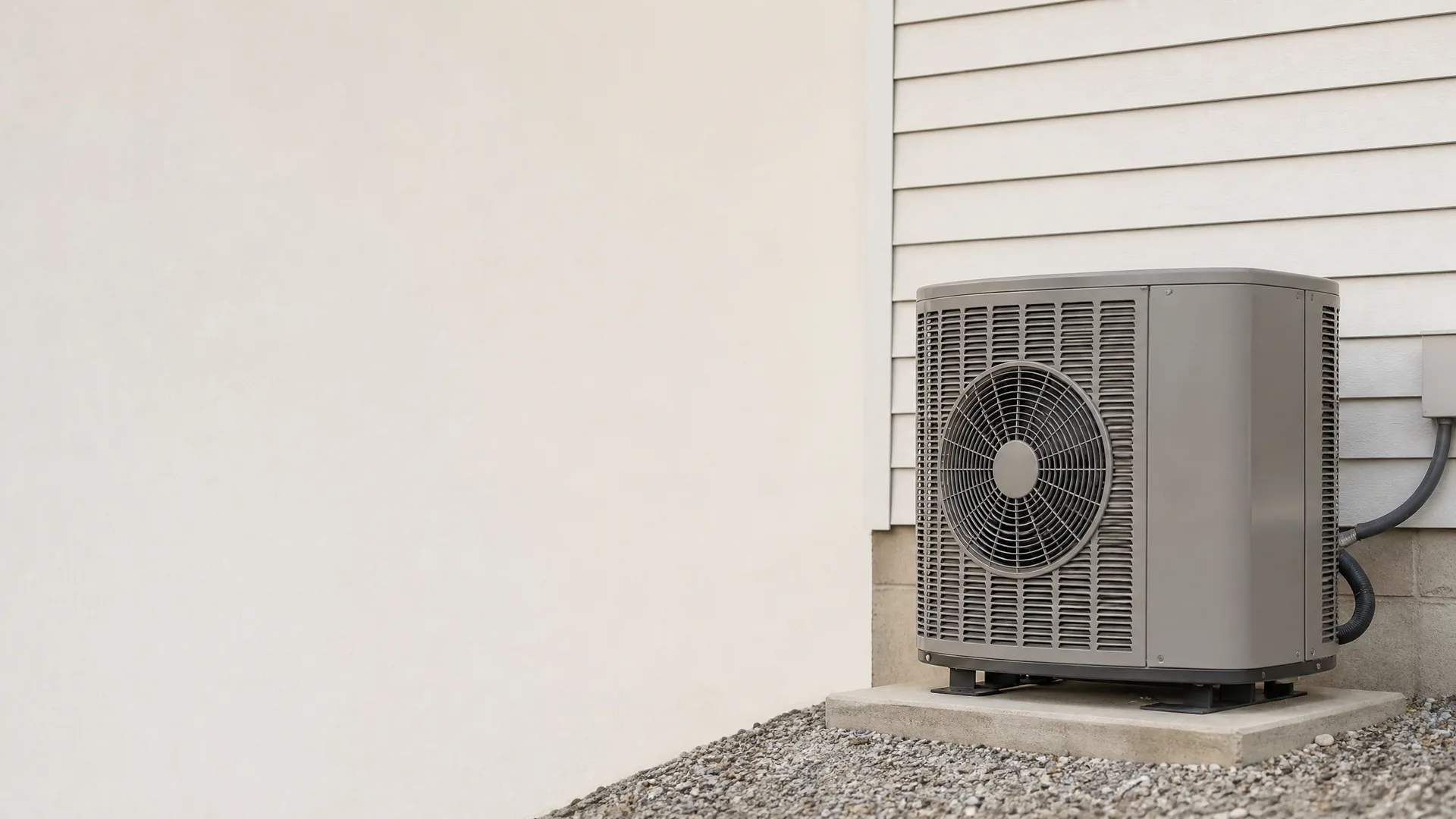
A gray outdoor condenser unit on a concrete pad beside a light green lap-sided house, with a wall-mounted electrical disconnect box, mulch bed with shrubs, river rock, and a paved walkway in the foreground.

Running the way it should

The outdoor unit sits clear on its pad, coil fins open to the air. Nothing blocking the sides, no ice built up on the coil. Heat pumps like this pull warmth from outside and move it in all winter, switching to emergency heat only if something goes wrong.

An outdoor air conditioner condenser unit on a concrete pad beside a house with beige vinyl siding, with a gray electrical disconnect box and insulated refrigerant lines on the wall and river rock to the right.

Coil clogged, switch tripped

Dirt and debris have packed into the coil fins on this one, so outside air can't move through it. A heat pump working that hard against a blocked coil will often trip into emergency heat and stay there until the coil gets cleared and it's reset.

Emergency Heat vs. Normal Operation

Emergency heat

  • This runs on electric heat strips or a furnace instead of the outdoor unit, so it costs more to run than the heat pump does.
  • It's meant for short stretches, like a hard freeze or while a technician is waiting on a part, not for the rest of the winter.
  • You or the thermostat switched it on, or the heat pump put itself there because it sensed it couldn't pull heat from outside.
  • It can heat the house fine through a cold snap, which is why some homeowners don't notice anything is wrong for weeks.
  • Nothing is cycling outside while this runs, so the outdoor coil gets no chance to clear itself of ice or debris.

Normal heat pump operation

  • The outdoor unit runs steadily, pulling warmth from the outside air even when it's cold, and moving it inside.
  • It costs less to run than emergency heat because it's moving heat rather than generating it with resistance coils.
  • It switches to emergency heat on its own only when the outdoor unit can't keep up, like during a deep freeze or a defrost cycle.
  • The outdoor coil stays clear of ice under normal operation, with the defrost cycle handling any frost that builds up.
  • Once whatever tripped the switch is fixed, the system should go back to pulling heat from outside instead of running on backup.
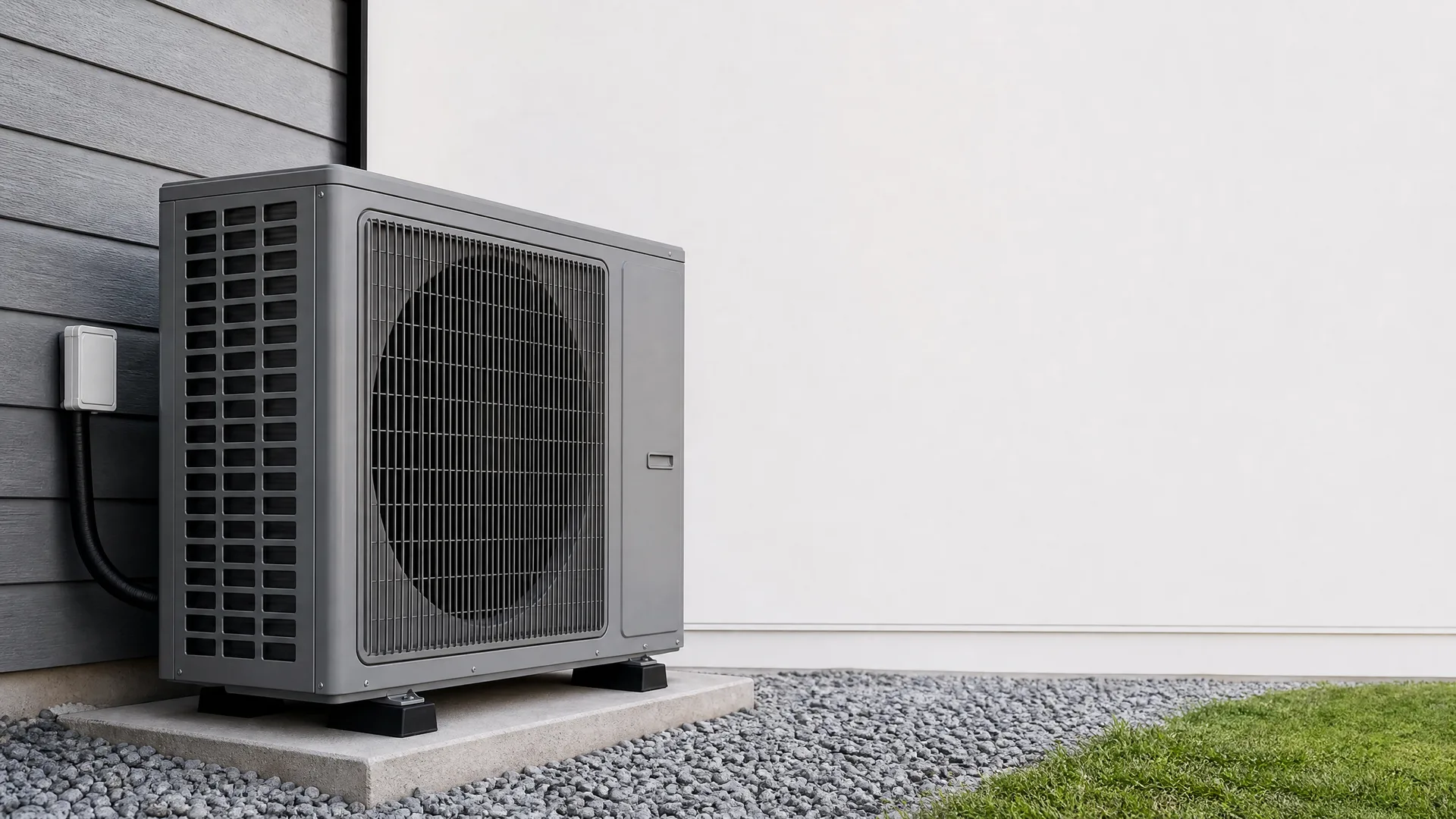
A gray outdoor heat pump unit on a concrete pad beside a house with dark horizontal siding and a plain white wall, surrounded by gray gravel next to a strip of grass.

What trips the switch

A heat pump moves heat by running refrigerant through the outdoor coil, pulling warmth out of air that feels cold to you. Below a certain outdoor temperature, that gets harder, and some systems switch to emergency heat on their own as a safeguard rather than let the house go cold. Ice on the coil does the same thing, since ice blocks the coil from pulling in any heat at all. Either way, the switch is the system protecting the house, not fixing itself.

A gray outdoor heat pump unit on a concrete pad over gravel, beside a house with horizontal siding and an adjoining light stucco wall.

Why the strips cost more

Electric heat strips make heat by resistance, the same way a toaster does, and that takes a lot more electricity than a heat pump moving heat that already exists outside. A furnace burns gas instead, which is why most homes in Shawnee County have one as backup. Either way, a system stuck on emergency heat through a stretch of cold weeks runs up a bill well past what the heat pump would have used doing the same job.

Why won't my heat pump switch back from emergency heat?

You flipped the switch back to normal, or the system never did it on its own, and nothing changed. The outdoor unit still isn't running and the backup heat is still carrying the whole house. In Shawnee County winters that can mean days of higher electric use before anyone looks at it, so it's worth knowing what actually has to happen for the system to switch back on its own.

It stays on emergency heat until the outdoor unit can run again

The thermostat switch is just a request. The system only leaves emergency heat when the outdoor unit is able to take over, and something is stopping that. A frozen coil needs to thaw, which can take hours even after the ice is gone from view. A tripped sensor or a fault code needs to clear, and some won't clear until a technician resets them. A stuck contactor or a failed compressor won't let the outdoor unit start at all, no matter what the thermostat says. Flipping the setting back and forth doesn't fix any of that. If the outdoor unit hasn't kicked on after a day of normal temperatures, something in it needs to be found and fixed before the switch means anything.

A woman in a gray turtleneck sweater stands by a window looking outside at snowy ground, with a dimly lit living room containing a sofa, shelves, lamp and a lit candle behind her.
A woman in a cream cable-knit turtleneck sweater stands in a warmly lit living room with a fireplace and shelves behind her, looking out a window toward snow-covered trees and a railed deck.
A woman in a cream knit turtleneck sweater stands by a window looking out at snow, with a lit fireplace, sofa and lamp in the room behind her.
A woman in a gray knit sweater sits by a window looking out at falling snow, with a dimly lit living room containing a sectional sofa, pillows, a lamp and houseplants behind her.
A gray outdoor condenser unit on a concrete pad beside a house with horizontal lap siding, connected by conduit and lines to a wall-mounted disconnect box, with a shrub and gravel bed to the left.
The outdoor unit sits clean on its pad, coil fins open, line set running up to the disconnect with nothing iced over or packed with leaves.
An outdoor air conditioner condenser unit on a concrete pad beside a light gray vinyl-sided house, with an electrical disconnect box and conduit on the wall and bare soil in the foreground.
Here the coil is hidden behind growth and debris at the base, the kind of blockage that keeps the unit from pulling heat and pushes it into emergency heat.
A bearded man in a plaid flannel shirt sits indoors looking out a window at snow-covered trees, with a steaming mug on the sill and wooden kitchen shelves behind him.
A bearded man in a navy T-shirt sits on a light-colored couch indoors, smiling while looking down at a laptop screen in the foreground, with a framed picture and a potted plant blurred behind him.

Find a heat pump repair pro in Shawnee County

A heat pump stuck on emergency heat is running your backup strips or furnace around the clock, and in a Shawnee County cold snap that shows up fast on the power bill. The fix means someone checking the outdoor unit itself: the coil, the defrost board, the reversing valve, whatever stopped it from switching back on its own. That's not a call you want to make five times to five different companies, explaining the same thing each time and then sitting with quotes that don't match up. A contractor who takes calls like this already knows what to check first and can tell you quickly whether it's a stuck valve, a failed sensor, or something simpler. Getting matched with one means you stop hunting for who's available and who covers Topeka, and start with someone already headed your way. Your house is running on backup heat right now. That's fine for a night, not for the rest of the winter.

Every day the outdoor unit sits idle, the electric strips or the furnace are carrying the whole house by themselves. That's a bigger load than a heat pump running a Topeka winter the way it's meant to.

Call around to a few contractors, explain the same problem each time, then sit with quotes and try to compare them. Or skip that and get matched with one who already knows what emergency heat that won't release usually means.

Power here costs 14.90 cents per kilowatt-hour

At 14.90 cents per kilowatt-hour, every hour those electric strips carry your house instead of the heat pump adds up fast. A heat pump moving heat costs less to run than one heating it outright, which is exactly what emergency heat is doing right now.

EIA-861 2025

Leaving it running as is

The heat strips or furnace will keep the house warm tonight and tomorrow night. There's no cold snap that catches you off guard, and nothing about the house changes in the short run. But that backup system was built for a hard freeze or a day or two of waiting on a part, not for carrying the whole house through the rest of winter. The longer the outdoor unit sits idle, the more those strips run, and the more it shows up on the next power bill.

Getting the outdoor unit looked at

A technician checks the coil, the defrost board, and the refrigerant charge to find out why the system won't move heat the way it should. Once that's fixed, the heat pump goes back to doing the cheaper work and the backup heat goes back to being backup. It means scheduling a visit and being home for it, but it's the only way the switch flips back on its own instead of staying stuck through a Shawnee County winter.

How cold does it get here, and how long is the heat pump working

  • Winter nights average 22°F

    Winter nights here drop that low often. A heat pump stuck on backup heat during a stretch this cold is leaning on the strips or furnace, not the outdoor unit.

  • Heat runs October through April

    Seven months of the year, this system is the one keeping the house warm. That's a long stretch for emergency heat to be covering instead.

  • Cooling runs May through September

    Five months of cooling means the same outdoor unit works most of the year, which is more time for ice, debris or a worn part to catch up with it.

NOAA nClimDiv 1991-2020

Where this leaves you

  • A heat pump stuck on emergency heat has stopped pulling warmth from outdoor air and is running on strips or a furnace instead.
  • The outdoor unit needs a look, usually the coil, the defrost board, or the refrigerant charge, before it will switch back on its own.
  • Leaving it alone through a Topeka winter means higher bills now and a system that still needs the same repair later.
  • Getting matched with a contractor means skipping the search, the round of calls, and explaining the same problem more than once.
  • A contractor who takes the call already knows what you've found: which unit it is, what it's doing, and what to check first.
  • The outdoor unit either comes back on or it doesn't, and that answer settles what's actually wrong with it.

The heat pump switched itself to emergency heat because the outdoor unit stopped moving warmth the way it should. Ice on the coil, a defrost board that isn't cycling, a refrigerant charge that's low, any of those will do it. Until someone looks at the outdoor unit itself, the strips or the furnace are carrying the house, and that costs more than a heat pump running the way it's built to. Nothing changes that on its own. The switch back to normal happens when whatever tripped it gets fixed, not before.

That part doesn't change whether you handle it this week or next month. What changes is how much it costs to get there and how long the backup system carries the load by itself. A Topeka winter doesn't let up long enough for that to go unnoticed on the bill.

Finding someone to look at it is its own job, separate from the repair. It means searching for a contractor who works on heat pumps, calling a few, telling each one the same thing about what the system is doing and what you've already checked, then sorting through what they quote before picking one. Getting matched with a contractor skips that. The contractor who reaches out already has what you've found here: which unit, what it's doing, what's been ruled out. That's the part this page settles. What's actually wrong with the outdoor unit is the part that still needs someone standing in front of it.

A gray outdoor heat pump unit mounted on a concrete pad beside a dark horizontal-slat clad house wall, with gravel ground and shrubs nearby.

The right pro for this job

Step 1 of 3: Equipment