
Running clean
A heat pump with a clear coil and a clean grille pulls heat from outside air the way it's supposed to. Less strain on the compressor, less reliance on backup heat, and a lower bill on the cold mornings in between.
Send the form and the search for an installer is over.
Hand it overLeavenworth winters get cold enough that it's a fair question. You've got a heat pump, or you're thinking about one, and you want to know if it can actually carry the house when it's 20 degrees outside instead of just taking the edge off. Most of your neighbors heat with gas, so there isn't always someone next door to ask.
A heat pump moves heat from the outside air into your house, and it does that well down into the 30s and often lower. The trouble starts when Leavenworth gets a real cold snap and the outside air has less heat left to pull from. At that point the unit runs longer and puts out cooler air at the vents, and on the coldest nights it needs a backup heat source, usually electric strip heat or a gas furnace paired with it, to keep the house at temperature. A heat pump sized and installed for this area, with that backup wired in correctly, will keep you warm all winter. One without it will fall behind on the worst days.
Heat pump pulls heat from outside air into the house.
Outdoor air gets too cold for the heat pump alone.
Backup heat kicks in to cover the gap.
Thermostat blends both sources until the air warms back up.
Winter nights average 23°F
Nights this cold are when backup heat matters most. A heat pump alone starts losing ground somewhere above this, so the gap is real, not occasional.
Heat runs October through April
Seven months is most of the year. Whatever system you run has to hold up through that stretch, not just the worst week of January.
Cooling runs May through September
Five months of cooling means the same equipment, run as a heat pump, is doing double duty most of the year.
NOAA nClimDiv 1991-2020
On a cold morning here, the house will still feel warm, but you'll hear the backup heat kick on more than you'd expect, and that's the part that costs you. Electric backup heat draws a lot more power than the heat pump does on its own, so a stretch of nights in the teens or single digits shows up on the bill the next month. Most homes in Leavenworth heat with gas, so your heat pump is already working against a system that wasn't built around it the way a gas furnace is. If the backup heat is sized wrong, or the heat pump has lost some capacity, you'll notice the air coming out cooler than it should, rooms that won't quite catch up, or the system running long stretches without shutting off. None of that means the equipment is failing. It means the balance between the heat pump and the backup isn't set up for what this county's winters actually ask of it, and that's worth having someone check before the next cold snap.


A heat pump doesn't burn anything to make heat. It moves heat that's already in the outdoor air into your house, and that's a harder job on a cold January night than it is in November. The compressor runs longer to pull the same warmth out of colder air, so you'll hear it cycle more. Every so often the outdoor unit goes into defrost to clear frost off the coil, and during that stretch the system is borrowing heat, not supplying it, which is normal and short. Refrigerant charge matters more here than most people think. If the charge is low, you won't notice it in July, but in winter it shows up as a house that never quite feels warm enough. Check that the thermostat hasn't been switched to emergency heat by accident, since that setting shuts the heat pump out entirely and runs backup heat on its own, which costs more to run. And if snow or ice is packed against the outdoor unit, give it room. It needs open air on every side to pull in the heat your house needs.


A licensed installer who works in Leavenworth County gets your project.
Send the form and stop researching installers for the new heat pump.
It costs nothing to send, and you don't have to hire anyone.

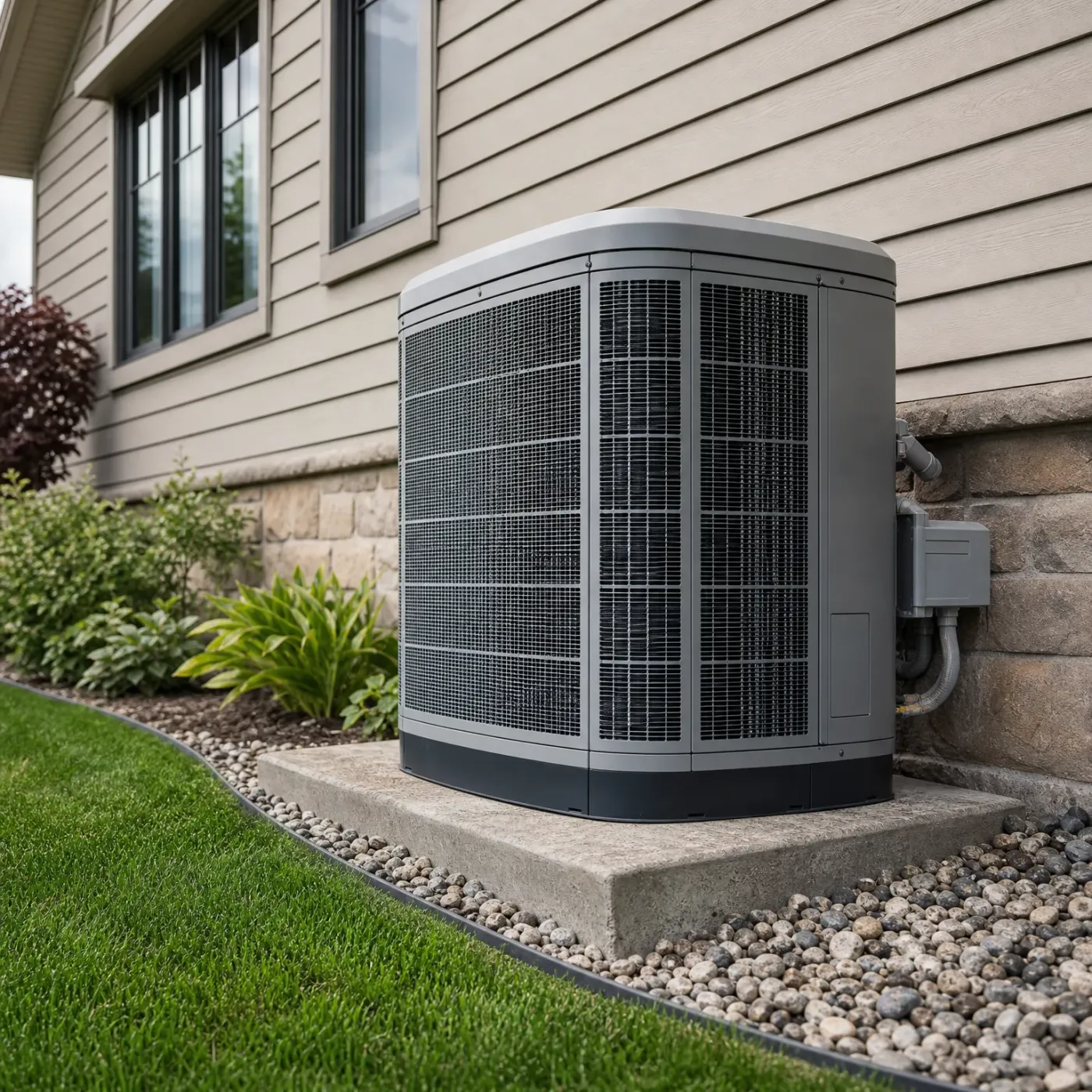
A heat pump with a clear coil and a clean grille pulls heat from outside air the way it's supposed to. Less strain on the compressor, less reliance on backup heat, and a lower bill on the cold mornings in between.

Dirt on the fins blocks the airflow the unit needs to pull heat from outside. It'll run longer to do the same job, lean on backup heat sooner, and wear down faster over a Leavenworth winter.
You might hear the outdoor unit running almost constantly on the coldest days, or notice the air from the vents feels cooler than usual even though the house holds its temperature. Some rooms may lag behind the thermostat setting, especially ones farthest from the unit. You might hear a click and a change in sound as backup heat kicks in, more often than you expected when you first got the system. If the outdoor unit looks iced over for long stretches, or the house struggles to recover warmth after a cold night, the system is leaning harder than it should. Left unchecked, the backup heat picks up more of the load than it was meant to, and that shows up squarely on the power bill.

This is a heat pump doing its job. The coil stays clear, the conduit and disconnect are hooked up tight, and the unit pulls heat from the outside air without a fight. On a cold Leavenworth morning, this is what keeps backup heat from running more than it has to.

Same setup, same wall, but something here is costing you. A weak capacitor, a low charge, a coil losing its grip on the cold air. The unit keeps running, but it's leaning harder on backup heat to make up the difference, and that shows up on the bill before it shows up anywhere else.
At 14.29 cents per kilowatt-hour, running the heat pump itself stays reasonable since it moves heat rather than generating it. The cost shows up when backup heat takes over on the coldest nights, because that backup draws far more power to warm the same house.
EIA-861 2025


A heat pump works in Leavenworth. It won't work alone, and it isn't supposed to. For most of the year it pulls heat from outside air and carries the house by itself, no backup needed. Once outdoor temperatures drop into the range Leavenworth sees most winters, the heat pump needs help finishing the job, and backup heat covers that gap automatically. That's not a flaw in the system. It's how the system is designed to run here. Where people get surprised is the bill, and that almost always traces back to backup heat running more than it should, usually because the coil is dirty or the unit was never sized for this climate in the first place. A heat pump sized correctly for a Leavenworth home, installed with the right backup source, and kept clean going into winter will keep the house warm through the coldest nights the area gets. The equipment matching the house matters as much as the outdoor temperature does. A unit that's too small for the square footage leans on backup heat constantly, even on mild days, and a unit that's sized right barely needs it outside of the hardest cold snaps. If you already have a heat pump and it's keeping up, that's the system doing what it's built to do. If it's struggling, the fix is usually in the sizing, the installation, or the upkeep, not in whether a heat pump can handle a Kansas winter at all. It can.




One request and it's handed off
One installer gets your project, so there's no bidding war over it.
