
When to replace a heat pump in Leavenworth, KS
A heat pump in Leavenworth is usually worth replacing once it's about 15 years old, needs a repair that costs close to a third of a new system, or can't keep the house warm on the coldest days anymore. That last one matters here more than people expect, because once a heat pump has to work hard against real cold for months at a time, a weak unit starts leaning on its backup heat constantly, and your power bill shows it. Frequent breakdowns are another sign, especially if the same part keeps failing or the system short cycles. If yours is newer and the problem is a single failed part, repair likely makes more sense. If it's old enough to be losing refrigerant, cycling oddly, or running up bills every winter, replacing it now costs less than nursing it through another one.


A heat pump doesn't make heat, it moves it. A reversing valve lets the same system pull warmth from outside air in winter and push heat back out in summer. That works fine most of the year, but once the outdoor temperature drops into the 30s, there's less heat in the air to grab, and a backup source, usually electric strips or a furnace, has to pick up the slack. You might see the outdoor unit covered in frost on a cold morning. That's normal. The system briefly reverses itself and slows the fan to melt it off, then goes back to work. What's worth watching is how often the backup heat is running once the weather turns. If it's carrying most of the load, the heat pump isn't doing its job anymore, and that's usually the compressor losing capacity with age, not a bad thermostat setting. The same goes for a unit that cycles on and off every few minutes. That short cycling points to a compressor or refrigerant problem, the kind that gets worse, not better, on its own.
How a heat pump actually works
- Your heat pump moves heat from the outside air into the house, so it depends on a reversing valve to switch between heating and cooling.
- Below about 35 to 40 degrees, the outdoor coil can't pull enough heat from the air, so a backup heat source kicks in to carry the load.
- A frosted-over outdoor unit isn't automatically broken; a normal defrost cycle melts that frost by briefly reversing the system and running the fan slower.
- If the backup heat strip or furnace is running most of the time once it gets cold, the heat pump itself may no longer be pulling its share.
- Compressors lose capacity as they age, so an older unit can still blow warm air and still fall short on the coldest nights.
- A heat pump that short cycles, turning on and off every few minutes, is often a sign the compressor or the refrigerant charge is failing, not just a thermostat issue.




Done looking for a heat pump pro
Skip collecting and comparing quotes for the new heat pump.
One request and the search for a pro is handled.
There's no charge for the request.
Is your heat pump keeping up this winter?
A heat pump that's struggling shows itself in small ways before it quits outright. The outdoor unit runs almost constantly on cold nights instead of cycling off. Rooms that used to feel even now have cold spots, and the air coming out of the vents feels cool rather than warm. You might hear the backup heat kick on more often than it used to, which shows up on the power bill. Ice building up on the outdoor coil that doesn't melt off during the defrost cycle is another sign. If the system can't keep up, pipes in unheated spaces are at more risk of freezing once the cold settles in for good.
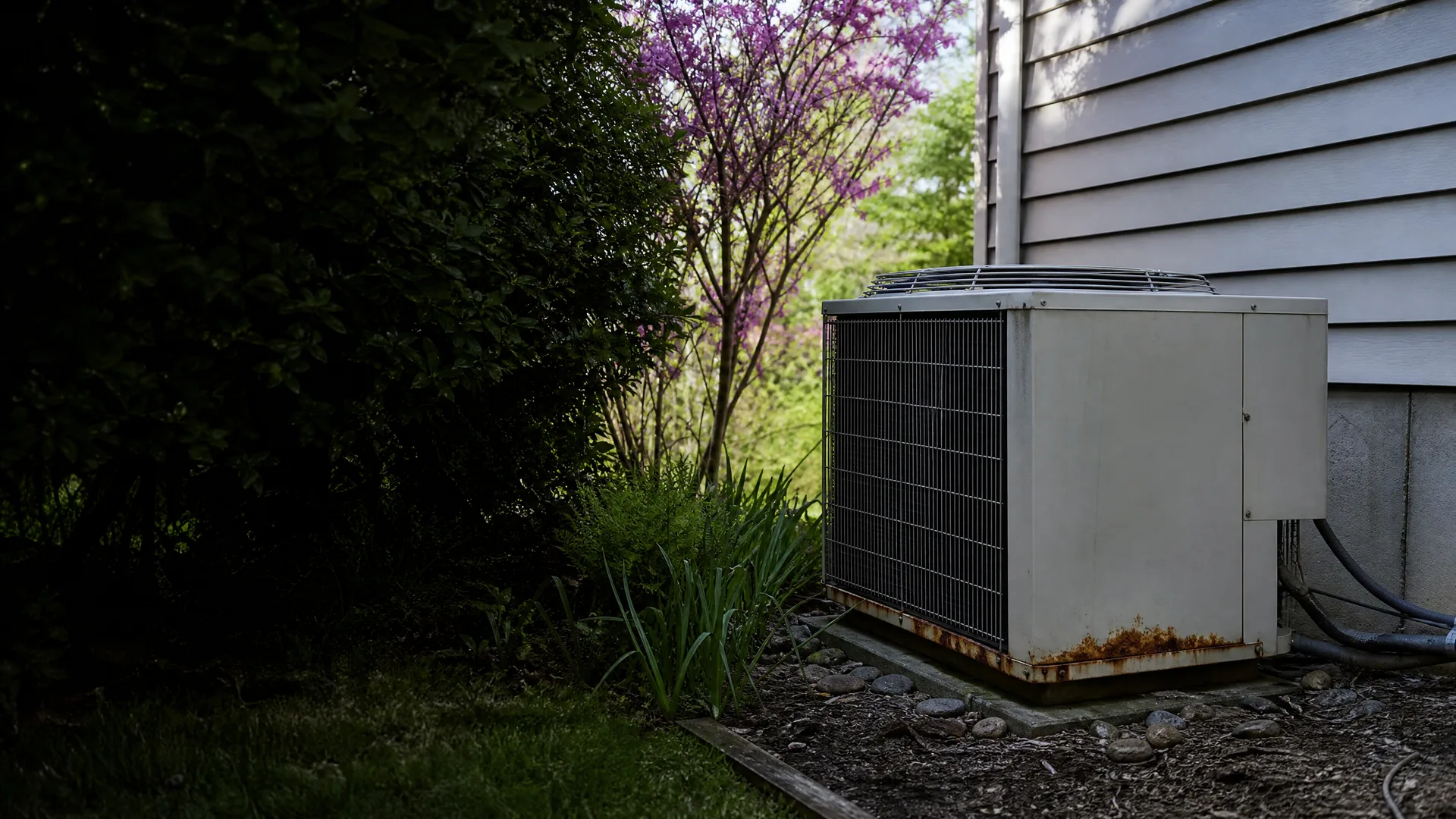
You're out checking the yard on one of the first warm days of March, the kind that gets Leavenworth thinking about yard work again. You walk past the outdoor unit on the side of the house and notice the rust this time, a line of it along the base where the metal meets the pad. It wasn't there last spring, or you hadn't looked close enough to see it. You crouch down and run a finger along it. The unit still runs. It kept the house warm enough through the cold stretch in January. But standing there, you find yourself doing the math on how many winters are left in it.
How hard does a heat pump work here year-round?
Winter nights average 23°F
Overnight lows near 23°F mean the backup heat kicks in often, and that's extra strain and extra cost a heat pump alone can't cover.
Heat runs October through April
Seven months of heating is more than half the year. A unit on its last legs doesn't get much rest before the next cold stretch starts.
Cooling runs May through September
Five months of cooling adds real hours on the compressor every year, on top of all that heating. There's not much downtime in between.
NOAA nClimDiv 1991-2020

Where that leaves you
A heat pump around 15 years old, a repair quote close to a third of what a new system costs, or a house that won't hold heat on the coldest nights: any one of those is reason enough to replace it. In Leavenworth, with winters this long and backup heat picking up so much of the load, waiting rarely makes the decision easier.
If you're at that point, the work left is finding someone to install it right: checking licenses, calling a few companies, explaining the same symptoms over and over, then sitting with quotes trying to tell them apart. That part isn't yours to do. Send the form once and that search is handled for you, so what's left is the part that actually matters, getting the new system in before the next cold snap finds the old one gone.

It's off your list after this
Skip the round of in-home estimates for a new heat pump.
You only hire the pro if you want to.