










Profile view of a bearded man wearing a dark green baseball cap and a dark gray T-shirt against a plain light background.

Why your heat pump fan won't spin in Kansas

Step 1 of 3: Equipment

A heat pump fan that won't spin outside usually means the motor has failed, the capacitor that starts it has gone bad, or the unit has lost power at the breaker or disconnect. In Kansas winters, ice buildup on the outdoor coil is another common cause. The system runs its defrost cycle to melt that ice, and if the defrost control board has failed, the fan can stay stuck off while the unit tries to clear itself. Sometimes the fix is simple, a tripped breaker or a disconnect switch bumped loose. Other times the motor itself has burned out, and running the system further can damage the compressor along with it. Either way, a heat pump that isn't moving air outside isn't cooling or heating your home right, and summer here gets sticky fast once that stops working. It's worth having someone look at it before you run the system at all.

A smiling bearded man in a dark green hooded jacket and blue t-shirt sits on a couch in a living room with shelves, a potted plant, and a bowl of popcorn on a wooden table.
A smiling man in a green long-sleeved shirt sits on a beige sofa in a living room, with a bowl of popcorn in the foreground, a large potted plant and shelving behind him.
A smiling man in a dark blue T-shirt sits on a couch in a dimly lit living room with a bowl of popcorn and a remote on a wooden table, a lit floor lamp and bookshelves behind him, and windows showing greenery.
A smiling bearded man in a dark green long-sleeved shirt sits on a leather couch in a living room, with a bowl of popcorn and a remote control on a wooden table in the foreground.

Behind that still fan is usually one of a few things. The motor itself needs a push from a run capacitor to get spinning, and when that capacitor weakens, the motor can hum and draw power without ever turning. Sometimes the motor windings have burned out entirely, and in that case you might still hear the compressor running while the fan sits dead. Cold weather adds another wrinkle. The system runs a defrost cycle on purpose, pausing the outdoor fan for a few minutes to melt ice off the coil, and that's normal. It's only a problem if the cycle doesn't end on schedule, in which case the fan stays off and ice keeps piling up instead of melting away. Most outdoor units also carry a safety switch that cuts the fan if the motor overheats or pulls too much current, which protects the motor but leaves you with a silent unit. And if a breaker has tripped or the disconnect got pulled, the fan, compressor and defrost board all lose power at the same time.

How the Outdoor Fan Fails

  • The outdoor fan motor has a run capacitor that gives it the jolt to start turning, and a weak one lets the motor hum without moving.
  • If the fan motor windings have burned out, the unit may still make noise at the compressor while the fan itself stays dead still.
  • A defrost cycle in cold weather can stop the outdoor fan on purpose for a few minutes while the system melts ice off the coil.
  • If that defrost cycle fails to end, the fan stays off well past the normal few minutes and ice keeps building on the coil.
  • Many outdoor units have a safety switch that shuts the fan off if the motor overheats or draws too much current.
  • A tripped breaker or a pulled disconnect cuts power to the whole outdoor unit, so the fan, the compressor and the defrost board all go quiet together.
A gray outdoor condenser unit on a concrete pad beside a light green lap-sided house, with a wall-mounted electrical disconnect box, mulch bed with shrubs, river rock, and a paved walkway in the foreground.
Fan spins freely and the coil behind it is clean, moving full airflow through the unit.
An outdoor air conditioner condenser unit on a concrete pad beside a house with horizontal lap siding, with refrigerant lines entering the wall and a shrub on bare soil to the left.
Fan stays still while the coil sits caked with debris, dirt and buildup blocking the airflow it needs.
  1. Thermostat calls for heat or cooling and sends power to the outdoor unit.

  2. Contactor closes, feeding power to the fan motor and compressor.

  3. Capacitor sends the motor a jolt strong enough to start spinning.

  4. Fan blade turns and pulls air across the outdoor coil.

Fan Won't Spin: What's Running, What's Not

Fan stuck, compressor runs

  • You hear a low hum or buzz from the unit but the fan blade never turns, which points to a bad capacitor or a seized motor bearing.
  • The compressor working without the fan means the outdoor coil gets no airflow, and the unit can overheat and shut itself off on a safety switch.
  • Running it this way for more than a few minutes risks damage beyond the fan motor, since the compressor was built to work with airflow moving across the coil.
  • If the hum stops and starts on its own, the unit may be tripping on a safety limit meant to protect the compressor from running without airflow.
  • This pattern usually means the problem is electrical, in the capacitor or motor itself, rather than something blocking the fan blade.

Fan stuck, whole unit silent

  • No hum, no click, nothing running at all usually means the unit lost power before it ever reached the fan or compressor.
  • Check the breaker and the disconnect box next to the outdoor unit, since either one tripping or being pulled out will stop the whole system cold.
  • A tripped breaker that resets and trips again points to a short somewhere in the unit rather than a one-time overload.
  • If the breaker holds and the disconnect is seated but the unit still won't run, the contactor that feeds power to the fan and compressor may have failed.
  • Ice built up over the coil and fan housing in winter can also leave the whole unit dead until it's cleared and the cause is found.
A woman in a dark gray sweater reclines on a light sofa with eyes closed and a slight smile, under a textured gray blanket with an open book resting on her lap, with a lit table lamp and plant in the background.
A smiling bearded man in a navy crewneck sweater sits at a dinner table with a glass of red wine, plates and glasses in the foreground, in a dimly lit room with a lamp and framed picture behind him.
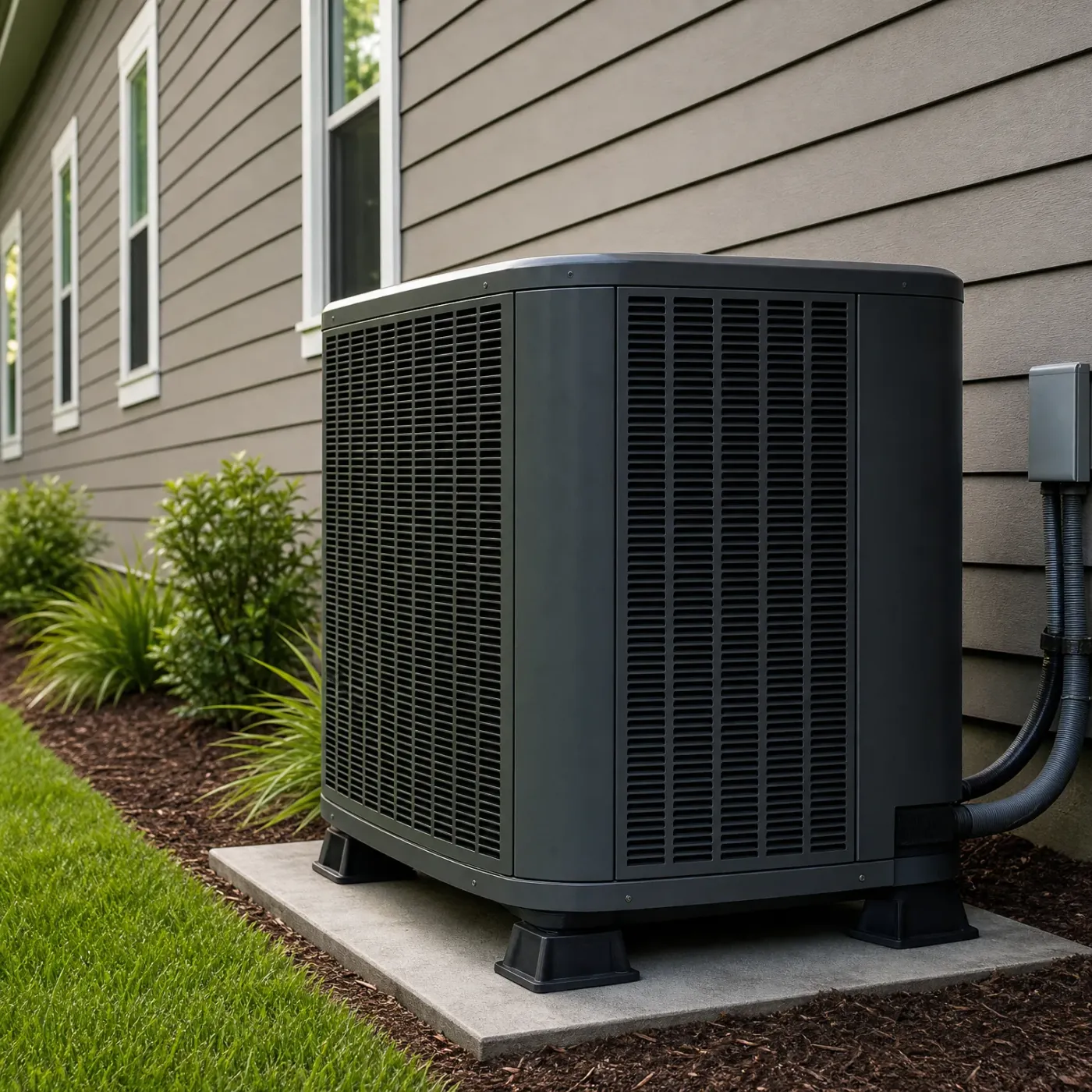
A dark gray outdoor condenser unit on a concrete pad beside a house with horizontal lap siding, with mulch beds, shrubs, and lawn nearby and conduit running to a wall-mounted box.

A local pro for your heat pump repair

Send the request today and let a heat pump pro reach out to you.

Tell a local repair pro what your heat pump is doing.

Get my match

You're not committing to anything by asking.

Is your heat pump blowing warm air or running nonstop?

Stand near the outdoor unit and listen. If you hear a hum or buzz but the fan blade sits still, or the whole unit is silent when it should be running, that matches what's above. Inside the house you'd notice the air from the vents isn't warm, or the system runs and runs without the house catching up. Check the breaker and the disconnect near the unit first, since a tripped breaker looks the same as a failed motor from inside the house. Left alone through a cold stretch, a heat pump that can't move air outside will lean hard on backup heat or stop keeping up at all, and the power draw climbs while the house stays cold.

A gray outdoor condenser unit on a concrete pad beside a house with horizontal lap siding, connected by conduit and lines to a wall-mounted disconnect box, with a shrub and gravel bed to the left.

Running the way it should

The fan spins freely and the coil behind it is clean. Air moves through the grille without resistance, and the unit sits on its pad without straining. This is what a heat pump looks like when the motor and capacitor are doing their job.


An outdoor air conditioner condenser unit on a concrete pad beside a house with horizontal lap siding, with refrigerant lines and a gray electrical disconnect box on the wall, surrounded by bare dirt.

Caked up and struggling

The coil guard and fan grille here are packed with dirt and debris. Even a healthy motor has to work harder to pull air through buildup like this, and heavy buildup over time is something a repair call will catch before it causes a bigger failure.

Power costs 14.44 cents per kilowatt-hour statewide

At 14.44 cents per kilowatt-hour, a heat pump stuck trying to start puts real strain on your power bill even if the fan never turns. A seized motor or dead capacitor can pull current without doing any work, so the meter runs while your house sits without heat or air.

EIA-861 2025 statewide residential average

A smiling man in a denim shirt and white t-shirt stands in an open dark doorway of a stucco house, facing a woman with long brown hair and a green jacket seen from behind in the foreground.

A fan that won't turn has a reason, and it's fixable

A dead fan on your outdoor unit comes down to a handful of parts: the motor, the capacitor, the power feeding it, or ice sitting on the coil behind it. None of those fix themselves, and the longer the fan sits still while the compressor keeps running, the more strain the rest of the unit takes on.

A licensed contractor can listen to what the unit is doing, check the capacitor and motor, and tell you which one gave out. Once you send the form, you're not the one tracking down who's available or what the problem might be. A contractor matched to your situation takes it from there and reaches out to you directly.

A gray upholstered sofa with a matching cushion sits beside a potted plant and a wooden table holding a small green plant in a stone pot, near a curtained window.
A lit ceramic table lamp with a linen shade sits on a round wooden side table with a small vase of greenery and a dark shallow bowl, beside a beige upholstered sofa with a cushion and knit throw, below a framed artwork on a pale wall.
Corner of a beige linen sofa with a large woven cushion and a fringed knit throw, beside a potted leafy tree in a woven basket against a neutral wall.
Sunlit interior corner with a wood-framed armchair with beige cushions and a striped pillow, a leafy plant in a tall ceramic pot, a window with wood sill showing green foliage outside, and dark wood flooring.
A lit black path light beside a stone walkway leading to a dark front door of a white clapboard house, with shrubs and flowering plants in the bed at dusk.
A covered porch at dusk with a wooden front door, a lit lantern wall sconce on gray horizontal siding, a black rocking chair with a cream throw, a potted white flowering plant, a coir doormat, and a window showing a lit interior lamp.

Get the right pro for your heat pump

Get the heat pump repair search off your mind today.

Request a pro

It costs nothing to send, and you don't have to hire anyone.





