
Heat pump frozen over in Emporia, KS

Step 1 of 3: Equipment

Why is my heat pump frozen over?

A heat pump covered in ice looks broken, and your first instinct might be to turn it off and wait for it to melt. In Lyon County winters, that ice can build up fast once temperatures drop, and it's not always obvious whether this is normal operation or a sign something is wrong. Before you decide what to do, it helps to know what's actually happening behind that frost.

A little frost is normal. A thick coat of ice is not.

Heat pumps pull heat out of cold outside air, and that process chills the outdoor coil enough to collect frost, the same way a freezer does. On its own, a thin layer isn't a problem. The unit is built to notice this and run a defrost cycle, switching briefly into cooling mode to melt it off before going back to heating. When you see a heavy buildup that doesn't clear on its own, something is stopping that cycle from working. That's usually a fan that isn't running, a refrigerant charge that's low, or a sensor that isn't telling the system the coil needs defrosting. Cold nights in Lyon County put more demand on that defrost cycle than mild ones, so a fault that goes unnoticed in October can turn into a solid block of ice by January.

A gray outdoor condenser unit on a concrete pad beside a light-colored lap-sided house, with a wall-mounted disconnect box, refrigerant lines, mulch bed and shrubs, and a concrete walkway in the foreground.

Normal defrost cycle

A thin coat of frost on the coil during a cold snap isn't a problem. Your heat pump runs a defrost cycle every so often, switching briefly to cooling mode to melt it off, and you'll see steam rise from the outdoor unit while that happens. Once it's done, the coil is clear and the unit goes back to heating.

An outdoor condenser unit sits on a concrete pad beside a house with horizontal vinyl siding, with a gray electrical disconnect box and conduit on the wall and a shrub at left.

Frozen solid

Ice built up thick across the coil, over the fan, or around the lines is a different matter. That means the defrost cycle isn't kicking in or isn't keeping up, often tied to a stuck reversing valve, a failed sensor, or low refrigerant. Left alone through a Lyon County cold snap, the unit can't pull heat from the air at all.

Call a Tech or Wait It Out

Call for repair now

  • Ice that doesn't clear after a few hours means the defrost cycle isn't working or the system is low on refrigerant.
  • If the outdoor fan isn't spinning while the coil is iced over, the fan motor has likely failed and the unit needs a technician.
  • A heat pump that keeps icing up night after night in Lyon County's cold stretches is losing heat it should be delivering to your home.
  • Running a frozen unit for days can damage the compressor, turning a repair into a much bigger job.
  • If you've switched to emergency heat and the strip heat is running constantly, that's a sign the heat pump itself isn't carrying the load.

Let it be for now

  • A light frost that disappears within an hour or two on its own is just the normal defrost cycle finishing its work.
  • If the outdoor fan is running and you see steam coming off the coil, the system is already correcting itself.
  • One cold, damp night with some ice the next morning isn't unusual and doesn't call for a service visit.
  • Brushing snow or ice buildup off the top of the unit by hand is fine and doesn't require a technician.
  • If the house is still holding its temperature and the unit cycles normally once the ice clears, there's nothing to act on yet.
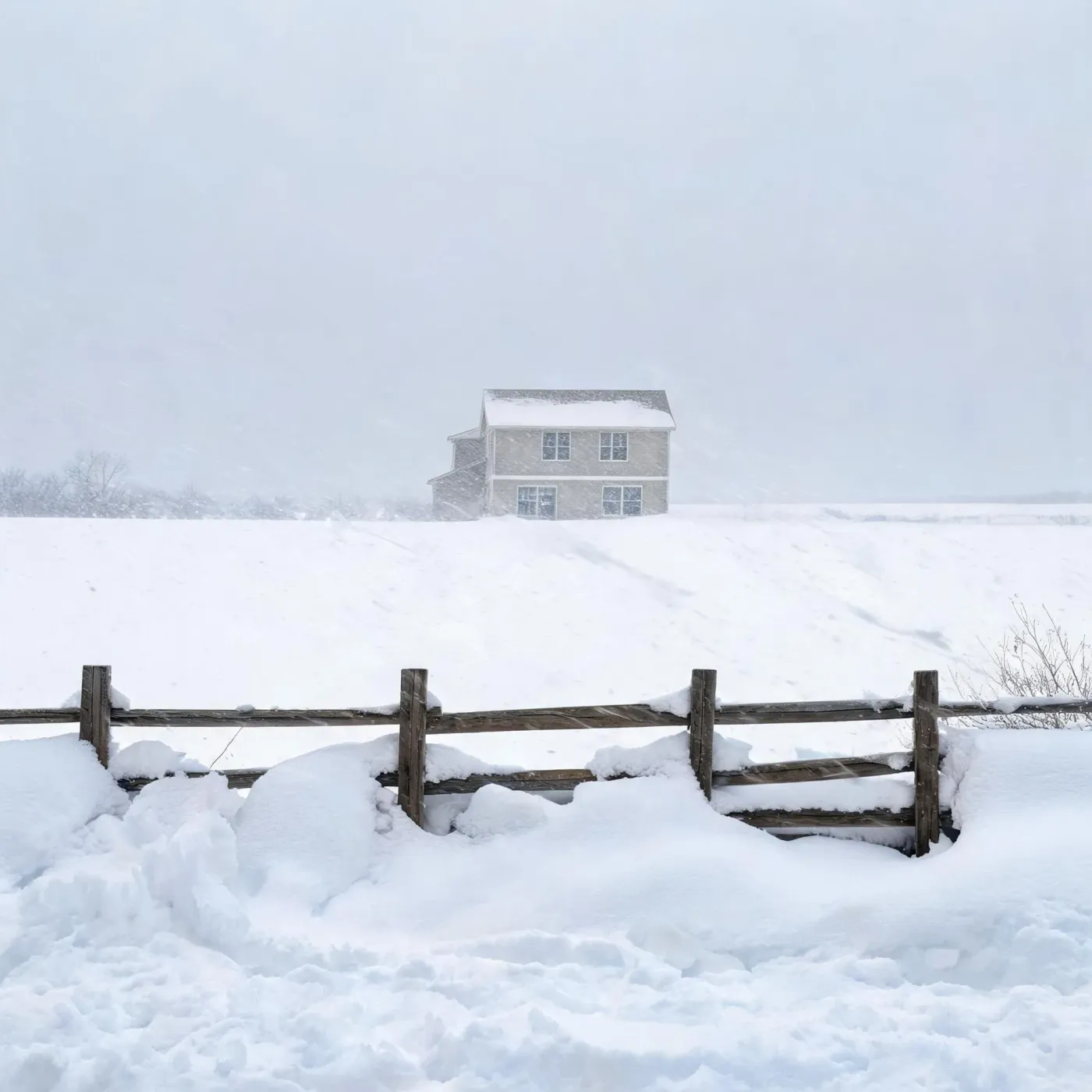
A two-story house with a snow-covered roof stands on a snow-covered field in falling snow, with a partly buried wooden rail fence in the foreground and a pale hazy sky behind.

Winter nights here average 23°F, according to NOAA climate data for Lyon County. At that temperature, your heat pump is defrosting more often, since the coil picks up frost faster in the cold than it can shed it in a normal cycle. That's more opportunities for something to go wrong: a stuck reversing valve, a defrost sensor out of position, refrigerant running low. Any one of those turns a routine frost into a solid sheet of ice that won't clear on its own. If you're seeing that most mornings this time of year, it's worth having someone look at the unit rather than waiting it out, since the cold isn't letting up anytime soon. Getting matched with a contractor who knows this equipment means you're not the one tracking down who's available and who isn't.

NOAA nClimDiv 1991-2020

Matched to your heat pump job

A heat pump that stays iced over isn't going to work itself out, and leaving it alone while you wait on a warmer stretch just gives the coil more time to lose efficiency, or ice up a component that shouldn't freeze at all. With Lyon County nights sitting around 23°F most of the winter, that's not a short wait. Shutting the system off to let it thaw can seem like the safe move, but it also leaves you without heat while you find out if the problem is something simple or something that needs a part replaced. A licensed contractor can tell from the fan, the coil and the defrost cycle itself whether this is a failed sensor, a refrigerant leak or a board that's lost its timing, and get the right repair started instead of another guess. Send the request and that search becomes someone else's job, not yours, while the ice stays right where it is until they get to it.

How defrost actually works

  • The reversing valve switches the system into cooling mode for a few minutes so the outdoor coil can shed frost.
  • A defrost control board reads coil temperature and outdoor temperature to decide when a cycle starts and stops.
  • During defrost the outdoor fan shuts off so heat isn't pulled away from the coil while it's melting the ice.
  • Indoor comfort usually dips slightly during defrost since the system briefly stops delivering heat to pull it from the coil instead.
  • A stuck defrost control board or a failed sensor can keep the system from ever starting the cycle, letting ice build unchecked.
  • Auxiliary heat strips often kick in during defrost to offset the cold air blowing inside while the outdoor unit works on the ice.

Your heat pump isn't guessing when it defrosts. A control board checks the temperature of the outdoor coil against the outdoor air temperature, and when the gap between them says frost is building, it starts a cycle. The reversing valve flips the system into cooling mode for a few minutes, which sends warm refrigerant through the outdoor coil instead of the indoor one. That warmth is what melts the ice. The outdoor fan shuts off during this part, since blowing cold air across the coil would fight the very heat trying to clear it. You'll notice the air coming from your vents cool off a little during this stretch, sometimes enough that the auxiliary heat strips kick on to keep the house from feeling the dip. Once the coil reads clear, the board switches the system back to heating and the fan starts again. The whole thing is supposed to happen on its own, a few times a day at most in weather like this. The failure point is almost always the board itself or the sensor feeding it information. If the sensor reads wrong or the board sticks, the system never gets the signal to start defrosting, and frost that would normally melt off in minutes just keeps building, layer on layer, with nothing to stop it.

A light gray outdoor heat pump unit mounted on a concrete pad beside a house with horizontal lap siding, with refrigerant lines and conduit running to a wall-mounted electrical box, gravel and a leafy shrub nearby.
Clean coil, clear frost, fan spinning without resistance, the system cycling the way it's built to.
An outdoor air conditioner condenser unit on a concrete pad beside a house with horizontal lap siding, with refrigerant lines entering the wall and a shrub on bare soil to the left.
Coil buried under ice and debris with no sign of clearing, the kind of blockage that only gets worse left alone.
  1. Frost builds on the outdoor coil as the heat pump runs in cold weather.

  2. The defrost control board senses the coil getting too cold and starts a cycle.

  3. The reversing valve shifts the system into cooling mode for a few minutes.

  4. Heat pulled from indoor air warms the outdoor coil and melts the frost.

What are you seeing when you walk outside

You go out back and the outdoor unit is wrapped in ice, maybe thick enough that you can't see the coil fins at all. The fan might be stuck, or it might be spinning but doing nothing against the buildup. Inside, the air coming from your vents feels cooler than it should, or the system is running longer than normal to keep the house at temperature. Some homeowners notice a hissing or gurgling sound from the unit, or the heat pump shuts off and won't restart. Left this way during a cold stretch, the compressor can take damage trying to run against a blocked coil, and the house loses heat right when Lyon County nights are coldest.

A gray outdoor condenser unit on a concrete pad beside a house with horizontal lap siding, with an electrical disconnect box and insulated refrigerant lines on the wall, gravel in the foreground and a planting bed at left.

What a working unit looks like

Lines and conduit run clean from the unit up to the disconnect box. No frost on the coil guard, no ice around the base. The fan spins free the moment the system calls for it, nothing dragging or catching against the grille.

An outdoor air conditioner condenser unit on a concrete pad beside a house with horizontal lap siding, with refrigerant lines and a gray electrical disconnect box on the wall, surrounded by bare dirt.

What a frozen unit looks like

Ice or heavy buildup covers the coil guard and fan grille, and you can't see the fins underneath it anymore. A coil this packed isn't shedding anything on its own, and the unit needs a tech to clear it and find out why the defrost cycle stopped working.

A woman with long blonde hair in a light blue shirt leans back on a beige sofa with her eyes closed, in a softly lit living room with cushions and a blurred plant and shelf in the background.
A woman with long dark hair in a gray knit sweater sits on a gray sofa with a cushion, looking toward a window in a living room with framed pictures and a lamp in the background.
A woman with long dark hair in a light grey knit sweater sits on a sofa indoors, looking to her right, with a framed landscape picture, a potted plant and a curtained window behind her.
A woman with long dark hair leans back against a gray sofa with her eyes closed, in a living room with a curtained window, a potted plant, and a dark screen in the background.

Winter nights average 23°F

At 23°F, the coil outside is colder than that just to pull heat from the air, so frost forms fast most nights. Your heat pump needs those defrost cycles to keep working right through the night, not just once in a while.

NOAA nClimDiv 1991-2020

A heat pump that clears its coil on its own every hour or so is doing its job. One that stays wrapped in ice past a full cycle is not, and no amount of waiting in a Lyon County cold snap fixes a bad defrost board, a stuck reversing valve, or a fan that's quit turning. The ice is just what shows up on the outside. What's actually wrong is a part that needs a tech to find it and replace it. Once you send the form, you're not the one tracking down who's free and who answers the phone. That part is off your plate. A contractor who works on heat pumps in this area gets your details and takes it from there, and you go back to checking on the thermostat instead of the coil. Your house still needs heat tonight whether the unit outside is working or not, and that's the part worth getting handled rather than watched.

A living room corner with a beige upholstered sofa, cushion and knit throw, a potted green plant in a woven basket, a framed botanical print on a taupe wall, and a window with foliage outside.
Sunlit room corner with a paned window, sheer cream curtain, a leafy plant in a woven basket on a wood floor, and a textured jute rug.
Sunlit room corner with a white-framed window overlooking green foliage, a wicker basket holding a cream knit blanket on a wood floor, and a woven rug in the foreground.
A woven basket holding folded cream blankets sits in a corner on a wood floor beside a linen curtain and window, with window-frame shadows cast on the beige wall.
Sunlit room corner with a potted variegated plant in a woven basket on a wood floor, a linen curtain beside a multi-pane window showing green trees, a framed artwork at upper left, and a jute rug in the foreground.

A heat pump pro near you

Get the heat pump repair search off your mind today.

Connect with a pro

Asking costs nothing, and the choice to hire stays yours.