Tell us about the job
Takes about a minute. No obligation.
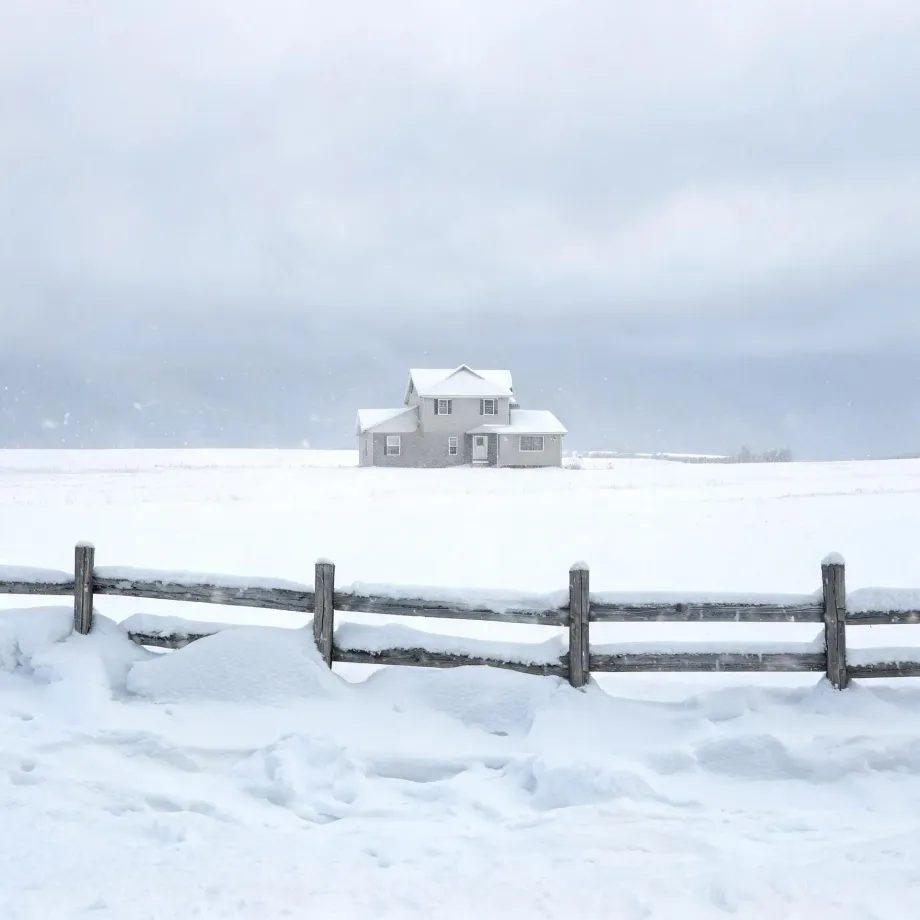
Sizing is the first thing a contractor has to settle before quoting a heat pump installation in Cloud County. Homes in Cloud County, KS run heat about seven months a year, from October through April. A heat pump loses capacity as outdoor temperatures fall, so a unit that tests well on a mild October day may struggle through the coldest part of February. That gap is why a contractor works out the backup heat requirement at install, not after the first cold complaint. The compressor and the reversing valve carry the load through most of the calendar, and an undersized system puts those components under steady pressure from the start.
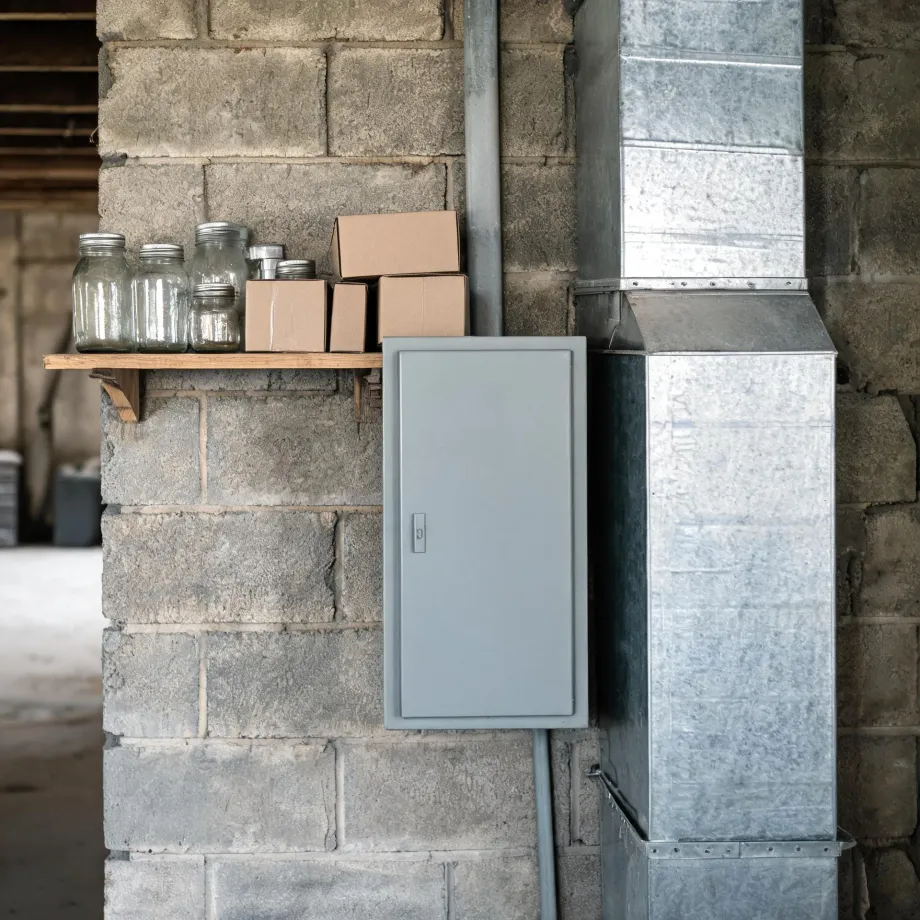
Ductwork laid for a furnace follows the logic of that furnace: trunk sizes, return placement, and static pressure assumptions that fit one kind of heat delivery and not another. Half the homes in Cloud County, Kansas were built in 1953 or earlier (2020-2024 ACS 5-year). A heat pump moves air differently, and what that means for an older home is that the existing duct layout is the first thing a contractor has to assess, before the equipment choice settles. Panels in houses of this vintage were sized for the loads of that era. A contractor quoting a heat pump installation here is pricing the duct and electrical work as seriously as the unit itself.
What a Heat Pump Installation Covers in Your Home
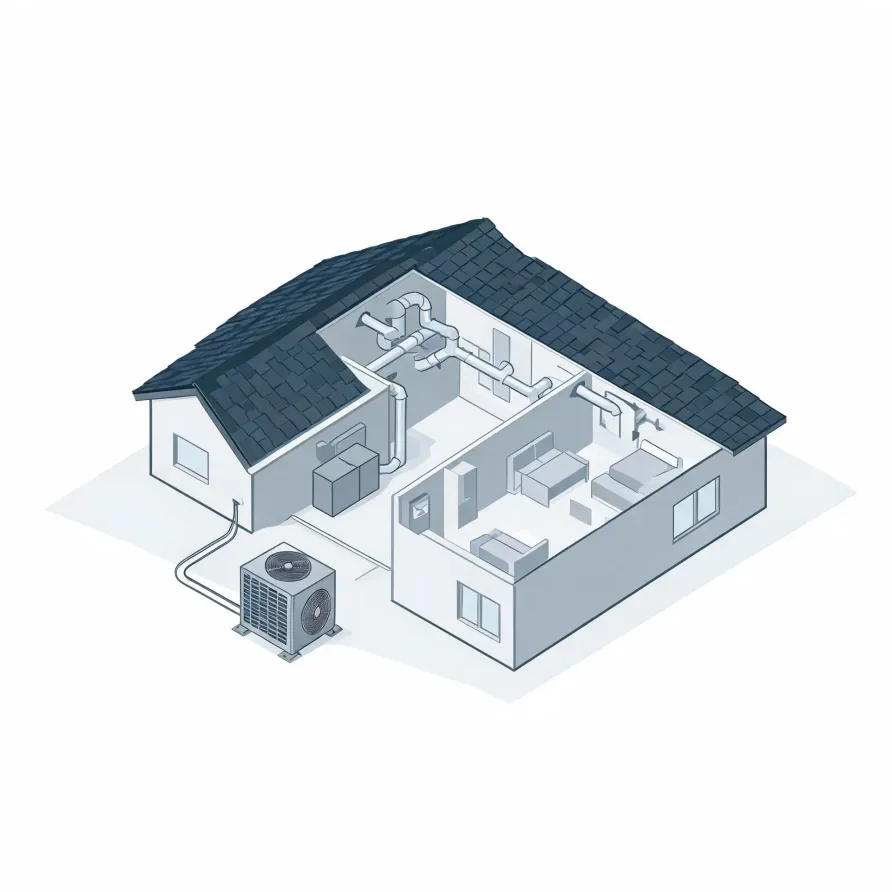
The outdoor unit sits on a pad beside the house and holds the compressor and one set of coils. The indoor air handler mounts in a utility space, a closet, or an attic and moves conditioned air through the home. Together these two pieces are what a contractor physically places and connects during an installation.
A refrigerant line set runs between the two units, carrying the working fluid that lets them exchange heat. A thermostat on an interior wall ties the whole system together, giving you a single point of control. The condensate drain line runs from the air handler to a floor drain or outside, clearing moisture the coils pull from indoor air.
The drawing shows a typical layout, and a licensed contractor determines exactly how each piece fits the conditions of your house.
Find a contractor in Cloud CountyCloud County, Kansas, by the numbers
144 severe weather events were recorded in Cloud County, Kansas between 2015 and 2024.
NOAA National Centers for Environmental Information, Storm Events Database, bulk CSV export, events 2015-01-01 through 2024-12-31.Half the homes in Cloud County, Kansas were built in 1953 or earlier (2020-2024 ACS 5-year).
U.S. Census Bureau, 2020-2024 American Community Survey 5-Year EstimatesCloud County, Kansas holds 4,467 housing units (2020-2024 ACS 5-year).
U.S. Census Bureau, 2020-2024 American Community Survey 5-Year EstimatesOwners occupy 74.0% of the occupied homes in Cloud County, Kansas (2020-2024 ACS 5-year).
U.S. Census Bureau, 2020-2024 American Community Survey 5-Year EstimatesSevere Weather Events in Cloud County
Heating and cooling equipment carries the load that local weather puts on it, and that load varies by where you live. A heat pump sized and installed for Cloud County conditions handles Kansas climate on its own terms.
144 severe weather events, 2015–2024. Source: NOAA National Centers for Environmental Information, Storm Events Database.