Tell us about the job
Takes about a minute. No obligation.
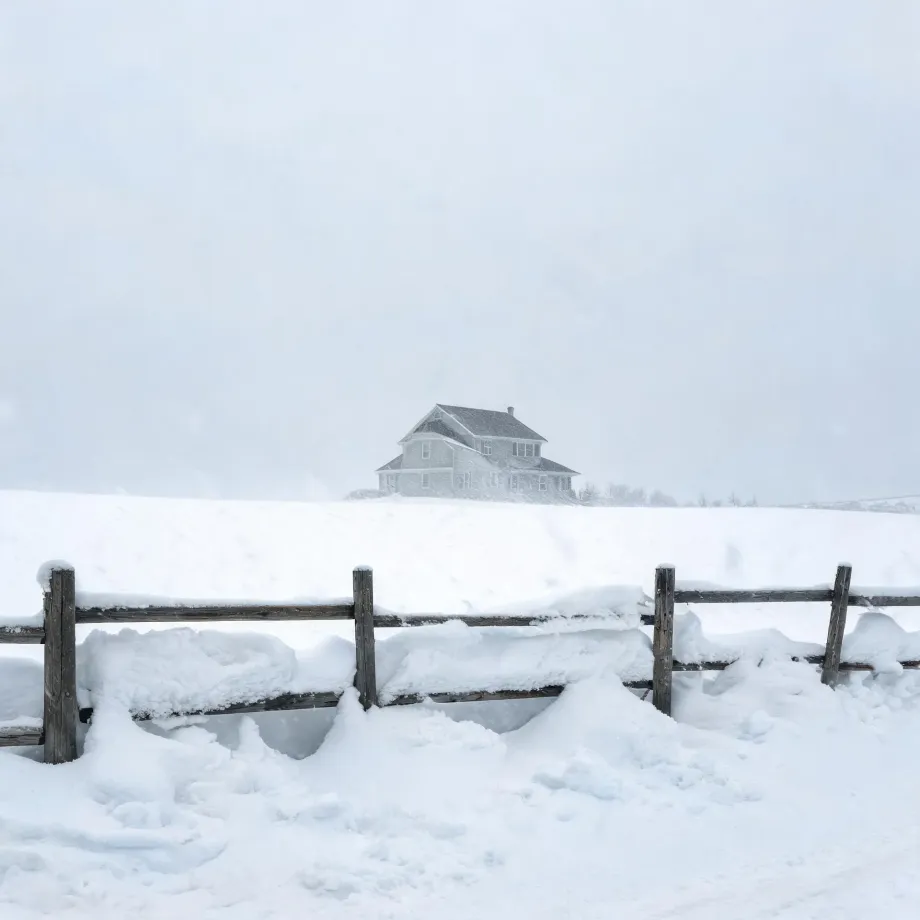
Sizing a heat pump for Morris County starts with how cold it gets and how long it stays cold. Homes in Morris County, KS run heat about seven months a year, from October through April. A heat pump loses capacity as outdoor temperatures drop, so the colder months of that heating run are exactly when the equipment is working hardest and delivering least. A contractor who underestimates that sustained cold load will install a unit that hands off to electric resistance heat regularly, not just on the worst nights. That resistance backup is the most expensive way to heat a house, and the homeowner rarely knows why their bills look the way they do.
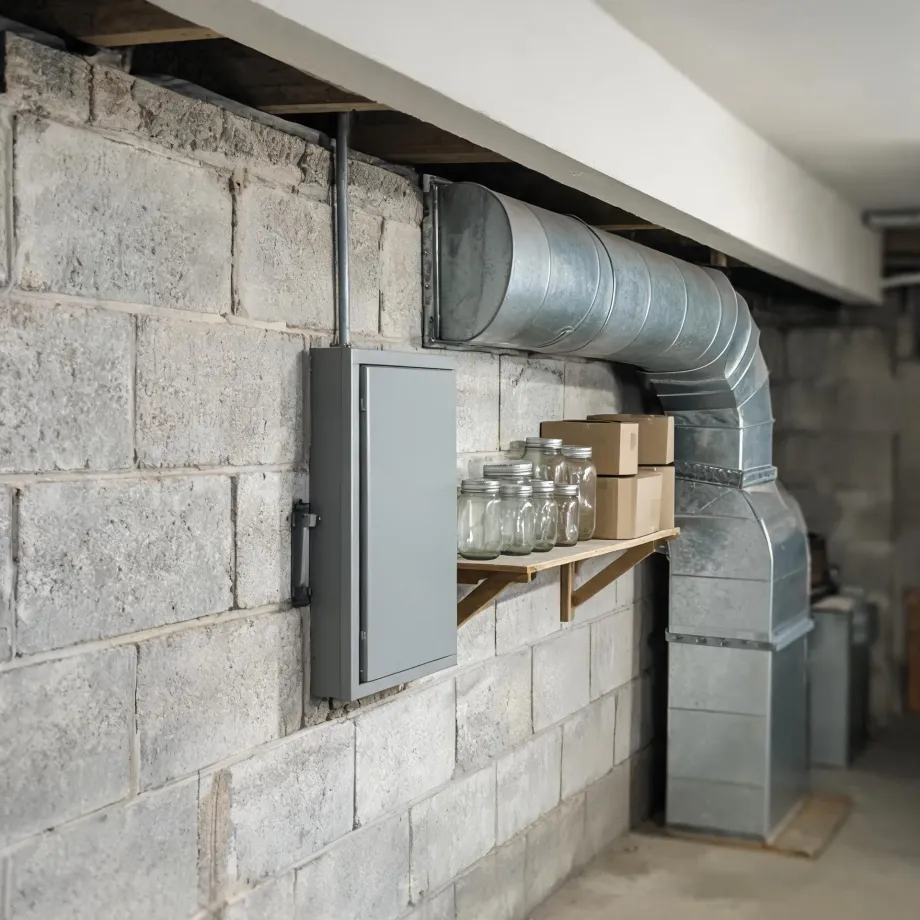
Ductwork in a house this old was designed around whatever was running at the time it was built, and a heat pump draws air differently. Half the homes in Morris County, Kansas were built in 1960 or earlier (2020-2024 ACS 5-year). That gap between the house's original design and what a new system needs is where an installation either works cleanly or runs into trouble. A contractor opening up the ductwork here is checking whether it moves the volume a heat pump requires, and whether the electrical service will carry the load, before anything else gets priced.
What a Heat Pump Installation Covers
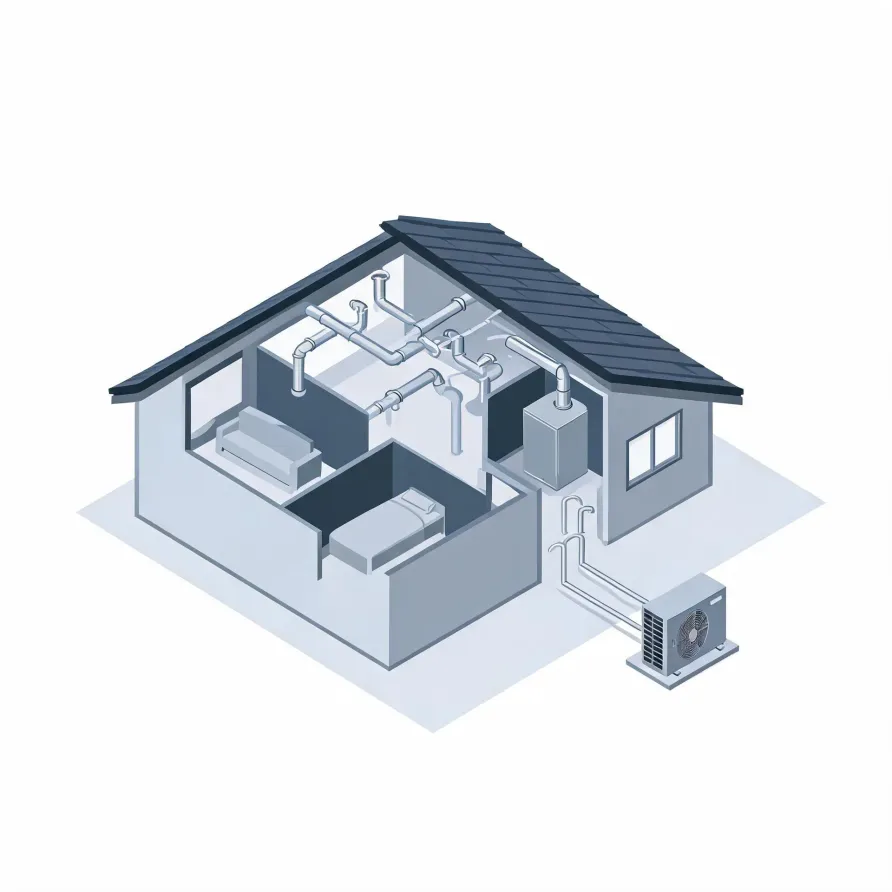
The outdoor unit sits on a pad beside the house and holds the compressor and coil that do the system's main work. Inside, an air handler mounts in a closet, attic, or utility room and pushes conditioned air through the home. Together those two cabinets are what a Heat Pump installation puts in place.
A refrigerant line set runs between the two units, carrying the working fluid through insulated copper tubing along an exterior wall or through a chase. A thermostat goes on an interior wall where it reads the living space and tells the system when to run.
The drawing shows a typical layout, and a licensed contractor determines what the configuration looks like in your specific home.
Find a contractor in Morris CountyMorris County, Kansas, by the numbers
75 severe weather events were recorded in Morris County, Kansas between 2015 and 2024.
NOAA National Centers for Environmental Information, Storm Events Database, bulk CSV export, events 2015-01-01 through 2024-12-31.Half the homes in Morris County, Kansas were built in 1960 or earlier (2020-2024 ACS 5-year).
U.S. Census Bureau, 2020-2024 American Community Survey 5-Year EstimatesMorris County, Kansas holds 2,995 housing units (2020-2024 ACS 5-year).
U.S. Census Bureau, 2020-2024 American Community Survey 5-Year EstimatesOwners occupy 80.1% of the occupied homes in Morris County, Kansas (2020-2024 ACS 5-year).
U.S. Census Bureau, 2020-2024 American Community Survey 5-Year EstimatesSevere Weather Events in Morris County
Weather in Kansas puts real demands on heating and cooling equipment, and those demands shape what a heat pump in Morris County needs to handle year after year. A unit sized and installed for local conditions will work differently than one that was not.
75 severe weather events, 2015–2024. Source: NOAA National Centers for Environmental Information, Storm Events Database.