Tell us about the job
Takes about a minute. No obligation.
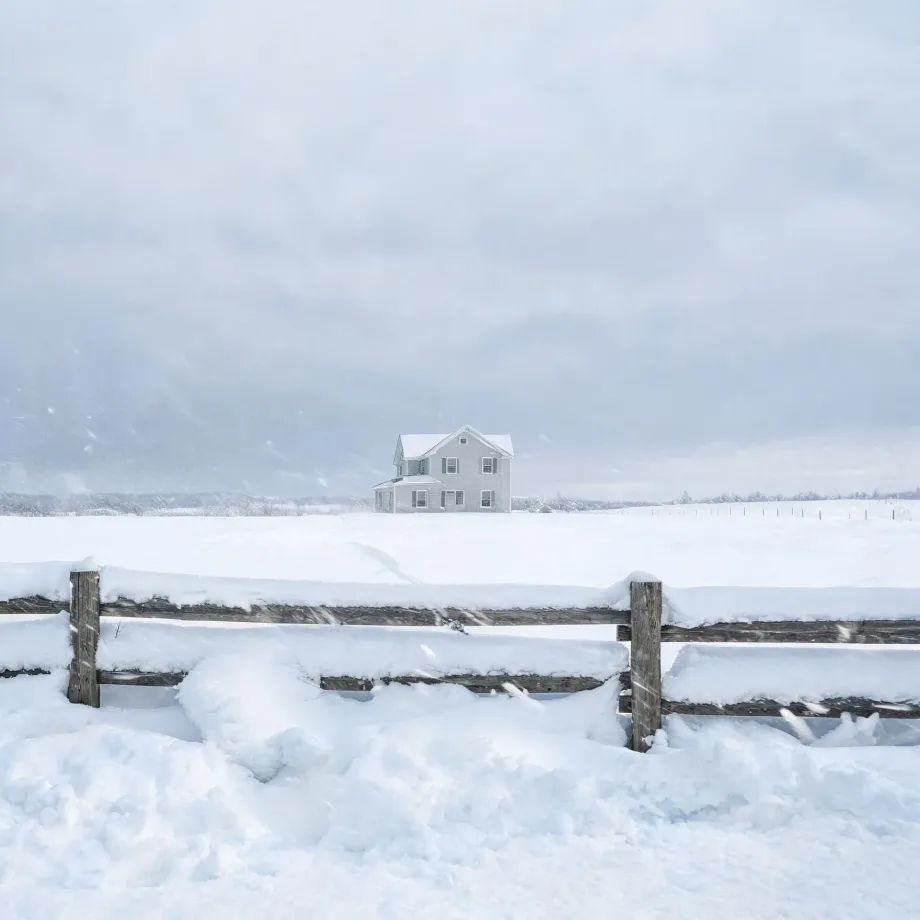
Sizing a heat pump for this county means accounting for what happens to its capacity when outdoor temperatures drop in January and February. Homes in Geary County, KS run heat about seven months a year, from October through April. As the cold deepens, a heat pump's output falls while the house's demand rises, and a unit that looks adequate on paper can leave the compressor straining to close that gap on the hardest nights. A contractor has to establish what back-up heat the house carries and whether the existing service panel can support it before the quote means anything.
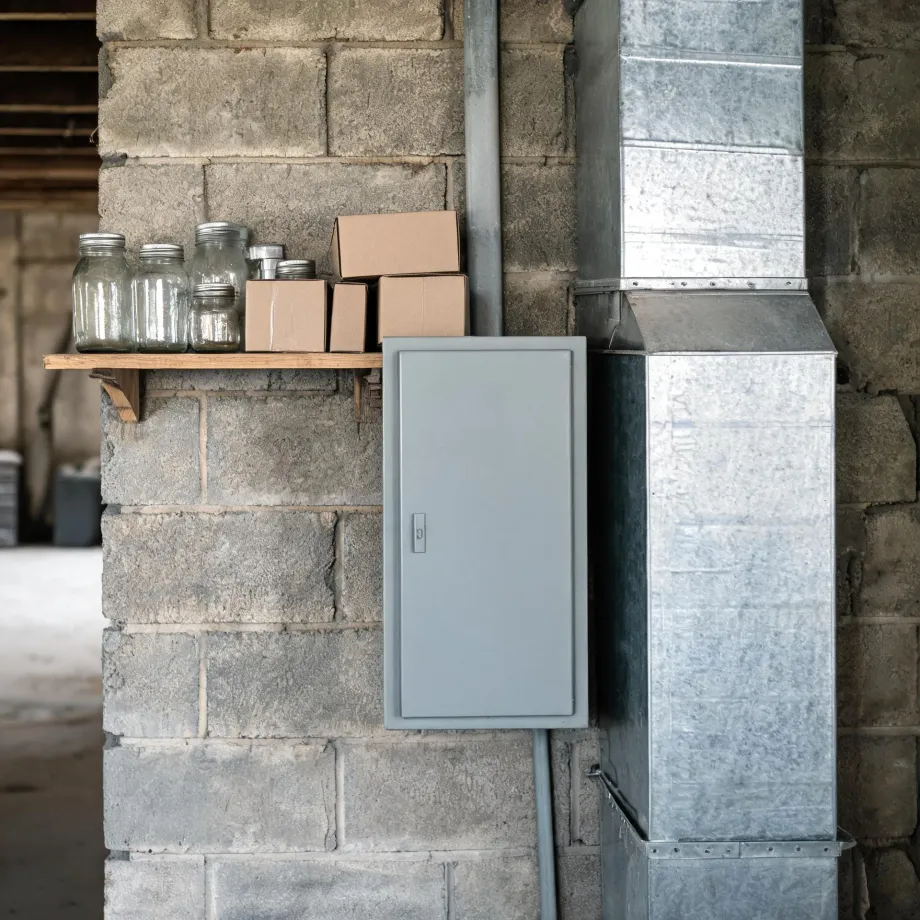
Ductwork sized and routed for an older system carries a different airflow profile than a heat pump requires, and that gap is where a Geary County installation job opens up or stays contained. Half the homes in Geary County, Kansas were built in 1987 or earlier (2020-2024 ACS 5-year). A contractor assessing a house here checks whether the existing trunk lines and branch runs will move the volume a heat pump needs at the static pressure it produces. If they will not, the electrical service gets quoted alongside sheet metal work, not after it. The age of the housing sets the question; what the contractor finds inside the walls answers it.
What a Heat Pump Installation Puts in Your Home
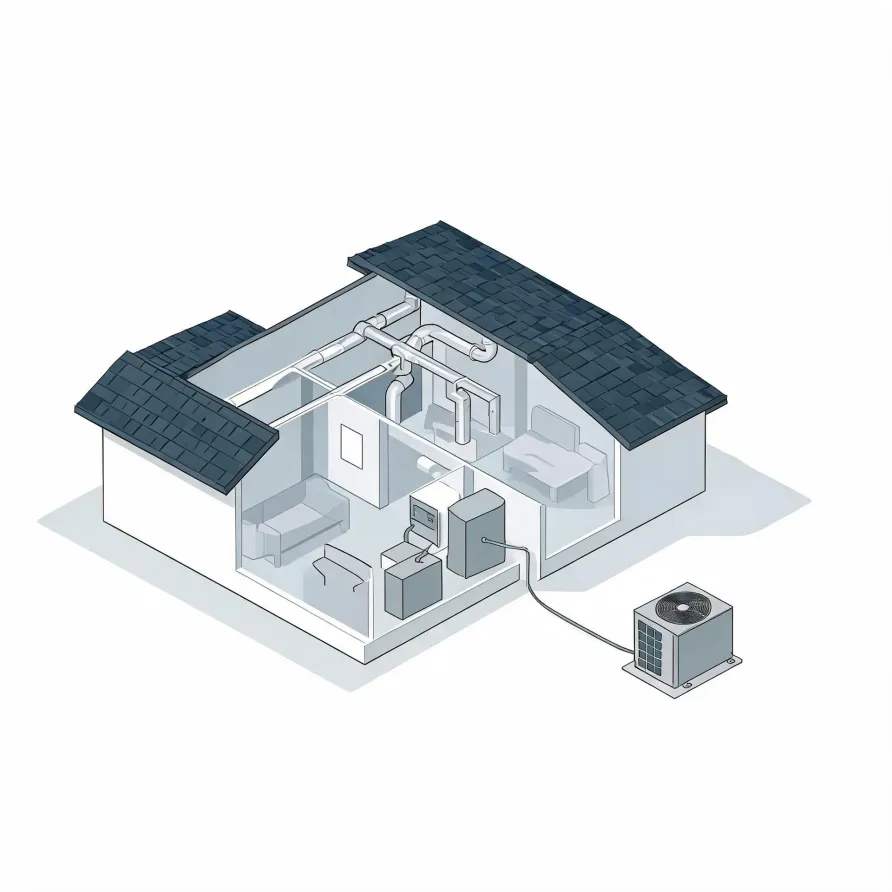
The outdoor unit sits on a pad beside the house and holds the compressor and the condenser coil. It is the largest piece a contractor places, and it is what you will see from the yard. Inside, the air handler mounts in a utility closet, attic, or basement and circulates conditioned air through the home.
A refrigerant line set runs between the two units, carrying the working fluid that lets them share energy. A thermostat goes on an interior wall and gives the homeowner control over the whole system. Some installations also include a supplemental electric heat strip inside the air handler for backup on cold days.
The drawing shows a typical layout, and a licensed contractor determines exactly what your house calls for.
Find a contractor in Geary CountyGeary County, Kansas, by the numbers
173 severe weather events were recorded in Geary County, Kansas between 2015 and 2024.
NOAA National Centers for Environmental Information, Storm Events Database, bulk CSV export, events 2015-01-01 through 2024-12-31.Half the homes in Geary County, Kansas were built in 1987 or earlier (2020-2024 ACS 5-year).
U.S. Census Bureau, 2020-2024 American Community Survey 5-Year EstimatesGeary County, Kansas holds 15,939 housing units (2020-2024 ACS 5-year).
U.S. Census Bureau, 2020-2024 American Community Survey 5-Year EstimatesOwners occupy 43.5% of the occupied homes in Geary County, Kansas (2020-2024 ACS 5-year).
U.S. Census Bureau, 2020-2024 American Community Survey 5-Year EstimatesSevere Weather Events in Geary County
Kansas weather puts real demands on heating and cooling equipment, and Geary County gets its share of what the region delivers. A heat pump sized and installed for local conditions handles that load differently than one spec'd for a milder climate.
173 severe weather events, 2015–2024. Source: NOAA National Centers for Environmental Information, Storm Events Database.