Tell us about the job
Takes about a minute. No obligation.
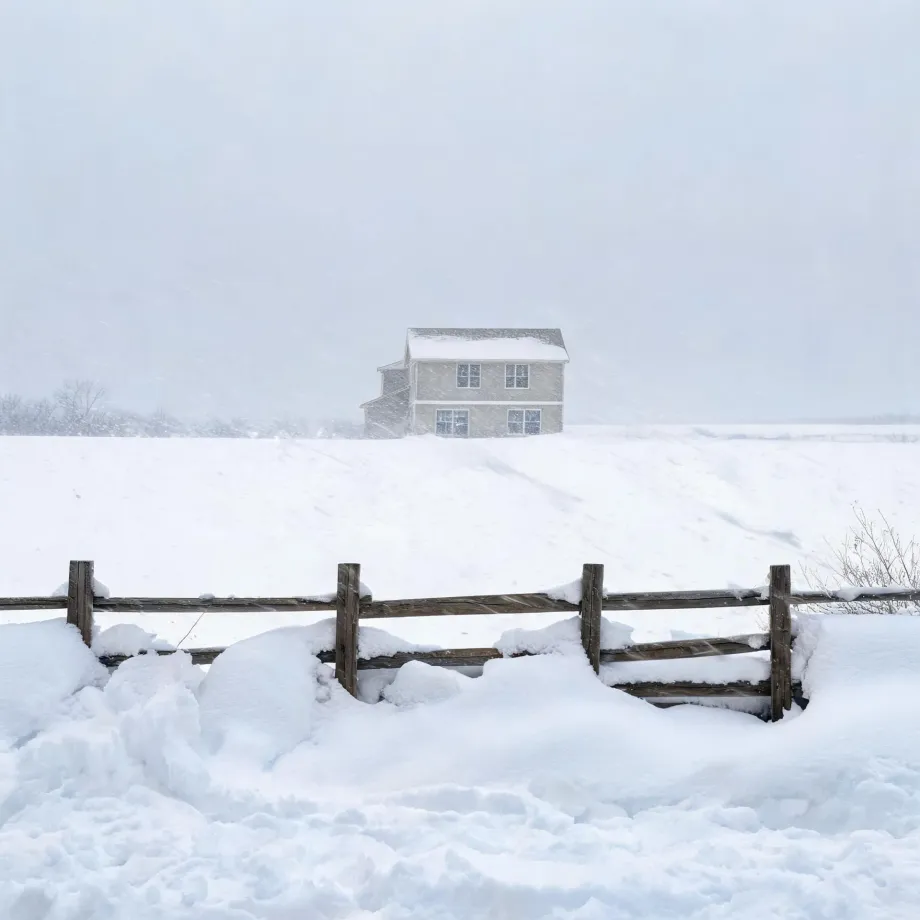
A heat pump's hardest problem is the gap between what it can deliver and what the house needs on the coldest days of the year. Homes in Bourbon County, KS run heat about seven months a year, from October through April. Outdoor temperature pulls capacity down while demand climbs, so a unit sized to the middle of the season will fall short at the edges. A contractor quoting this work has to run a proper load calculation against the coldest realistic temperatures, not against a seasonal average, and has to spec back-up heat accordingly. Undersizing shows up fast here, on the coil and the compressor both.
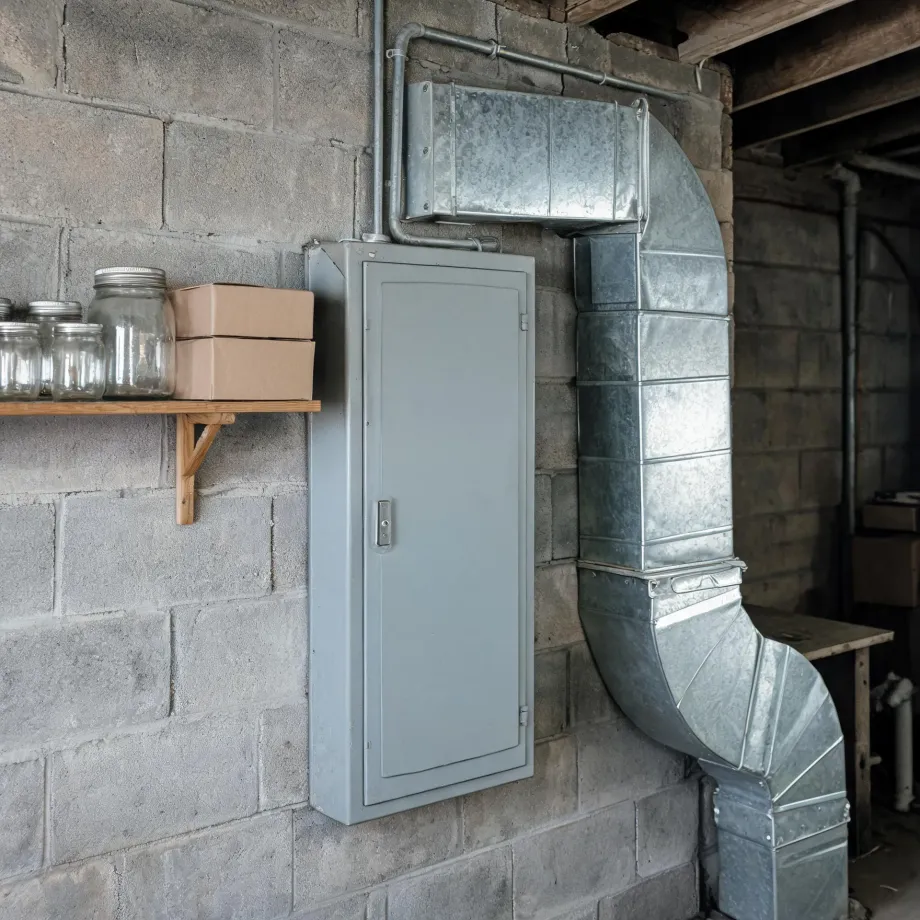
Existing ductwork is where a heat pump installation either fits or it does not. Half the homes in Bourbon County, Kansas were built in 1957 or earlier (2020-2024 ACS 5-year). A house built in that era was ducted for whatever system the builder put in, and that original layout may have been reconfigured once or twice since. What a contractor has to determine is whether those ducts can move the volume a heat pump requires, and whether the electrical service will carry the load. If the ductwork is undersized or poorly routed, that becomes the first item on the scope, and it shapes everything that follows.
What a Heat Pump Installation Covers
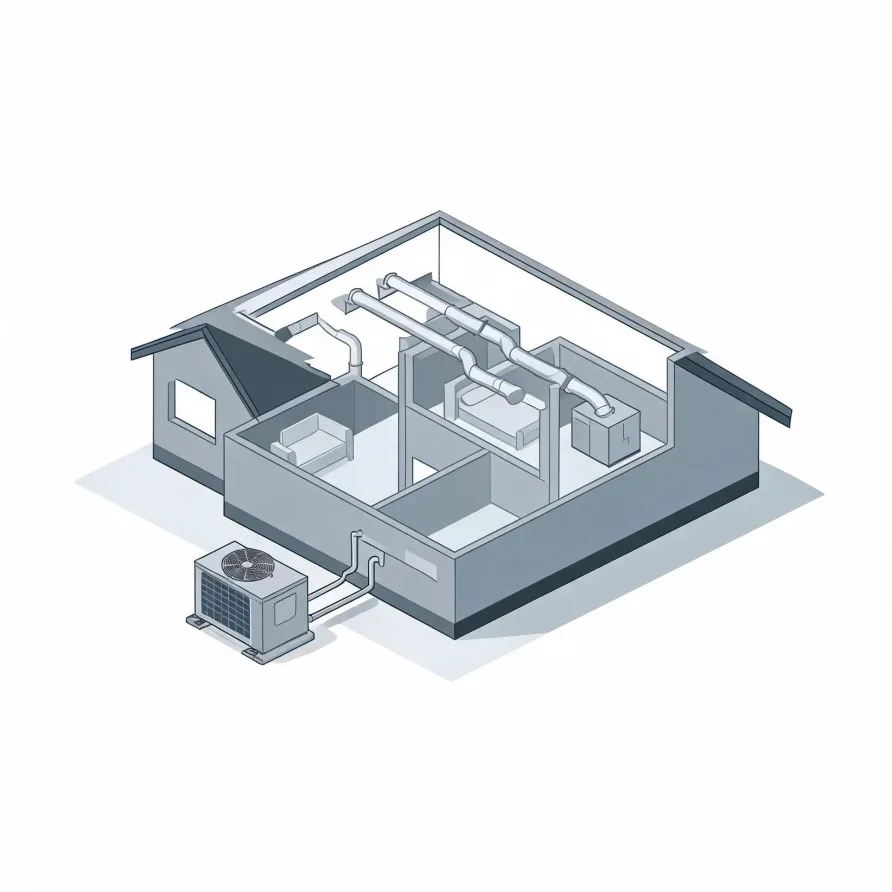
The outdoor unit sits on a pad beside the house and holds the compressor and coil that do the core work of the system. Inside, the air handler mounts in a utility space, attic, or closet and moves conditioned air through the home. These two units are what a homeowner buys when they buy a heat pump.
A refrigerant line set runs between the outdoor unit and the air handler, connecting the two halves of the system. A thermostat mounts on an interior wall and gives the homeowner control over when and how the system runs. Where an existing system is being replaced, the contractor also removes and disposes of the old equipment.
The drawing shows a typical layout, and a licensed contractor determines exactly what applies to this house.
Find a contractor in Bourbon CountyBourbon County, Kansas, by the numbers
73 severe weather events were recorded in Bourbon County, Kansas between 2015 and 2024.
NOAA National Centers for Environmental Information, Storm Events Database, bulk CSV export, events 2015-01-01 through 2024-12-31.Half the homes in Bourbon County, Kansas were built in 1957 or earlier (2020-2024 ACS 5-year).
U.S. Census Bureau, 2020-2024 American Community Survey 5-Year EstimatesBourbon County, Kansas holds 6,756 housing units (2020-2024 ACS 5-year).
U.S. Census Bureau, 2020-2024 American Community Survey 5-Year EstimatesOwners occupy 74.0% of the occupied homes in Bourbon County, Kansas (2020-2024 ACS 5-year).
U.S. Census Bureau, 2020-2024 American Community Survey 5-Year EstimatesSevere Weather Events in Bourbon County
Bourbon County's weather puts real demands on heating and cooling equipment over its lifetime. A heat pump sized and installed for local conditions handles those demands better than one spec'd to a national average.
73 severe weather events, 2015–2024. Source: NOAA National Centers for Environmental Information, Storm Events Database.