Tell us about the job
Takes about a minute. No obligation.

Sizing a heat pump for this house is not a task a contractor can do from a square footage number alone. Homes in Linn County, KS run heat about seven months a year, from October through April. As outdoor temperatures drop through those months, a heat pump's capacity falls at the same time the house needs the most from it, which means the gap between what the unit delivers and what the house demands has to be calculated, not guessed. A contractor who skips a full load calculation leaves backup heat to cover that gap constantly, and backup resistance heat draws far more power than the heat pump itself. Getting the sizing right at installation is what keeps that backup in reserve rather than in daily service.
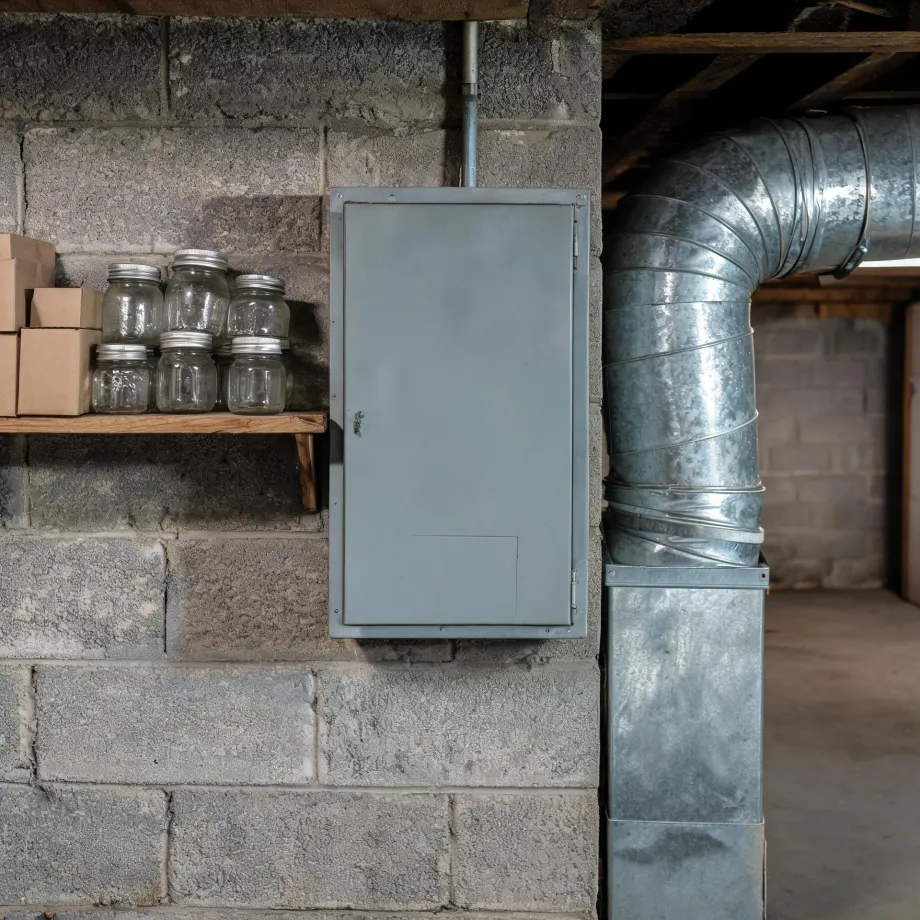
Ductwork sized for a previous generation of equipment is what a contractor meets inside most houses here. Half the homes in Linn County, Kansas were built in 1983 or earlier (2020-2024 ACS 5-year). That gap between what was built into the house and what a heat pump needs to move air through it is where installation jobs get complicated or expensive. The electrical service is the second check: panels in stock this age were not sized for the loads a heat pump draws, and an upgrade changes both the scope and the cost of the job before the unit is ever set.
What a Heat Pump Installation Covers
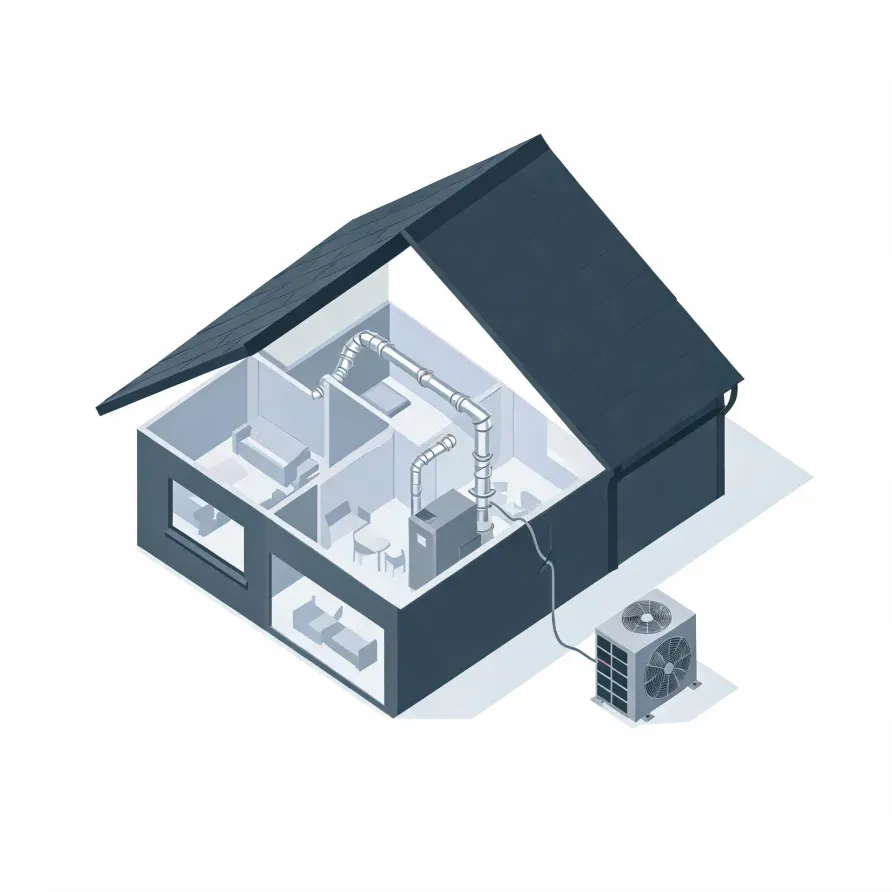
The outdoor unit sits on a pad beside the house and holds the compressor and the coil that exchange heat with the outside air. Inside, an air handler mounts in a utility space, closet, or attic and moves conditioned air through the home. These two units are the core of what a contractor places and connects.
A refrigerant line set runs between the outdoor unit and the air handler, and a condensate drain line carries moisture away from the indoor coil. A thermostat, mounted on an interior wall, gives the homeowner control over the whole system.
The drawing shows a typical layout, and a licensed contractor determines exactly what applies to this house.
Find a contractor in Linn CountyLinn County, Kansas, by the numbers
68 severe weather events were recorded in Linn County, Kansas between 2015 and 2024.
NOAA National Centers for Environmental Information, Storm Events Database, bulk CSV export, events 2015-01-01 through 2024-12-31.Half the homes in Linn County, Kansas were built in 1983 or earlier (2020-2024 ACS 5-year).
U.S. Census Bureau, 2020-2024 American Community Survey 5-Year EstimatesLinn County, Kansas holds 5,222 housing units (2020-2024 ACS 5-year).
U.S. Census Bureau, 2020-2024 American Community Survey 5-Year EstimatesOwners occupy 81.1% of the occupied homes in Linn County, Kansas (2020-2024 ACS 5-year).
U.S. Census Bureau, 2020-2024 American Community Survey 5-Year EstimatesSevere Weather in Linn County
Heating and cooling equipment in Linn County works against whatever the local climate delivers, and the stress that weather puts on a system shapes how it is sized, selected, and installed. That makes local weather history a practical reference for any heat pump installation here.
68 severe weather events, 2015–2024. Source: NOAA National Centers for Environmental Information, Storm Events Database.