Tell us about the job
Takes about a minute. No obligation.
A contractor diagnosing a heat pump here starts with the components that carry the heating load: the reversing valve, the refrigerant circuit, and the coil surfaces that shed ice during defrost cycles. Homes in Chase County, KS run heat about seven months a year, from October through April. Outdoor temperatures in that window push a heat pump toward its capacity limits, and the refrigerant circuit works harder the colder it gets. A fault in the reversing valve or a slow refrigerant leak that goes unnoticed in mild weather shows up fast when the system is running close to its limit month after month. The coil and the contactor both accumulate wear that a short idle summer does not reset.
Ductwork in houses built for earlier generations of heating equipment carries its own history into every repair call. Half the homes in Chase County, Kansas were built in 1958 or earlier (2020-2024 ACS 5-year). That history shows up once a contractor pulls a panel or traces a refrigerant line: connections that have been adapted, materials that belong to an earlier system, and configurations that a heat pump was never the first thing to run through. The parts a repair turns on are almost always inside the unit, but what the unit has been asked to do inside that ductwork shapes what the contractor finds when it is open.
The Parts of a Heat Pump a Contractor Checks During Repair
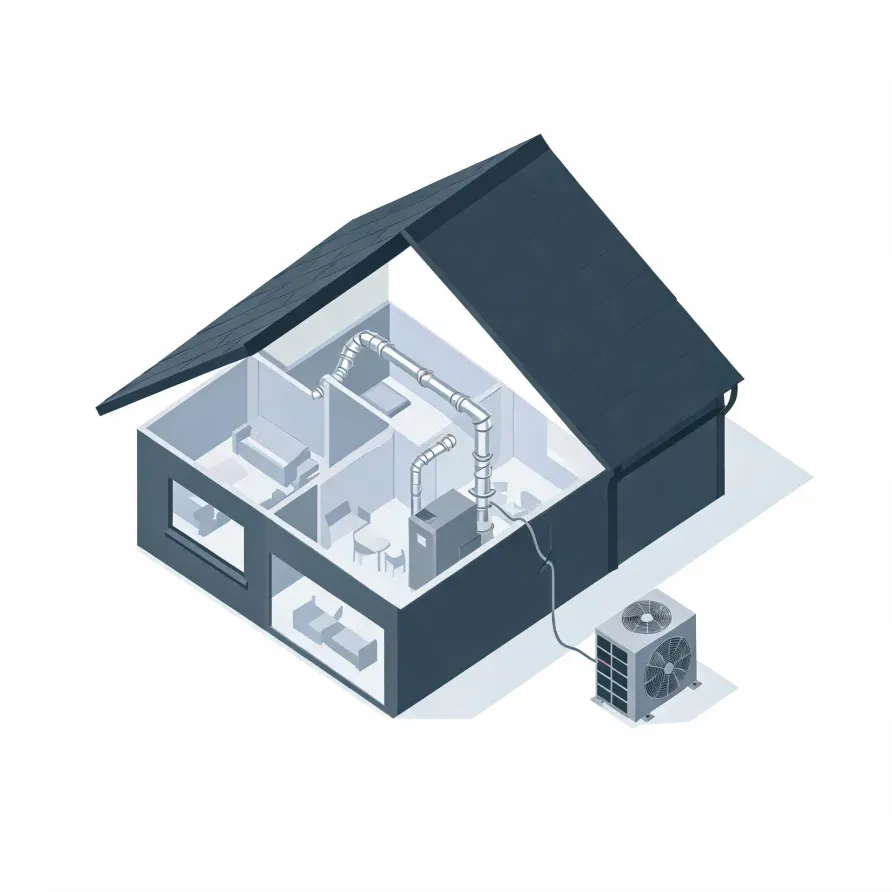
The outdoor unit sits outside the house and holds the compressor and the condenser coil, which are the pieces a contractor reaches first when something stops working. A failed compressor means no heat transfer at all. A damaged coil, a refrigerant leak, or a seized fan motor in that cabinet each produce their own pattern of symptoms.
Inside the house, the air handler contains the evaporator coil, the blower fan, and the reversing valve, which switches the system between heating and cooling. The thermostat and the refrigerant lines that run between the two units round out what a contractor traces when tracking down a fault.
The drawing shows the general layout of a heat pump system, and a licensed contractor determines which components apply to your specific home and situation.
Find a contractor in Chase CountyChase County, Kansas, by the numbers
91 severe weather events were recorded in Chase County, Kansas between 2015 and 2024.
NOAA National Centers for Environmental Information, Storm Events Database, bulk CSV export, events 2015-01-01 through 2024-12-31.Half the homes in Chase County, Kansas were built in 1958 or earlier (2020-2024 ACS 5-year).
U.S. Census Bureau, 2020-2024 American Community Survey 5-Year EstimatesChase County, Kansas holds 1,388 housing units (2020-2024 ACS 5-year).
U.S. Census Bureau, 2020-2024 American Community Survey 5-Year EstimatesOwners occupy 73.3% of the occupied homes in Chase County, Kansas (2020-2024 ACS 5-year).
U.S. Census Bureau, 2020-2024 American Community Survey 5-Year EstimatesSevere Weather Events in Chase County
Kansas weather puts real demands on heat pump systems, cycling them hard through whatever conditions the region delivers. How much stress local weather places on equipment is a Chase County question, which is why the record below matters for repair work here.
91 severe weather events, 2015–2024. Source: NOAA National Centers for Environmental Information, Storm Events Database.