Heat pump running all the time in Emporia, KS

Step 1 of 3: Equipment

A heat pump that runs nonstop in cold weather is usually just keeping up. Below about 35 to 40 degrees, a heat pump has to work harder to pull warmth from the outside air, so in a Lyon County winter it may run most of the day and that alone does not mean something is wrong. What points to a real problem is a system that runs constantly but the house still feels cool, or a heat pump covered in ice that never seems to go away. That usually means the unit is low on refrigerant, the defrost control has failed, or the outdoor coil is too dirty to pull heat from the air. A heat pump working overtime also pushes up the power bill, since most homes here lean on gas furnace backup for the coldest stretches, and a heat pump stuck in constant run time is likely leaning on backup heat more than it should.

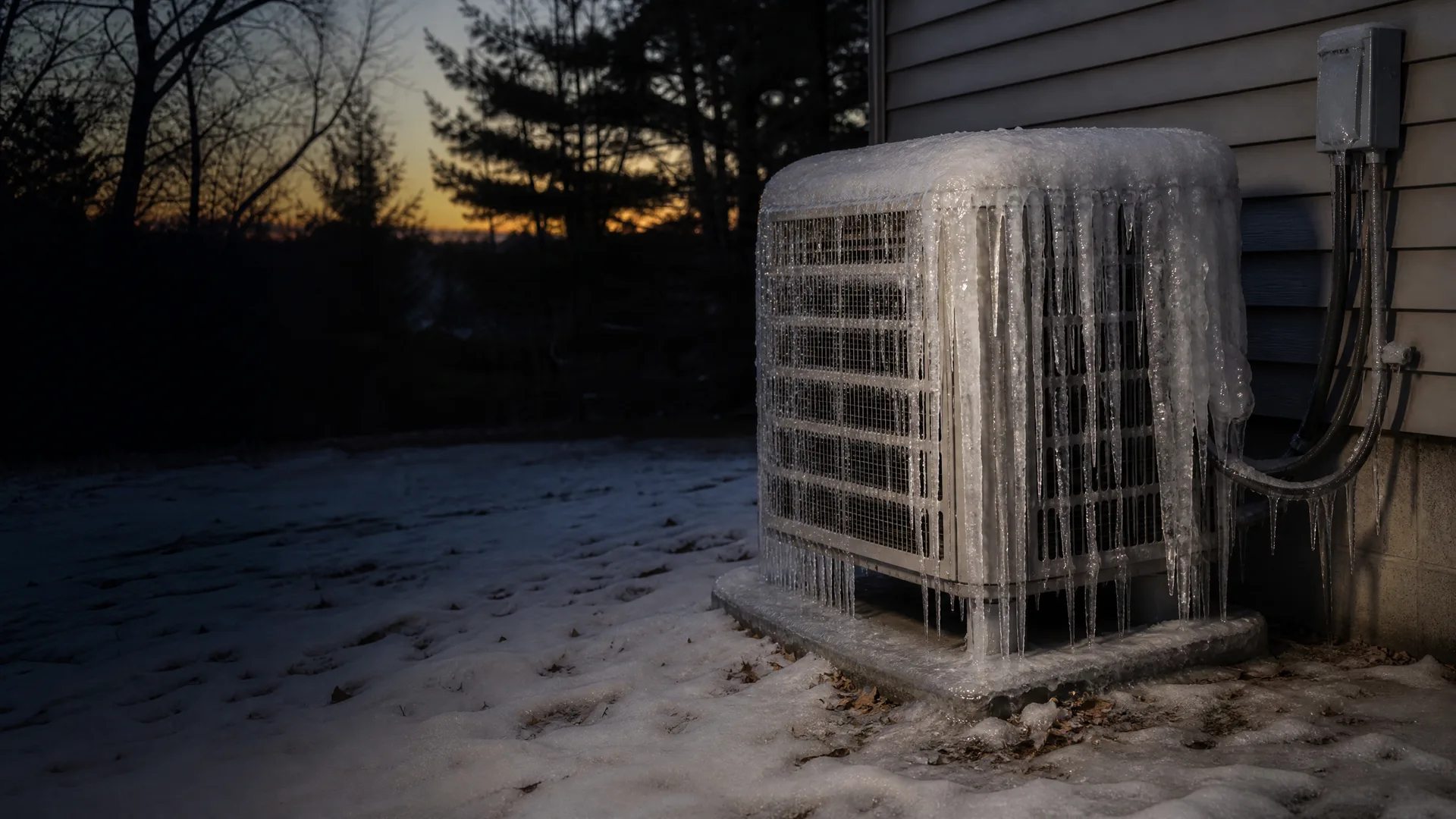
An outdoor air conditioning or heat pump unit encased in thick ice with hanging icicles, standing on a concrete pad beside a house with horizontal siding and an electrical box, with snow on the ground and a dusk sky behind bare trees.

You go out for the paper a little after seven and the sky is still gray. The outdoor unit sits against the side of the house with a shell of ice over the cabinet, thick enough that you can't see the coil fins underneath. Frost climbs the refrigerant lines. Inside, the air coming from the vents feels cool, not warm, and the system hasn't let up since you went to bed. You crouch down and knock a knuckle against the ice and it doesn't give. The fan isn't turning. Somewhere behind the ice the unit is still trying to run, and the sound of it carries across the yard into the cold.

Is Your Heat Pump Working, or Struggling

Normal for the cold

  • The outdoor unit runs long stretches below 35 degrees because it is pulling heat from colder air, not because something broke.
  • A thin, even layer of frost across the coil that clears on its own during a defrost cycle is part of how the system works.
  • The unit cycles into defrost every so often, the fan stops, and warm refrigerant melts the frost off the coil before it switches back to heating.
  • Indoor air from the vents feels cool to the hand even when the system is heating the house, since heat pump air runs cooler than a gas furnace's.
  • Rooms stay at the temperature you set, even if it takes longer to get there and the unit seems to run most of the day.

Needs a look

  • A shell of ice thick enough to hide the coil fins, or frost climbing the refrigerant lines, means the defrost cycle has stopped working.
  • The system runs constantly but the house still will not hold the temperature you set it to, even by a few degrees.
  • The outdoor fan is not turning at all while the compressor runs, which points to a failed fan motor rather than a normal defrost pause.
  • You hear the unit short-cycling, switching on and off every few minutes instead of running in longer stretches.
  • Backup heat is on constantly rather than kicking in only on the coldest stretches of the Lyon County winter.
  • Ice builds back up again within an hour or two of a defrost cycle instead of staying clear for several hours.
A woman in a cream sweater with her hair in a bun laughs while seated at a stone counter holding a glass of red wine, in a dimly lit interior with a sofa, houseplants and a large window at night.
A woman with long dark hair in a cream knit sweater laughs while looking off to the side, seated in front of a dimly lit kitchen with an island, stools, open shelving and a potted plant, with a glass of red wine in the foreground.
A smiling woman with long dark wavy hair in a light knit sweater sits at a marble counter with a glass of red wine, with a dimly lit living room and kitchen in the background.
A smiling woman with long wavy brown hair in a beige sweater sits at a white marble counter with a glass of red wine, with a living room, dining table and kitchen cabinets behind her.

Why does your heat pump have so much work to do here?

  • Winter nights average 23°F

    Overnight lows average 23°F in December, January and February, so your heat pump is pulling warmth from cold air most winter nights, not just on the odd cold snap.

  • Heat runs October through April

    Heat runs October through April here, about seven months. That's most of the year your system is working, so steady runtime is normal, not a sign of trouble.

  • Cooling runs June through September

    Cooling only runs June through September, about four months. The rest of the year the load falls on the heat pump's heating side, which is where most of its hours go.

NOAA nClimDiv 1991-2020

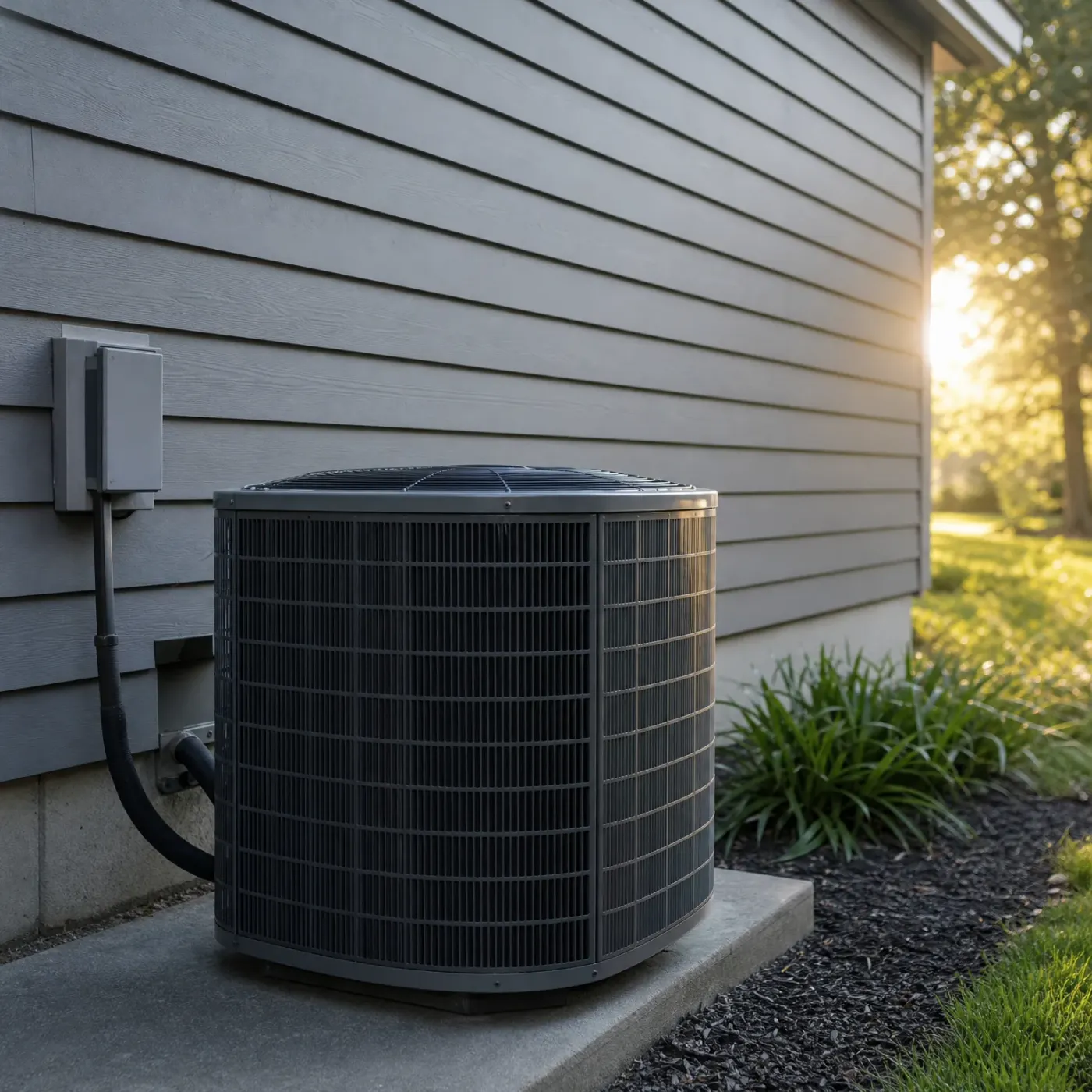
A gray outdoor heat pump unit on a concrete pad beside a house with horizontal lap siding, connected by conduit and a flexible line to a wall-mounted disconnect box, with low shrubs and mulch nearby.

Running long but working as it should

This is what steady, normal operation looks like. The outdoor unit sits on its pad, fan turning, lines running clean to the disconnect box. No ice, no odd sounds, just a heat pump earning its keep on a cold Lyon County morning.

An outdoor air conditioner condenser unit on a concrete pad beside a house with beige horizontal siding, with conduit running from an electrical box on the wall.

Running long and struggling

Here the unit is working against something it shouldn't have to. If yours looks closer to this, with frost that won't clear, a hard rattle, or ice building past the coil, that's a contractor call, not a wait-and-see.

Why does my heat pump run constantly but never seem to shut off?

Why does my heat pump run constantly but never seem to shut off?

It's running a defrost cycle, or it's actually undersized for this cold

A heat pump moves heat by running refrigerant through the outdoor coil, and below freezing that coil picks up frost the same way a car windshield does on a cold morning. Every so often the system reverses itself for a few minutes, sends warm refrigerant outside to melt that frost off, and the outdoor fan may slow or stop while it does. That's normal and it ends on its own. What is not normal is the indoor blower running around the clock while the house still feels cool. That points to the heat pump not having enough capacity for a Lyon County cold snap, or to something like a low refrigerant charge making it work far harder than it should to hold the thermostat setting.

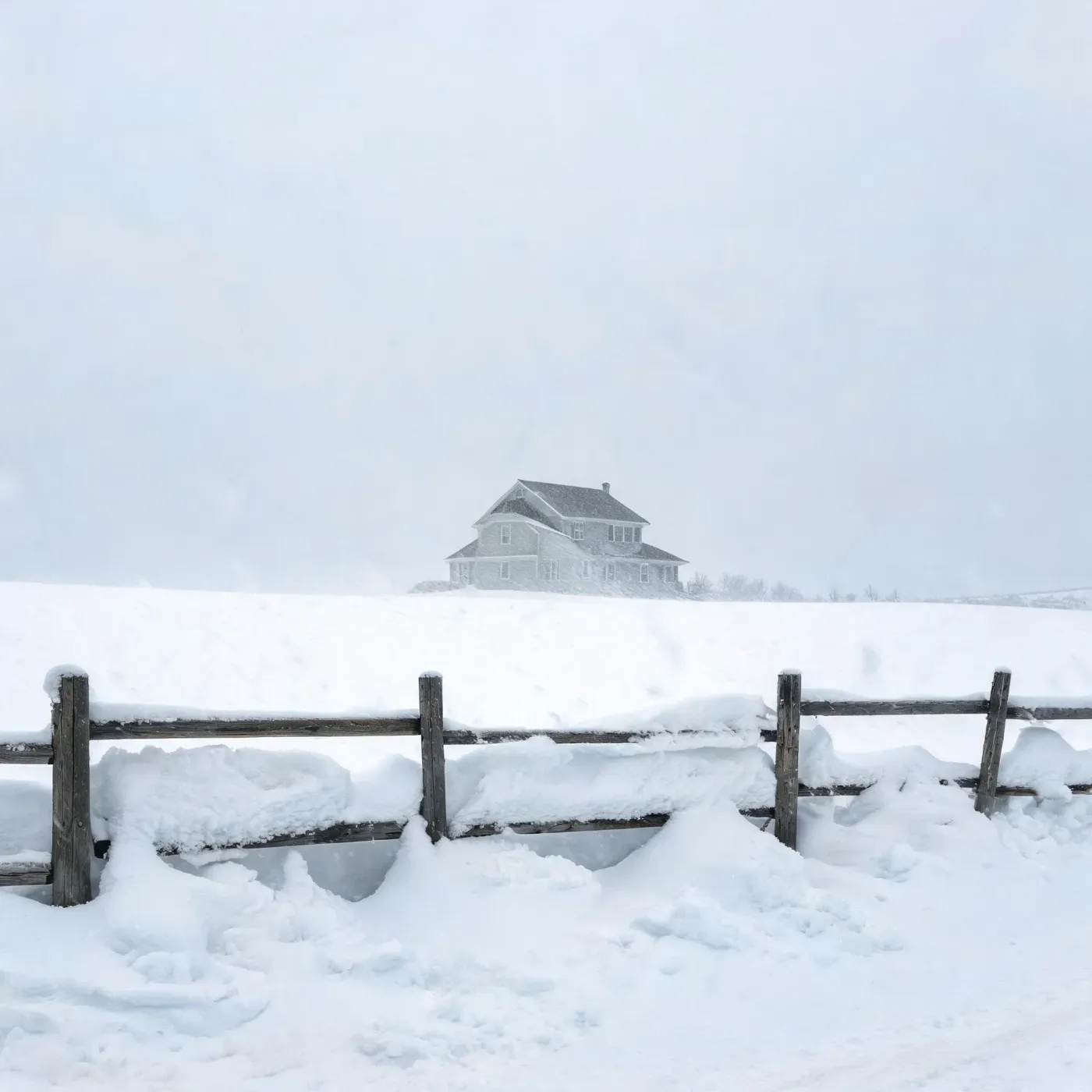
A two-story gabled house stands on a snow-covered rise under a pale overcast sky, with a snow-laden wooden rail fence crossing the foreground.

At 23°F, which is the average overnight low here from December through February, a heat pump is moving heat out of air that barely has any to give. That's most nights all winter, not just the cold snaps. The colder the air outside, the longer the unit has to run to move the same amount of heat indoors, so long run times on a night like that are the system doing its job, not struggling against it. What's worth watching instead is whether the house actually holds its temperature, whether the air coming out of the vents still feels warm, and whether the outdoor unit ices over and fails to clear. If you're trying to sort that out on your own, you're stuck searching for someone local who actually works on heat pumps in this kind of cold and knows what tends to give out at 23 degrees versus what's normal for the weather.

NOAA nClimDiv 1991-2020

Explain it one time

A licensed pro who repairs heat pumps in Lyon County gets your request.

Asking costs nothing, and the choice to hire stays yours.

Wait it out through a defrost cycle. The outdoor fan stops, the unit runs quiet for ten or fifteen minutes, and warm air may even slow down inside while it clears the coil. That's the system working.

Call for a look if the running never breaks into cycles at all, or the house stays cold no matter how long it runs. That's not defrost. That's a system that can't keep up, and a Lyon County contractor who works on heat pumps all winter can tell you why.

An outdoor air conditioner condenser unit on a concrete pad beside a house with horizontal vinyl siding, with refrigerant lines and an electrical disconnect box on the wall and dry leaves on the ground.
Before you get your heat pump repair
A gray outdoor heat pump unit on a concrete pad beside a house with horizontal lap siding, with a conduit running to a wall-mounted disconnect box and a green shrub to the left.
After you get your heat pump repair

Let it ride out the cold

If the unit cycles normally and the heat keeps up, long run times in a Lyon County winter are the system doing its job, not a sign of trouble.

Fill out one form

Get it looked at

If rooms stay cold, the outdoor unit iced over outside of a defrost cycle, or it never shuts off at all, a local contractor who works on these year-round can tell you what's actually wrong.

Fill out one form

What are you noticing around the house right now

The thermostat says it's satisfied, but the air coming out of the vents feels cool rather than warm. Some rooms stay a few degrees colder than others, so you're closing doors or layering a blanket on the couch. The outdoor unit hums almost nonstop when you walk past it in the evening. Your gas furnace might be kicking on more than you'd expect, picking up where the heat pump leaves off. If this has been going on for a while, you may notice it on the power bill too. Left alone, a heat pump straining to keep up can mean cold rooms stay cold all winter and the backup heat carries more of the load than it should.

  1. Refrigerant in the outdoor coil pulls heat from the outside air.

  2. A compressor squeezes that refrigerant to raise its temperature.

  3. The indoor coil releases that heat into the air moving through your ducts.

  4. Below about 35 degrees, frost builds on the outdoor coil as it works.

A bearded man in a dark navy sweater over a collared shirt smiles and looks off to the side while seated at a dinner table with a glass of red wine, a lit candle, and a plate of food in the foreground of a dimly lit room.
A woman in a dark gray sweater reclines on a couch with her eyes closed and a knit blanket over her lap, an open book resting face-down in front of her, with a lit table lamp and shelving blurred in the background.

Power here costs 14.73 cents per kilowatt-hour

At 14.73 cents per kilowatt-hour, every extra hour your heat pump runs in cold weather shows up on the bill. Long run times through a Lyon County winter aren't wasted power if the system is actually heating, but if it's running constantly and the house still feels cool, you're paying for work that isn't landing.

EIA-861 2025

Where You Stand Now

  • Long run times in a Lyon County winter mean the heat pump is keeping up with the cold, not that it's failing.
  • Ice that clears on its own during a defrost cycle is normal; ice that stays and rooms that stay cold are not.
  • If the outdoor unit is running nonstop and the house still feels cool, it's worth having someone check it rather than waiting it out.
  • A contractor who works on heat pumps in this area through every winter has seen what usually goes wrong in weather like this.
  • One local, licensed contractor takes the call, so you're not fielding quotes from several companies while your house is cold.
  • You know where you stand either way: the system working hard, or a specific problem worth fixing.

A heat pump running long stretches through a Lyon County winter is doing what it was built to do. Cold air holds less heat to pull from, so the system works longer to move the same warmth into your house. That's true whether the night is 23 degrees or colder. Frost on the coil that melts off during a defrost cycle is part of that same work, not a sign anything's wrong.

What tells you something is off is different. Ice that doesn't clear. Rooms that stay cool no matter how long the unit runs. A system that never settles into normal cycles, just runs and runs without catching up. If you're seeing that, it's not something to ride out through January hoping it corrects itself.

Either way, you don't have to guess alone. Someone who services heat pumps in this part of Kansas every winter has already seen most of what cold weather does to this equipment, from the ordinary defrost cycle to a unit that's actually undersized or low on refrigerant. That's a different conversation than calling around to find out who even works on heat pumps out here, then repeating your symptoms to three different companies before one can get out to look. One local, licensed contractor takes the call and looks at your system directly. You end up knowing which situation you're in, the system doing its job in the cold or something specific that needs fixing, instead of just listening to it run and wondering.

An outdoor air conditioner condenser unit on a concrete pad beside a gray horizontal-lap-sided house, with an electrical disconnect box and refrigerant line on the wall, grass, shrubs and a tree with low sun behind.

Skip calling around

Skip the search

The pro who gets in touch is licensed in Kansas and works in Lyon County.

Sending the form costs nothing.