








When to replace a heat pump in Hays, KS

Step 1 of 3: Equipment

A heat pump in Hays usually needs replacing somewhere between 10 and 15 years, and winter is what wears it out fastest here. Below freezing, a heat pump has to work harder to pull heat from outside air, and once temperatures drop into the teens or lower, many systems lean on backup heat strips just to keep up. That strain adds up year after year. If yours is icing over on cold mornings, running constantly without catching up, or you're paying for backup heat more often than not, the compressor is likely wearing down. Repairs on an older unit start to cost more than they're worth once you're calling a contractor every winter. Since most homes here heat with gas, your heat pump is probably only carrying part of the load, but a failing one still means higher bills and cold rooms when you need warmth most. If yours is past 10 years and struggling through winter, it's worth having someone look at whether repair or replacement makes more sense.

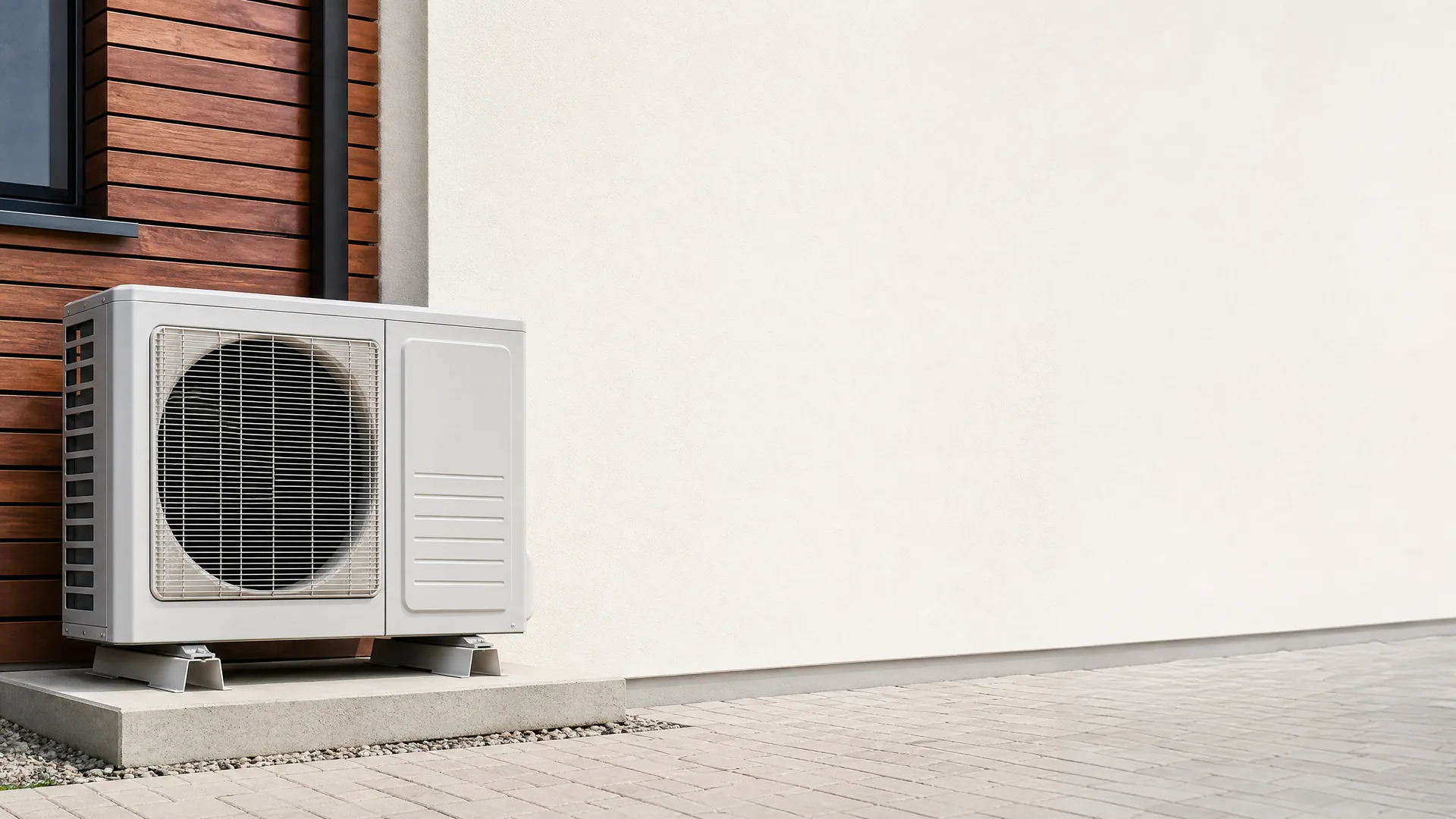
A white outdoor heat pump unit on a concrete pad beside a house with wood-slat siding and a large plain light-colored stucco wall, with paving stones in the foreground.

What the backup heat tells you

Most heat pumps in Ellis County pair with an electric or gas backup for the coldest stretches. If that backup is running most of the time instead of just on the hardest nights, the heat pump itself has likely fallen behind on what it can pull from the outside air. Watch your gas use or your electric bill for a jump that isn't matched by a cold snap. That pattern often shows up a season or two before the heat pump stops keeping up at all.

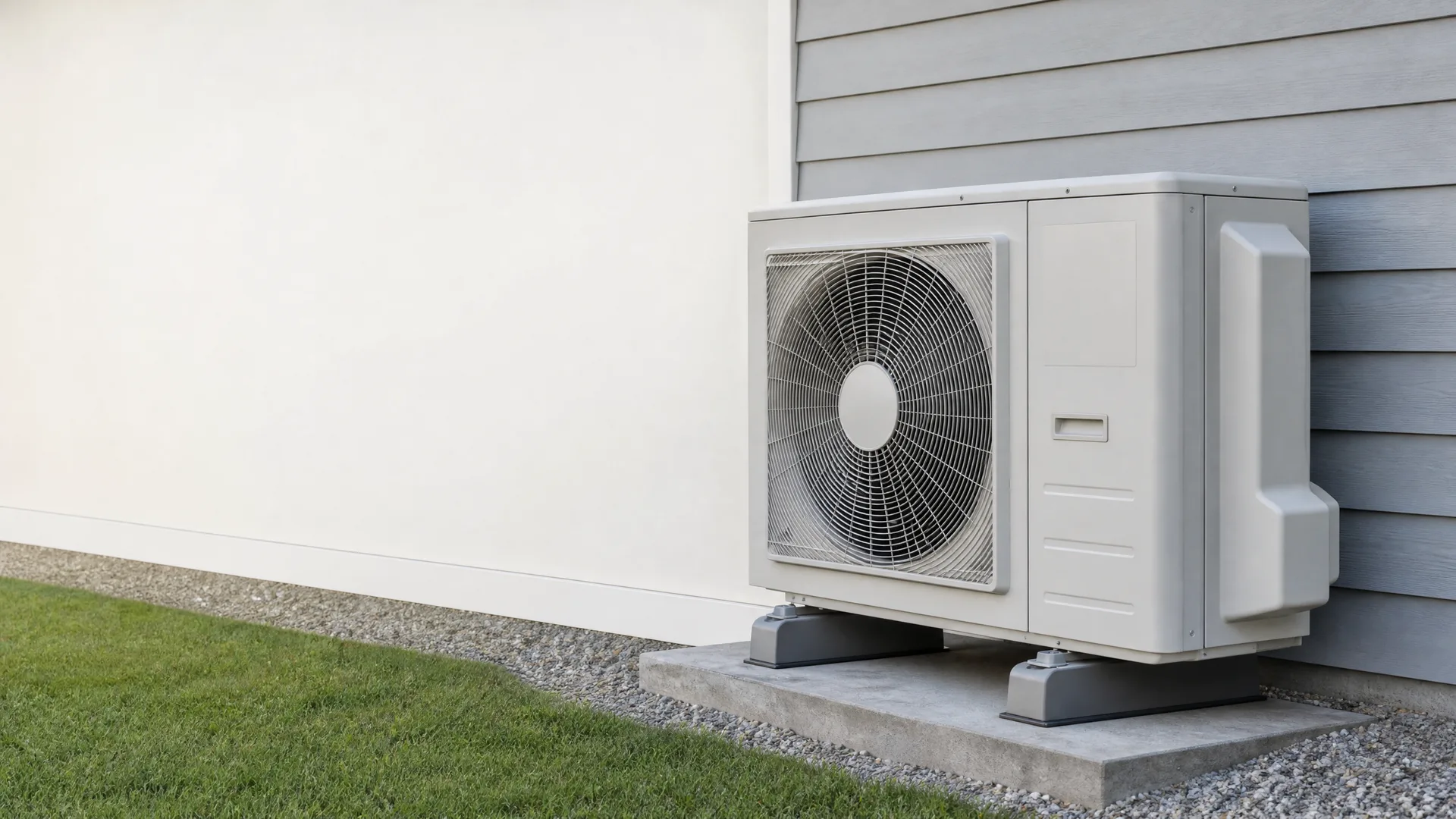
A white outdoor heat pump unit on rubber feet sits on a concrete pad beside a gray-sided house wall, next to a smooth light wall, gravel strip and lawn.

What the compressor's age tells you

The compressor is the part that does the work of moving heat, and it's also the most expensive part to replace on its own. A repair bill that centers on the compressor is usually a sign the unit is near the end of what it can give. If the system is past 10 years and the compressor needs attention, that repair is often the point where replacing the whole unit makes more sense than fixing just that part.

A woman stands in the open black front door of a white-sided house with a dark shingled roof while a man in a navy jacket approaches along the walkway, with lantern wall lights, a potted shrub, and flowering garden beds nearby.

What an aging heat pump does to your house

You'll notice it room by room before you notice it on the bill. The bedroom farthest from the unit stays a few degrees cooler than the rest of the house. The system runs longer to hold the same setting, and in a Hays winter that means more hours of runtime on nights when it's already struggling to pull heat from cold air. Some homeowners hear it too, a louder cycle or a clunk when it starts, which usually means a part is working harder than it should.

None of that tells you on its own whether to repair it again or replace it. That depends on the age of your unit, what a repair would run, and whether the parts are still easy to get. A contractor who looks at your system can tell you which side of that line you're on, and once you send in your information, that's the next step: getting matched with someone who takes it from there.

A dark ceramic mug on a round wooden table beside a light grey sofa with a woven cushion and knit throw, with a window, potted plant, floor lamp and wooden cabinet blurred in the background.
  1. Refrigerant pulls heat from outside air, even when it's cold.

  2. The compressor presses that refrigerant to raise its temperature further.

  3. Indoor coils release the heat into air circulating through your ducts.

  4. A reversing valve flips the cycle to cool your home in summer.

An outdoor condenser unit on a concrete pad beside a gray lap-sided house, with an electrical disconnect box and conduit on the wall and shrubs with mulch to the right.
A heat pump that still looks clean and sits level on its pad is moving refrigerant the way it should, and the lines running to the disconnect show no strain.
An outdoor air conditioning condenser unit on a concrete pad beside a house with horizontal siding above a brick foundation, with a flexible conduit running to a wall-mounted disconnect box.
Years of dust and weather on the cabinet often line up with a compressor and coils that have lost ground too, even if the unit still runs.

How much of the year does your heat pump actually work?

  • Winter nights average 20°F

    Winter nights here average 20°F, and that's when a heat pump strains hardest to pull heat from the air.

  • Heat runs October through April

    Heat runs October through April here, about seven months. That's most of the year asking your heat pump to perform.

  • Cooling runs June through September

    Cooling runs June through September, so between the two, your heat pump is working nearly year-round.

NOAA nClimDiv 1991-2020

A gray outdoor air conditioning condenser unit on a concrete pad beside a house with light vinyl siding, with a gray electrical disconnect box and conduit on the wall to the right.
Before you get your heat pump installation
A gray outdoor condenser unit on a concrete pad beside a light-green sided house, surrounded by mulch, ornamental grasses and a shrub, with mowed lawn in the foreground.
After you get your heat pump installation

Get matched with a heat pump pro in Ellis County

Send the form and the search for an installer is over.

There's no charge for the request.

Repair the one you have

A repair makes sense when the compressor and coils are still sound and the problem is a single part, a contactor, a capacitor, a low charge from a small leak. If the unit is under 10 years old and this is the first real repair it's needed, paying for the fix usually costs less than paying for a new system. You keep the efficiency rating you already have, and you avoid the work of sizing and installing a replacement before you actually need one.


Replace it now instead

Replacement makes more sense once the repairs start stacking up, or the one you're facing is major, a compressor or a coil, on a unit already past 10 years. At that point you're paying close to replacement cost to keep an old system limping through another Hays winter, with no guarantee the next part holds. A new heat pump also runs on a higher efficiency rating, so it pulls less power on those 20°F nights than the one it's replacing.

A gray-haired, bearded man in a dark coat dusted with snow stands smiling in a dimly lit room with a lamp, mirror, framed art, and a sofa in the background.
An older man with white hair and a beard, wearing a dark snow-dusted coat and scarf, stands in a warmly lit interior hallway with a framed landscape picture, a table lamp and a potted plant behind him, and a snowy view through a window at left.
An older man in a dark snow-flecked overcoat and scarf stands smiling in a warmly lit home entryway, with a glass-paned door showing darkness outside and a lamp-lit room visible through a doorway behind him.
An older man with gray hair and a beard, wearing a dark snow-dusted jacket and scarf, stands smiling in a warmly lit interior hallway with a lit table lamp, a vase of dried branches, and a framed picture in the background.

Knowing Where Your Heat Pump Stands

  • Most heat pumps in Ellis County hold up for 10 to 15 years before the compressor or coils give out.
  • Winters here push a heat pump harder than summers do, since pulling heat from 20°F air takes more work than cooling a muggy house.
  • A backup system running more than just the coldest nights usually means the heat pump has already fallen behind.
  • Uneven temperatures from room to room and longer run times point to a system losing ground, not a thermostat problem.
  • A unit under 10 years old with one failed part, a contactor or capacitor, is usually worth repairing instead of replacing.
  • A clean, level unit with no strain on the refrigerant lines is often still moving heat the way it should.

Ten to fifteen years is the range most heat pumps in Ellis County fall into before the compressor or coils wear out, and winter here is what pushes them toward the low end. Pulling heat out of 20°F air night after night for seven months asks more of the system than a muggy Kansas summer ever will. That strain shows up in a few places before it shows up on a repair bill. The backup heat tells you something if you pay attention to it, since it's meant for the hardest nights only, not for carrying the load every evening. The house tells you something too. A bedroom that stays cooler than the rest, a system that runs longer than it used to, those point to a heat pump losing ground rather than a thermostat that needs adjusting. None of this means replacement is the only answer. A unit under 10 years old that's otherwise been reliable, with a single part gone bad, a contactor or a capacitor, is usually worth fixing. The age and the history of the repairs matter as much as the symptom in front of you. A cabinet that still looks clean, sits level, and shows no strain at the refrigerant lines is often a sign the system underneath is still sound. Put together, the age of the unit, how hard it's had to work, and what's failed so far point toward whether repair or replacement makes sense for the one in your house.

A woman wrapped in a cream textured blanket sits in an armchair beside a lit lamp and a dark window, with an open book in the foreground.
A woman in a cream knit sweater sits in an armchair with her eyes closed and head tilted back, beside a window showing orange autumn foliage and a wooden side table with a mug.

A local pro for your heat pump installation

A heat pump in Hays earns its keep for 10 to 15 years, and the cold is what ends that run. Once a unit is leaning on backup heat most nights and still leaving rooms uneven, replacing it is usually the sounder move over another repair. A new system brings back even heat through a Hays winter and handles the muggy months too, without the strain an old compressor is carrying now. Share your details and a contractor who installs heat pumps in Ellis County will reach out to look at your options.

Get matched

Send the request and finding a pro stops being your problem.

You only hire the pro if you want to.



