Tell us about the job
Takes about a minute. No obligation.

Sizing a heat pump for this county starts with the heating side, because that is where the real load lives. Homes in Miami County, KS run heat about seven months a year, from October through April. As outdoor temperatures drop through January and February, a heat pump's capacity falls, and the backup heat strips carry the difference. A contractor who undersizes the unit leaves those strips working through the coldest weeks every year. Getting the load calculation right before the quote is set protects the homeowner from a system that leans on its most expensive mode all winter.
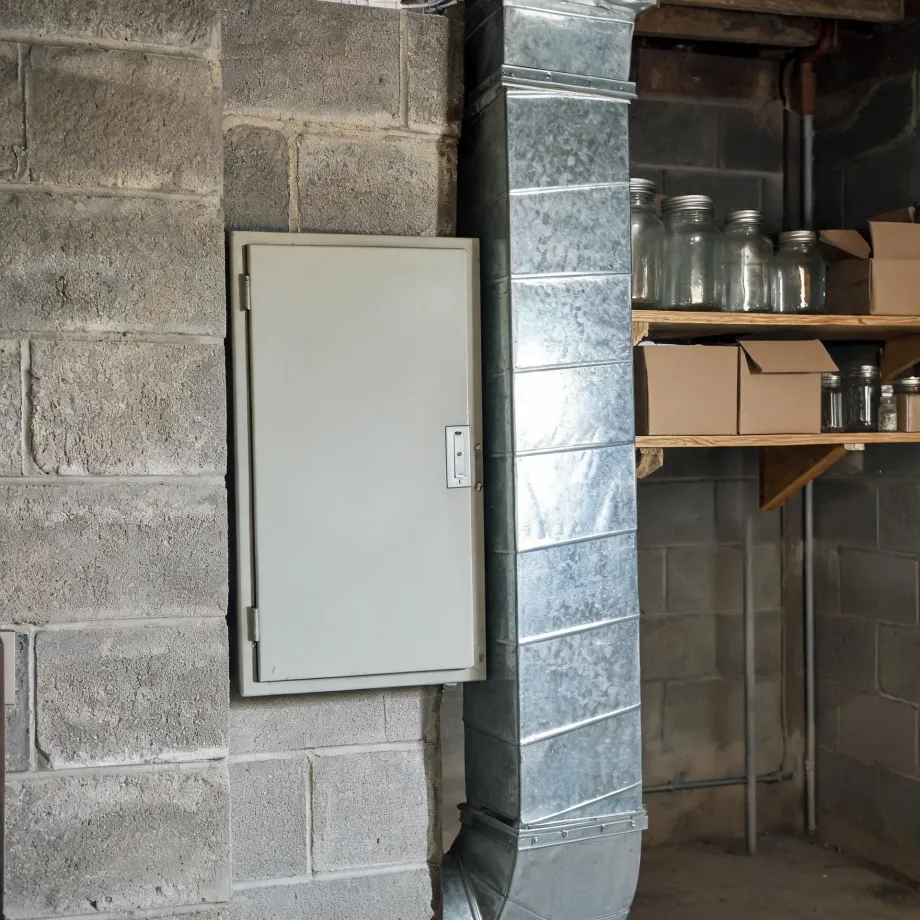
Ductwork laid out for a furnace and central air system distributes air at a different velocity and return-air ratio than a heat pump requires. Half the homes in Miami County, Kansas were built in 1987 or earlier (2020-2024 ACS 5-year). That means a contractor quoting a heat pump installation here opens walls and crawlspaces to measure what is actually there, because the original duct layout often cannot move the volume a heat pump depends on without modifications. Electrical service in houses of this generation is the second check: heat pump loads differ from what those panels were originally sized to carry.
What a Heat Pump Installation Covers
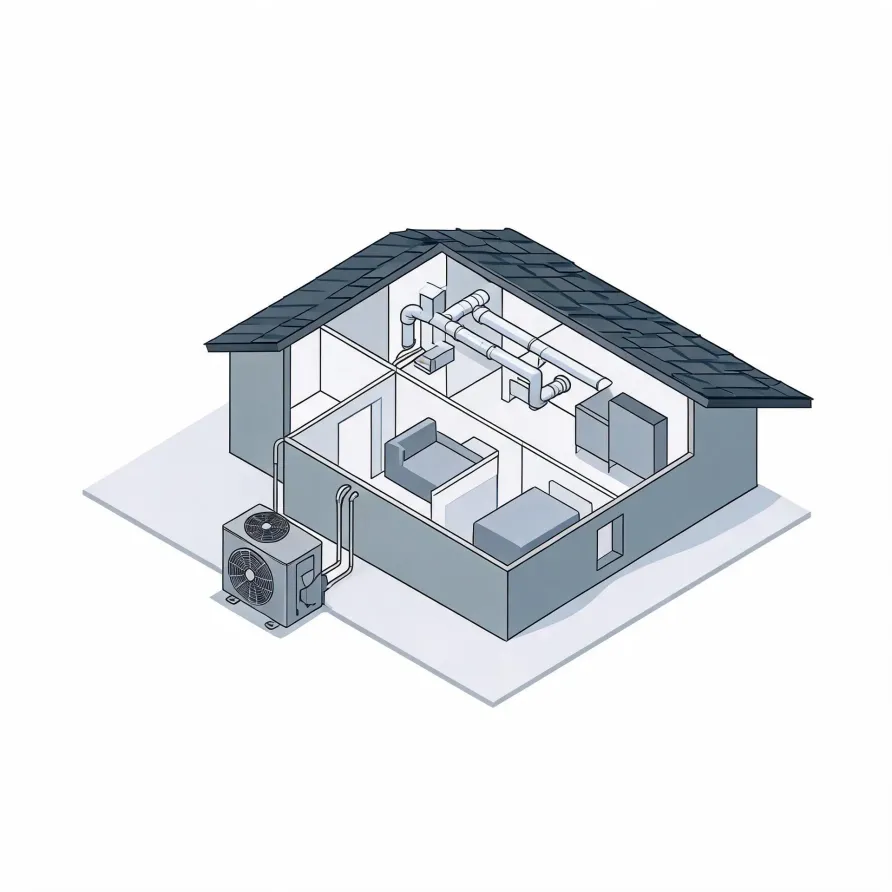
The outdoor unit sits on a pad beside the house and holds the compressor and the coil that exchange heat with the outside air. The indoor air handler mounts in a utility space, closet, or attic and moves conditioned air through the home. Together these two units are what a contractor sets into place.
A refrigerant line set connects the outdoor and indoor units, running through the wall or the structure between them. A thermostat goes on an interior wall where it reads the living space temperature and tells the system when to run. A condensate drain line also runs from the air handler to carry away any moisture the unit pulls from the air.
The drawing shows a representative layout, and a licensed contractor determines exactly what the installation involves in your specific home.
Find a contractor in Miami CountyMiami County, Kansas, by the numbers
73 severe weather events were recorded in Miami County, Kansas between 2015 and 2024.
NOAA National Centers for Environmental Information, Storm Events Database, bulk CSV export, events 2015-01-01 through 2024-12-31.Half the homes in Miami County, Kansas were built in 1987 or earlier (2020-2024 ACS 5-year).
U.S. Census Bureau, 2020-2024 American Community Survey 5-Year EstimatesMiami County, Kansas holds 14,262 housing units (2020-2024 ACS 5-year).
U.S. Census Bureau, 2020-2024 American Community Survey 5-Year EstimatesOwners occupy 78.2% of the occupied homes in Miami County, Kansas (2020-2024 ACS 5-year).
U.S. Census Bureau, 2020-2024 American Community Survey 5-Year EstimatesSevere Weather Events in Miami County
Heat pump performance is tied directly to what the climate puts it through. A system sized and installed for local conditions handles the workload a Kansas county like this one actually delivers.
73 severe weather events, 2015–2024. Source: NOAA National Centers for Environmental Information, Storm Events Database.